
The traditional image of a physician hunched over a keyboard for hours after a shift is rapidly dissolving as sophisticated artificial intelligence ecosystems transition from simple transcription tools into proactive clinical partners. This shift toward automated, intelligent assistance marks a departure from the era of manual medical documentation, which has long been a primary driver of clinician burnout. By leveraging Natural Language Processing and Large Language Models specifically tuned for the medical domain, these platforms act as a secondary cognitive layer that captures nuances in patient-doctor interactions without the need for intrusive manual input.
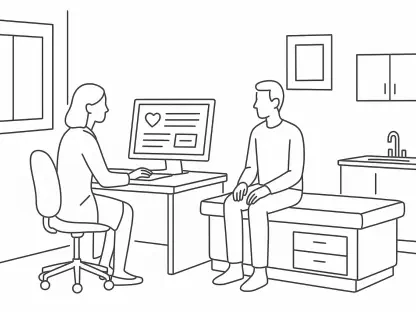
The role of an “AI Care Partner” extends beyond passive observation, evolving into an active participant that structures chaotic data into actionable clinical insights. This evolution is vital in a landscape where medical professionals are increasingly overwhelmed by the volume of digital records. Instead of merely digitizing paper processes, these ecosystems re-imagine the clinical encounter as a data-rich event where the AI handles administrative burdens, allowing the physician to maintain eye contact and genuine engagement with the patient.
Core Architectural and Functional Components
Proprietary Clinical Modeling and Transcription: The Technical Edge
Unlike general-purpose frontier models that often struggle with the specialized vocabulary of medicine, leading platforms like Heidi utilize purpose-built clinical models. These proprietary architectures are designed to prioritize medical accuracy and context, ensuring that complex terminology is not misunderstood or misrepresented during the transcription process. In high-pressure environments such as Emergency Departments, the ability of these models to filter ambient noise and recognize varied dialects is critical for maintaining data integrity under stress.
Point-of-Care Support and Hardware Integration: Synchronized Care
Functional utility is further enhanced through tools like “Evidence,” which provide real-time medical references and query processing directly at the point of care. This integration allows clinicians to verify dosages or treatment protocols without leaving the patient’s side, creating a continuous loop of information. Furthermore, the introduction of specialized hardware and seamless synchronization with existing Electronic Health Record systems ensures that AI-generated notes are not siloed but are instead immediately available within the broader hospital infrastructure.
Recent Innovations and Strategic Financial Trends: Scaling Through Revenue
The financial landscape for clinical AI has undergone a radical transformation, evidenced by Heidi’s successful acquisition of $340 million in fresh capital. By utilizing revenue-based growth financing alongside traditional equity, the company has managed to scale aggressively to a $900 million valuation without excessive shareholder dilution. This unique financial structure reflects a growing industry confidence in the recurring value of AI assistants, shifting the focus from simple “AI Scribes” to comprehensive digital partners that support entire clinical shifts.
Real-World Implementation and Sector Adoption: Global Healthcare Integration
The practical success of these platforms is reflected in their rapid global penetration, including large-scale deployments within nationalized systems like NHS England. In the Midlands region alone, over 1,200 general practitioner practices have adopted these tools to manage administrative workflows. Such implementations are not limited to primary care; acute and community trusts are also leveraging AI to save millions of clinical hours. From the DACH region to Australasia, the platform now supports millions of weekly patient encounters, proving that specialized AI can adapt to diverse regulatory and cultural environments.
Technical Obstacles and Regulatory Compliance: Navigating the Legal Framework
As AI moves from an administrative aid to a potential clinical decision-support tool, navigating international standards like GDPR and ISO 27001 becomes paramount. The industry must manage the delicate transition toward regulated medical device software while ensuring that a “Human-in-the-Loop” protocol is strictly maintained. This protocol ensures that while the AI suggests notes or identifies trends, the ultimate clinical responsibility remains with the human provider. This balance is a key competitive differentiator in a market contested by legacy tech giants and nimble clinical startups.
Future Trajectory of Clinical AI Platforms: Moving Toward Predictive Care
Looking ahead, the potential for breakthroughs in predictive diagnostics and personalized treatment recommendations is vast. Future iterations of these platforms will likely integrate multimodal AI, synthesizing voice, text, and imaging data into a single, cohesive patient profile. As these tools become standard of care, they will play a crucial role in mitigating the global shortage of healthcare professionals by dramatically increasing the efficiency of each encounter. Regulatory frameworks will inevitably shift to accommodate these advancements, moving toward a more integrated, AI-enhanced medical reality.
Summary and Assessment of Clinical AI Technology
The deployment of clinical AI platforms represented a significant milestone in modernizing the global healthcare infrastructure. Providers moved away from the inefficiencies of manual data entry, choosing instead to embrace systems that prioritized clinician well-being and patient engagement. This transition redefined the role of technology from a burdensome requirement into a supportive partner that enhanced clinical precision.
The shift toward specialized, proprietary modeling ensured that the integrity of medical records was preserved even as adoption rates accelerated. Strategic financing models allowed for rapid expansion, making these tools accessible to thousands of practices across multiple continents. Ultimately, the integration of these platforms successfully balanced the need for rapid technological innovation with the unwavering requirement for clinical responsibility and data security.