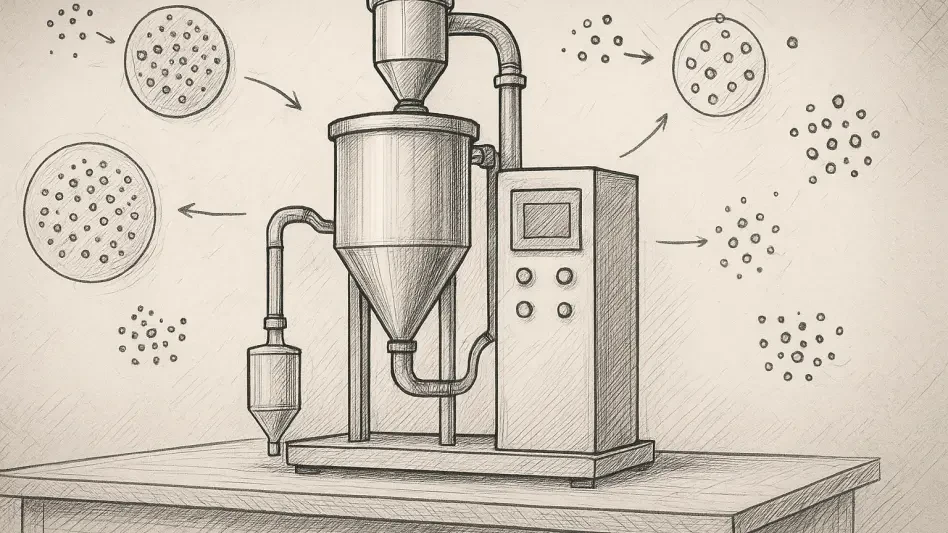

Wet milling and high-pressure homogenization are increasingly utilized to create nanocrystals that exponentially increase the surface area available for drug dissolution in the body. This technological leap serves as the cornerstone for addressing a pervasive industry bottleneck where promising laboratory findings fail to reach the clinical stage. Currently, the Journal of Pharmaceutical Investigation has prioritized this issue through a specialized call for papers led by researchers at Yonsei University and Duksung Women’s University. Their objective is to formalize a translational framework that ensures scientific breakthroughs are not lost in the transition to large-scale production. While molecular discovery often grabs headlines, the practical reality of 2026 shows that without robust particle engineering, even the most potent drug remains a theoretical benefit. Bridging this gap requires an unprecedented level of cooperation between chemists and process engineers to ensure that the delicate architecture of a drug molecule remains stable and effective during every step of the commercial journey.
Overcoming Solubility and Bioavailability Obstacles
The current pharmaceutical landscape is dominated by a solubility crisis that threatens to derail dozens of potential therapies before they ever reach a patient. Most modern drug candidates emerging from research pipelines are classified as poorly soluble, which means they are essentially “brick dust” that cannot be easily absorbed by the human digestive system. This lack of solubility results in low bioavailability, necessitating higher doses that can lead to increased toxicity and unpredictable side effects. Particle engineering provides the most effective solution to this dilemma by fundamentally altering the physical state of the active pharmaceutical ingredient. By manipulating the crystal lattice or creating amorphous forms, scientists can ensure that a drug dissolves rapidly enough to be absorbed into the bloodstream. This shift toward molecular physical manipulation represents a significant departure from traditional formulation techniques, moving the industry toward a more calculated, engineering-centric approach to therapeutic delivery.
Advanced techniques like nanonization and the development of solid dispersions have become standard tools for rescuing these difficult molecules. Beyond simple size reduction, researchers are utilizing spray drying and hot-melt extrusion to embed drug particles within specialized polymer matrices. This process effectively traps the drug in a high-energy amorphous state, which bypasses the natural energy barriers that typically prevent poorly soluble crystals from dissolving. Furthermore, maintaining precise control over the crystallization process is vital to prevent polymorphic transitions, where a drug might spontaneously shift into a less effective form during storage. By ensuring that these engineered states are both stable and reproducible, formulation scientists are able to turn chemical curiosities into viable medical products. This rigorous control of the solid-state environment allows for more predictable clinical outcomes and ensures that patients receive a consistent therapeutic dose every time, regardless of the inherent chemical challenges of the original compound.
Importance of Characterization and Delivery Versatility
To guarantee the performance of these engineered particles, the industry has adopted high-resolution analytical tools that provide a “molecular fingerprint” of each batch. Techniques such as powder X-ray diffraction, differential scanning calorimetry, and Raman spectroscopy are now indispensable for monitoring structural integrity. These methods allow scientists to observe molecular mobility and moisture content in real-time, providing critical data on how a tablet might degrade over its shelf life. In 2026, the focus has shifted toward predictive modeling, where characterization data is used to simulate how a formulation will behave under various environmental conditions. This level of technical rigor is essential for maintaining global quality standards, as it allows manufacturers to identify potential failures before a product ever leaves the factory. By understanding the solid-state properties of a drug at this depth, engineers can build a foundation of reliability that supports the transition from experimental success to a stable, long-term commercial medical product.
The versatility of particle engineering extends far beyond simple oral medications, impacting the entire spectrum of drug delivery systems. For instance, pulmonary delivery relies on particles engineered to a specific aerodynamic diameter—typically between one and five micrometers—to ensure they reach the deep lung tissue rather than being trapped in the upper airways. Similarly, injectable formulations must be meticulously designed to prevent particle aggregation, which could cause dangerous blockages in the cardiovascular system. Transdermal patches also benefit from these advances, as engineered carriers can now be designed to penetrate the skin’s natural lipid barriers more effectively than ever before. This broad applicability demonstrates that particle engineering is not a niche specialty but a universal necessity in modern medicine. Whether the target is a small molecule or a complex biologic, the ability to control particle size, shape, and surface chemistry is what ultimately determines if a treatment can be successfully administered to a patient in a real-world clinical setting.
Navigating Scale-Up and Advanced Manufacturing
One of the most difficult hurdles in the pharmaceutical development cycle is scale-up, where laboratory successes often face the harsh realities of industrial manufacturing. The physics governing a small-scale lab mixer are fundamentally different from those of a massive industrial vessel, leading to unexpected changes in drying kinetics and shear rates. A formulation that appears stable in a two-liter batch can easily fail when subjected to the heat and pressure of large-scale compression and granulation. Consequently, researchers are now focusing on “scale-up science,” which involves using mathematical modeling and small-scale prototypes to predict how a drug will behave in a factory environment. This proactive approach helps to identify “critical process parameters” early in the development cycle, reducing the risk of costly manufacturing failures later. By bridging the gap between the lab bench and the production floor, particle engineering ensures that innovation is matched by mechanical feasibility, allowing for a smoother path to global market entry.
The landscape of pharmaceutical production is also being transformed by the adoption of continuous manufacturing and additive technologies like 3D printing. Unlike traditional batch processing, which is prone to human error and variability, continuous systems offer a seamless flow of materials that improves consistency and reduces waste. This shift allows for the real-time adjustment of particle properties during the manufacturing process itself. Furthermore, 3D printing is opening new doors for personalized medicine by allowing for the creation of tablets with intricate internal architectures. These complex structures can be engineered to release medication at specific intervals or in response to biological triggers, providing a level of precision that was previously impossible. By integrating microfluidics and other high-tech fabrication methods, manufacturers can now achieve unprecedented control over particle architecture at a microscopic level. These emerging technologies are not just theoretical; they are becoming the standard for producing the next generation of highly specialized medical treatments.
Integrating Quality by Design and Regulatory Frameworks
Modern pharmaceutical development is increasingly guided by the philosophy of Quality by Design, which asserts that quality must be built into a product rather than just tested at the end. This regulatory framework requires a deep understanding of how particle characteristics influence the final performance of a drug. To support this, Process Analytical Technology uses real-time sensors to monitor chemical and physical uniformity throughout the manufacturing process. These sensors provide a constant stream of data, allowing engineers to maintain a “design space” where processes can be adjusted on the fly to ensure every batch meets perfect specifications. This intersection of engineering and data science is crucial for meeting the strict safety requirements of global health authorities. By documenting these relationships through rigorous research, the pharmaceutical community is establishing a more transparent and reliable pathway for drug approvals. This disciplined approach ensures that every scientific discovery can be safely and reliably delivered to the millions of patients who depend on them.
The collaborative efforts within the scientific community successfully identified particle engineering as the primary tool for bridging the drug development gap. Researchers concluded that by focusing on translational science, they were able to overcome the solubility barriers that had previously stalled numerous life-saving therapies. The integration of advanced characterization and automated manufacturing systems provided a clear roadmap for moving complex molecules from discovery to delivery. Stakeholders recognized that building quality into the initial design phase was far more effective than traditional post-production testing. As these methodologies became standard practice, the industry realized significant improvements in both the speed and reliability of drug commercialization. Moving forward, the continued application of these engineering principles offered a sustainable solution for managing the increasingly complex pipelines of modern medicine. This evolution in formulation science ultimately ensured that laboratory breakthroughs were transformed into tangible healthcare solutions that reached the global patient population with unprecedented efficiency and safety.