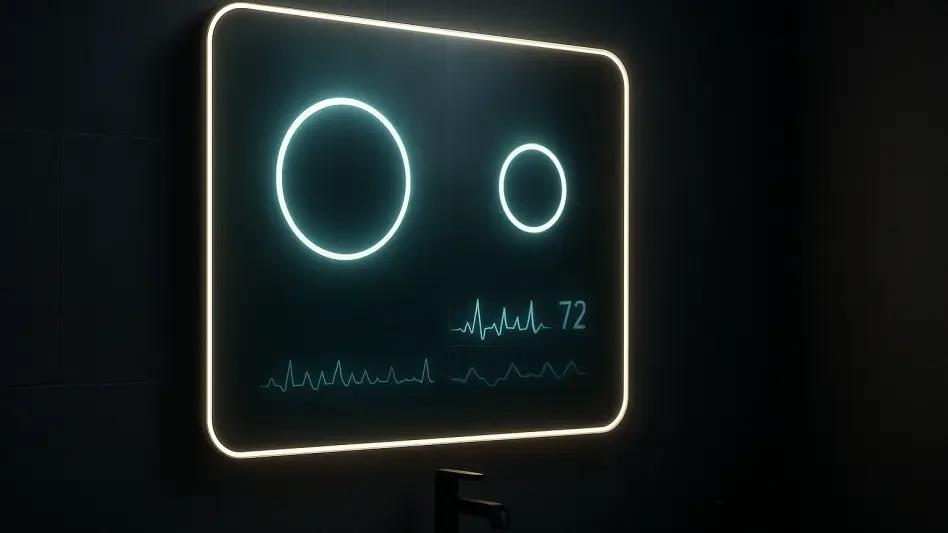

The daily ritual of glancing into a bathroom mirror is being fundamentally reimagined as high-resolution cameras and artificial intelligence turn reflective surfaces into sophisticated diagnostic hubs capable of reading the subtle language of human physiology. This evolution represents a departure from luxury consumer electronics toward essential medical-grade tools that facilitate continuous health monitoring. By embedding sensors directly into a common household object, the technology removes the friction typically associated with clinical check-ups, allowing for the integration of wellness tracking into the morning routines of millions.
Key technological players are currently driving a shift toward proactive, home-based cardiovascular screening through the use of facial scanning. These mirrors function as an unobtrusive gatekeeper, utilizing computer vision to detect markers that previously required specialized hospital equipment. As global populations age, the ability to monitor chronic conditions without leaving the home becomes a vital component of the modern healthcare ecosystem, reducing the physical and financial burden on patients.
The global market scope for these devices is expanding as fitness enthusiasts and healthcare providers recognize the value of seamless data collection. This intersection of telehealth and the Internet of Things provides a foundation for a new era of preventive cardiology. By transforming a reflective surface into a digital health portal, manufacturers are creating a continuous feedback loop that encourages users to take ownership of their physiological well-being while providing physicians with a richer data set.
Emerging Frontiers in Remote Photoplethysmography (rPPG)
Trends Driving the Shift Toward Contactless Diagnostics
The industry is observing a significant move away from traditional wearables such as chest straps and smartwatches in favor of ambient, camera-based monitoring. Remote photoplethysmography, or rPPG, leverages ordinary camera sensors to detect minute changes in skin color that are invisible to the naked eye. These changes correspond to blood flow with every heartbeat, allowing the software to derive a pulse rate and other vital signs without any physical contact or specialized light sources.
Deep learning algorithms play a crucial role in this process by correcting for motion and environmental lighting. In real-world settings, shadows or slight head movements often interfere with signal quality, but advanced neural networks now ensure clinical-grade accuracy outside the laboratory. This capability allows the technology to function reliably in diverse home environments, providing a level of stability that was previously unattainable for non-contact sensors.
The utility of rPPG is also expanding beyond simple heart rate tracking to include complex biomarkers like NT-proBNP. Measuring such indicators via a facial scan represents a massive leap in diagnostic potential, as these markers are traditionally assessed through invasive blood tests. Identifying heart failure indicators through a simple mirror reflection allows for much earlier intervention, potentially preventing emergency room visits and improving long-term patient outcomes.
Market Projections and the Future of At-Home Clinical Screening
Growth forecasts for the rPPG and smart mirror sectors remain robust, with significant expansion expected from 2026 through 2030. Adoption rates are particularly high in nursing homes and rural healthcare initiatives where access to specialists is limited. By providing a low-cost, high-efficiency screening method, these mirrors serve as an essential tool for public health officials looking to manage large populations with fewer resources.
The potential for AI-driven mirrors to reduce the burden on traditional healthcare systems is a primary driver of investment. In hospital waiting rooms, these devices can perform preliminary triage, allowing medical staff to focus on high-risk patients immediately. As the technology reaches broader consumer markets, the cumulative effect of early heart failure detection is expected to save healthcare systems billions in avoided acute care costs.
Navigating the Technical and Practical Hurdles of Mirror-Based Health Care
Developers are focused on overcoming skin tone bias to ensure that deep learning models remain accurate across diverse populations. Validating these algorithms with a wide spectrum of complexions is critical for maintaining equity in healthcare delivery. Furthermore, the reliance on ambient light poses a technical challenge compared to contact-based infrared sensors, requiring high-performance optics that can handle varying degrees of indoor illumination without losing precision.
Achieving a Technology Readiness Level of 7 and beyond requires a perfect marriage between hardware and software. High-resolution cameras must be integrated behind reflective surfaces in a way that does not compromise the aesthetic value of the mirror or the privacy of the user. Strategic solutions involve edge computing, where data is processed locally on the device rather than in the cloud, ensuring that sensitive facial imagery never leaves the home.
The Regulatory Landscape and Data Sovereignty in Optical Wellness
Distinguishing between wellness metrics and diagnostic medical claims is a central focus for regulatory bodies like the FDA. While rPPG technology has secured clearances for basic vitals like pulse and respiration, software intended for heart failure screening must undergo more rigorous clinical trials. This regulatory pathway is necessary to ensure that the AI-calculated biomarkers meet the same standards as traditional laboratory results.
Compliance with global standards such as HIPAA and GDPR is mandatory for any platform storing sensitive physiological data. The implementation of FHIR standards allows for a secure bridge between smart mirrors and professional electronic health records, facilitating seamless data sharing between patients and physicians. This connectivity is essential for the long-term success of telemedicine, provided that robust cloud security protocols are maintained to protect data sovereignty.
The Future Path: From Daily Reflection to Life-Saving Intervention
The disruptive potential of smart mirrors lies in their ability to eventually replace routine blood tests for chronic condition management. This convergence of telemedicine and smart home ecosystems creates a world where physician-patient data sharing is effortless and continuous. Innovations in invisible health monitoring are expected to have a profound impact on global life expectancy by identifying risks years before they manifest as physical symptoms.
Hyper-personalized preventative medicine is becoming the new standard as continuous vital sign tracking becomes ubiquitous. By analyzing longitudinal data, AI can detect subtle trends in cardiovascular health that a single doctor visit might miss. This shift toward persistent monitoring ensures that interventions are tailored to the specific needs of the individual, fostering a more proactive approach to longevity.
Final Assessment: Is Your Mirror the Next Essential Medical Device?
The evaluation of rPPG efficacy confirmed that contactless technology reached a level of precision suitable for both wellness and specialized monitoring. Tech investors and healthcare providers recognized that the integration of these sensors into household objects provided an unparalleled opportunity for data collection. The results indicated that while laboratory validation was ongoing for certain biomarkers, the core technology was ready for large-scale deployment.
The transition toward smart mirrors as diagnostic tools offered a clear path for reducing the strain on clinical infrastructure. Stakeholders identified that early adoption by nursing facilities and telehealth providers created a more resilient health network. Final observations suggested that the shift toward invisible monitoring redefined the standard of care by making health awareness a natural part of daily life.