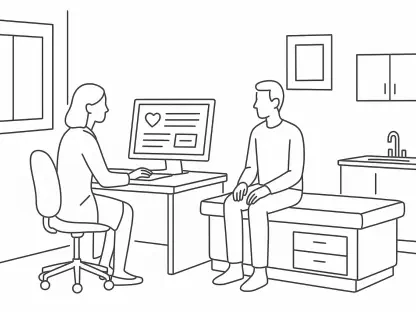

The quiet dismantling of medical confidentiality is no longer a speculative concern but a documented federal initiative aimed at consolidating the most intimate biological details of every citizen into a centralized digital vault. This evolution reflects a significant transition in how the state perceives individual health history. Once viewed as a strictly private matter between a patient and a physician, medical records have been rebranded as strategic national assets essential for public health, national security, and scientific advancement. As the infrastructure for data collection expands, the traditional boundaries of the clinical environment are vanishing, replaced by a seamless web of surveillance that tracks everything from genetic markers to daily physiological fluctuations.
The Shifting Landscape of Health Information and Data Acquisition
Mapping the Ecosystem of Modern Health Data Entities
The modern health data landscape has expanded far beyond the traditional confines of hospital basements and insurance databases. In the current year, the ecosystem is a complex tapestry where clinical records are intermingled with lifestyle data generated by consumer technology. Fitness wearables, smartwatches, and even sleep-tracking rings provide a continuous stream of physiological metrics that offer a far more granular view of an individual than any quarterly doctor visit could provide. This technology is no longer a niche market for athletes; it has become a standard component of the American lifestyle, creating a massive, unregulated reservoir of biological information.
Moreover, the rise of consumer genomics has introduced a permanent and unchangeable data layer into this ecosystem. Companies that offer ancestry insights or health risk assessments now hold the genetic blueprints of millions, often with user agreements that allow for broad secondary usage. This data often finds its way into the hands of third-party aggregators who specialize in building comprehensive profiles of individuals. When combined with traditional medical history, this information creates a digital twin of the patient, one that is accessible to a variety of entities that exist entirely outside the reach of conventional privacy regulations.
The Role of Public Health Infrastructure in National Policy
Public health infrastructure has undergone a radical transformation, shifting from a localized support system to a centralized pillar of national policy. State-level health information exchanges, or HIEs, serve as the primary conduits for this change. These exchanges were originally designed to allow different hospitals within a region to share records for better care coordination. However, they have increasingly become the backbone of federal data-harvesting efforts. By integrating these regional networks into a national grid, the government can facilitate the near-instantaneous movement of patient records across the country.
This centralization is justified under the guise of public health preparedness and the need for large-scale clinical research. National initiatives now rely on these exchanges to monitor disease outbreaks in real time and to assess the efficacy of various medical interventions on a population-wide scale. While the benefits of such data for research are undeniable, the shift toward using clinical records as strategic assets marks a departure from the individual-centric model of healthcare. The focus has moved from the welfare of the single patient to the statistical optimization of the collective, often without the explicit consent of those whose data fuels the system.
Emergent Trends and the Data-Driven Market Outlook
The Shift Toward Massive State and Federal Medical Repositories
Current federal initiatives are moving aggressively toward the creation of comprehensive medical repositories. The Department of Health and Human Services has signaled a clear intent to centralize patient records, often bypassing the slow process of legislative reform in favor of administrative directives. A notable trend is the expanding use of prescription drug monitoring programs. Originally intended to curb the opioid crisis, these programs now track a wide array of controlled substances and are frequently accessed by law enforcement agencies through administrative subpoenas. These orders allow federal agents to obtain sensitive records without the probable cause or judicial oversight required for a traditional search warrant.
Furthermore, the government is increasingly treating health data as a tool for political and social inquiry. Recent efforts to investigate historical medical trends or to validate specific scientific hypotheses have led to demands for massive datasets that include identifiable patient information. This trend suggests a future where medical records are not just tools for treatment but are also subject to the shifting priorities of different administrations. As the technical barriers to data aggregation continue to fall, the push for a singular, federalized health database becomes more a matter of political will than technological capability.
Projections for National Data Aggregation and Performance Indicators
The federal government has set an ambitious target to secure access to 90% of American medical records from 2026 to 2028. This objective is being pursued through a combination of regulatory mandates and significant financial incentives. Federal grants are being funneled into state health exchanges that agree to standardize their data formats and provide real-time access to federal agencies. For instance, multimillion-dollar allocations are being used to modernize systems in states that were previously lagging, ensuring that no geographic region remains a “dark zone” for data collection.
Performance indicators for these programs are no longer measured solely by patient outcomes but by the “liquidity” of the data within the network. The success of a health information exchange is now judged by how quickly and comprehensively it can fulfill a data request from a national repository. As interstate data-sharing networks expand, the concept of a “local” medical record is becoming obsolete. The projected expansion suggests that within the next two years, the vast majority of clinical interactions in the United States will be recorded in a system that is accessible to federal authorities, creating a permanent and searchable archive of the nation’s health.
Critical Obstacles in Protecting Patient Confidentiality
The Technical Failure of Data Anonymization in the AI Era
One of the most persistent myths in the data industry is the idea that “de-identifying” a dataset makes it safe for mass consumption. In reality, the era of artificial intelligence has rendered traditional anonymization techniques largely ineffective. Sophisticated algorithms can now perform membership inference attacks, where they cross-reference “anonymous” medical data with publicly available information from social media, voter registrations, and commercial databases. This allows for the re-identification of individuals with a high degree of accuracy. If an AI can confirm a specific person’s presence in a cancer research database, it has effectively revealed that person’s diagnosis, regardless of whether their name was attached to the file.
Furthermore, the risk of re-identification is disproportionately high for members of marginalized or underrepresented groups. In a large dataset, a person with a rare condition or a unique demographic profile stands out like a beacon to an AI-driven search. As the government continues to push for larger and more diverse datasets, the technical impossibility of true anonymity becomes a glaring liability. The promise that personal identities are protected is increasingly seen as a hollow assurance, providing a false sense of security while the actual risk of exposure grows alongside the complexity of the data models.
Addressing the Social and Market Risks of Health Surveillance
The expansion of medical surveillance carries significant social and market risks that could undermine the healthcare system’s core mission. When patients become aware that their most sensitive medical information is being fed into a government dragnet, they are likely to alter their behavior. This deterrent effect is particularly pronounced for individuals seeking treatment for stigmatized conditions, mental health issues, or reproductive care. If the doctor’s office is perceived as a data collection point for the state, the fundamental trust required for an honest patient-physician relationship is destroyed, leading to poorer health outcomes as people avoid necessary care.
Moreover, the market for healthcare technology is beginning to feel the impact of these privacy concerns. While the industry continues to grow, there is a rising demand for “privacy-first” platforms that promise to keep data siloed and encrypted. However, the regulatory environment makes these promises difficult to keep. As the government tightens its grip on health data, the competitive landscape may shift, favoring large corporations that have the resources to comply with federal data mandates over smaller, more innovative firms that prioritize user privacy. The resulting centralization of the market could stifle innovation and further entrench the systems of mass surveillance.
The Regulatory Environment and the HIPAA Privacy Gap
Limitations of Federal Safeguards for the Digital Age
The Health Insurance Portability and Accountability Act is often cited as the gold standard for medical privacy, yet it is a “filing cabinet” law struggling to function in a cloud-computing world. The most significant gap in federal safeguards is that the act only applies to “covered entities”—primarily hospitals, doctors, and insurers. It provides zero protection for the massive amounts of health data generated outside these entities. Information entered into a period-tracking app, medical queries typed into a search engine, or DNA samples sent to a private lab are all exempt from the law’s stringent privacy requirements.
Consequently, a vast parallel system of health data exists that is legally allowed to be sold, traded, and analyzed without the patient’s knowledge. This data is often more revealing than a standard clinical record because it captures daily habits and real-time physiological changes. The failure of federal law to evolve at the same pace as technology has created a situation where the most intimate aspects of an individual’s life are essentially unprotected. This regulatory vacuum allows government agencies to acquire detailed health profiles from third-party brokers, effectively bypassing the protections that would normally apply to records held by a physician.
Legal Exceptions and the Mechanics of Government Compliance
Even within the system, federal law contains numerous “open doors” that allow for the disclosure of medical records without patient authorization. There are more than a dozen categories of legal exceptions that permit hospitals and insurers to hand over data to government agencies. These range from public health investigations and judicial proceedings to the incredibly broad “essential government functions” clause. This specific exception is frequently used to justify the mass collection of data for purposes that have little to do with immediate patient care, such as administrative audits or broad research initiatives.
The mechanics of compliance are often automated, meaning that once a request is made, the data is transferred electronically with minimal human review. This streamlined process removes the opportunity for medical providers to advocate for their patients’ privacy or to challenge overly broad data requests. For the government, this represents a highly efficient way to populate its repositories; for the patient, it means their medical history can be shared across multiple federal agencies without them ever being notified. The legal framework is designed for ease of access rather than the protection of individual liberty.
Future Trajectory: Innovation, Geopolitics, and Global Surveillance
The Rise of Digital Colonialism and International Data Diplomacy
The appetite for medical data is not restricted to domestic borders; it has become a central component of international diplomacy. A burgeoning trend involves the United States conditioning healthcare aid to developing nations on the requirement that those nations grant real-time access to their national health repositories. This practice has led to accusations of digital colonialism, where wealthy nations exploit the biological data of vulnerable populations in exchange for basic medical support. For countries like Kenya or Uganda, the choice is often between losing access to life-saving funding or handing over the health records of their entire citizenry.
While these agreements are often framed as collaborative research efforts to fight global diseases, they rarely include robust protections against secondary data usage. The data harvested from these nations is frequently used to train AI models and develop pharmaceutical products that the original data providers can never afford. This global data-sharing network creates a situation where a person’s medical history can be monitored by a foreign government thousands of miles away, further eroding the concept of national data sovereignty and creating a global surveillance apparatus that operates with almost no international oversight.
Predictive Modeling and the Long-Term Ethics of Centralization
The long-term goal of centralizing health data is the development of sophisticated predictive models that can anticipate everything from disease outbreaks to individual behavior. However, the ethical implications of this trajectory are profound. Centralized databases are susceptible to being used for predictive policing or political inquiries, where an individual’s health status could be used to justify state intervention or to limit their participation in certain social activities. The potential for “health-based” discrimination grows exponentially as these databases become more comprehensive and integrated with other government systems.
Moreover, the value of medical information is tied to global economic shifts, making these repositories prime targets for both state-sponsored cyberattacks and internal misuse. As the government builds these massive vaults, it is creating a permanent target for anyone looking to exploit the most sensitive details of the American public. The transition from localized, patient-centered care to a centralized, data-driven surveillance model represents a fundamental shift in the social contract. The question for the coming years is not whether the data can be collected, but whether the society can survive the loss of the privacy that once defined the human experience.
Redefining Medical Liberty in a Centralized Era
The path forward required a fundamental rejection of the “public commodity” view of medical data that dominated federal policy mid-decade. Strategic recommendations focused on the urgent need to overhaul existing legal frameworks, ensuring that any government access to biological data required a scientifically valid justification rather than an administrative whim. Advocates sought to implement AI-resistant protections and insisted that data sovereignty must return to the individual, granting every citizen a decisive voice in how their information was utilized. The transition toward a model of true data ownership offered a potential exit from the surveillance-state trajectory that had begun to define the relationship between the government and the governed.
Ultimately, restoring the sanctity of the patient-physician relationship became the primary goal for those seeking to protect individual liberty. The risks of treating medical history as a collective resource were too high, threatening to turn the pursuit of health into a mechanism for social control. Policymakers discovered that only by decentralizing data control and providing robust, transparent safeguards could they hope to rebuild the public trust that had been eroded by years of mass harvesting. This shift ensured that the future of medicine remained focused on the healing of the individual rather than the monitoring of the population.