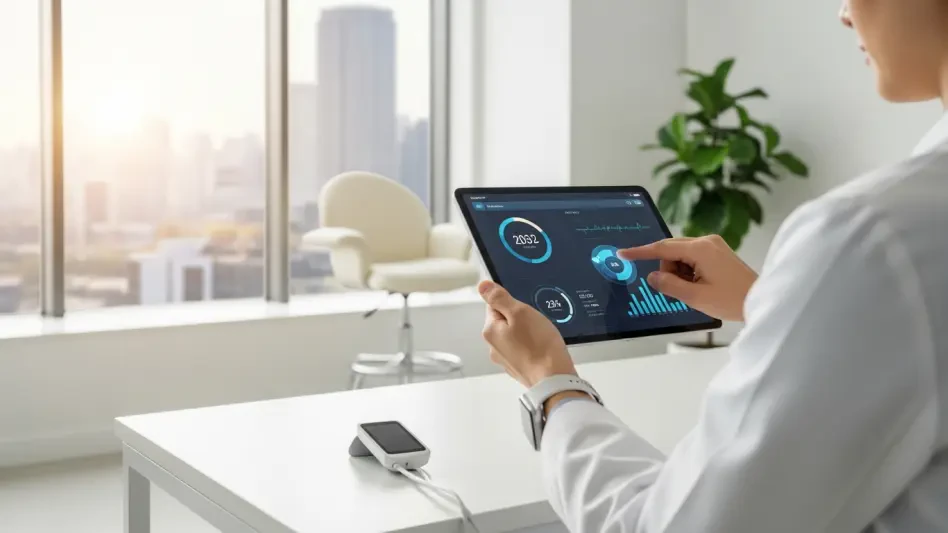

The transition from emergency digital health measures to a permanent, sophisticated virtual care infrastructure has redefined how modern society perceives the accessibility and quality of medical services globally. This shift has moved beyond the simple replacement of office visits with video calls, evolving into an ecosystem where the patient experience is the primary metric for organizational survival. In the current landscape, the most successful providers have recognized that technological prowess alone does not guarantee loyalty; rather, the seamless integration of digital tools into the rhythm of a patient’s life determines who remains relevant. Healthcare organizations are no longer debating whether to implement telemedicine but are instead refining the nuances of digital empathy and technical reliability to prevent patient churn. By focusing on the removal of traditional frictions such as geographic barriers and administrative delays, developers have turned virtual care into a deeply personal journey. The current environment demands a high level of sophistication where every digital touchpoint reflects a commitment to clinical excellence and operational efficiency. This maturation of the market means that patients now expect the same level of intuitive design and immediate gratification from their healthcare providers that they receive from retail and financial services. Consequently, the industry is seeing a consolidation around platforms that can deliver high engagement while maintaining the rigorous standards required for modern clinical outcomes.
Market Evolution: Rise of the Hybrid Care Paradigm
Market data from the current year indicates that telehealth usage has stabilized at remarkably high rates, with a significant majority of patients returning for subsequent virtual visits within the same calendar year. This high retention rate demonstrates that virtual care is no longer a novelty or a temporary fix but a deeply ingrained habit within the global population. Successful healthcare models have recognized that while patients prefer digital platforms for routine consultations, prescription refills, and mental health services, they still place immense value on in-person interactions for complex chronic management and physical diagnostics. This realization has led to the dominance of the hybrid care approach, which seamlessly blends the convenience of digital tools with the specialized touch of physical clinics. By offering a unified experience that transitions smoothly between virtual and physical environments, providers are able to maintain a continuous relationship with the patient, regardless of the setting. This continuity is essential for driving long-term adherence to treatment plans and ensuring that no patient falls through the cracks of a fragmented system.
The shift toward a virtual-first preference for many medical needs is largely driven by a collective desire to eliminate the common barriers found in traditional healthcare, such as excessive travel time and congested physical waiting rooms. Patients now expect what is frequently termed “conversation-based” healthcare—where minor illness checks and follow-ups are handled instantly and remotely without the need for a formal office visit. Platforms that fail to acknowledge this shift risk losing their patient base to more agile, digitally native competitors who prioritize speed and convenience above all else. In this competitive environment, the most successful organizations are those that have streamlined their intake processes to mirror the efficiency of other high-performance digital services. By reducing the time it takes to see a provider from days to minutes, these platforms have transformed medical care from a burdensome chore into a supportive, on-demand resource. The evolution of patient behavior suggests that the future of the industry will be defined by those who can provide the highest level of care with the lowest possible expenditure of the patient’s time and effort.
Technical Precision: Engineering a Frictionless User Experience
In a market saturated with various digital health options, the most successful telemedicine applications avoid the pitfall of “feature bloat” and instead focus on technical simplicity and reliability. One-tap video access has become the gold standard for patient engagement, as technical friction remains one of the leading causes of abandoned appointments and patient dissatisfaction. By utilizing deep-linked or web-based solutions that allow patients to join a session without the frustration of downloading extra software or navigating complex login screens, providers ensure a higher completion rate for virtual visits. This focus on technical accessibility is particularly crucial for reaching diverse populations, including the elderly and those with limited digital literacy. When the technology becomes invisible and the focus remains on the consultation itself, the quality of the patient-provider relationship is significantly enhanced. The goal is to create a digital environment that feels as natural and intuitive as a face-to-face conversation, removing any mechanical barriers that might distract from the clinical experience.
Beyond the call itself, patients demand a closed-loop experience where all of their medical and administrative needs are handled within a single, unified interface. This includes the implementation of automated multi-channel reminders—utilizing text, email, and app notifications—to reduce no-show rates and keep patients informed about their upcoming care steps. Successful platforms also provide integrated access to laboratory results and comprehensive health records, allowing patients to take an active role in managing their own health data. Furthermore, the incorporation of secure, in-app payment solutions has revolutionized the financial aspect of healthcare by streamlining the collection of copays and providing transparent, modern transaction experiences. When a patient can schedule a visit, speak to a doctor, view their results, and settle their bill within the same ecosystem, the perceived value of the service increases exponentially. This level of integration not only improves the patient experience but also provides clinics with the operational efficiency needed to manage high patient volumes without increasing administrative overhead.
Operational Engagement: Optimizing the Patient-Provider Connection
The digital health industry has collectively realized that high no-show rates are typically the result of administrative friction and poor communication rather than patient apathy or lack of interest. To combat this, modern platforms utilize frictionless self-scheduling tools that allow patients to book, reschedule, or cancel appointments with minimal effort at any time of the day. Additionally, the concept of the “productive waiting room” has gained significant traction, allowing patients to complete digital intake forms, update their medical history, or view personalized health education content while waiting for their provider to join the session. This approach significantly reduces the perceived wait time and keeps the patient actively engaged in their own care process from the moment they check in. By transforming the wait time into a period of active participation, providers can gather higher-quality data before the visit even begins, allowing for a more focused and efficient consultation. This shift in operational design reflects a deeper understanding of patient psychology and a commitment to respecting the user’s time.
Communication in the current landscape is highly situational, and the most effective applications offer a variety of modalities to suit the specific needs of the patient at any given moment. While high-definition video remains essential for initial diagnoses, building rapport, and conducting visual assessments, asynchronous messaging and secure chat are increasingly preferred for routine follow-ups and medication adjustments. This “stepped care” approach ensures that patients receive the appropriate level of interaction for their specific needs without overwhelming the clinical staff with unnecessary video calls. By providing a spectrum of communication options, healthcare organizations can optimize their workforce and ensure that providers are spending their time on the most critical clinical tasks. This flexibility also caters to the lifestyle of the modern patient, who may prefer a quick text-based check-in during a work break rather than a full video consultation. The ability to switch between these modalities within a single platform is a key differentiator for the leading telemedicine services, as it provides a level of personalization that traditional models cannot match.
Technological Synergy: Artificial Intelligence and Biometric Connectivity
Artificial Intelligence has emerged as the most significant driver of engagement and efficiency in the telemedicine sector throughout the current year. AI-powered chatbots now handle initial symptom checking and triage on a twenty-four-hour basis, providing patients with immediate reassurance and directing them to the most appropriate level of care based on their reported symptoms. This technology does more than just reduce patient anxiety; it serves as a sophisticated filter that ensures providers are seeing the cases that truly require human expertise and clinical judgment. By automating the routine aspects of triage and data collection, AI allows clinicians to focus on high-value interactions and complex decision-making, which ultimately leads to better patient outcomes and higher job satisfaction for medical staff. The integration of these intelligent systems has turned telemedicine platforms into proactive health partners that can identify potential issues before they escalate into emergencies, representing a shift from reactive to preventive medicine.
Wearable integration has matured to a point where it adds a necessary and expected layer of personalization to every virtual medical encounter. For patients managing chronic conditions such as hypertension or diabetes, the ability to share real-time vitals—including heart rate, blood glucose, and oxygen saturation—directly with their doctor transforms a simple video call into a rigorous, data-driven clinical review. This level of connectivity makes virtual care feel more substantial and personalized, effectively bridging the gap that once existed between digital and physical assessments. When a provider can see a patient’s health trends over several weeks through a synchronized dashboard, the diagnostic process becomes much more accurate and the resulting treatment plans are far more tailored to the individual’s actual lifestyle. This reliance on continuous biometric data has fundamentally changed the nature of the patient-provider relationship, moving it away from episodic interactions toward a continuous and collaborative monitoring process. Organizations that successfully leverage this data are able to provide a level of care that is both highly efficient and deeply personal.
Fiscal Strategy: Financial Planning and Sustainable Development
To ensure a high return on investment in the competitive digital health landscape, experts recommend a tiered development framework that prioritizes “must-have” core features before investing in complex extras. The first tier of development typically focuses on the core minimum viable product—consisting of one-tap access, secure scheduling, and integrated payments—which are considered non-negotiable for user retention and initial market entry. Only after these core functions have been stabilized and proven to be reliable should developers begin to invest in differentiators such as multi-language support, advanced patient analytics, or specialized remote monitoring tools. This phased approach allows organizations to achieve product-market fit more quickly while managing their development costs effectively. By focusing on the essentials first, providers can ensure that they are meeting the primary needs of their patient population while building a solid foundation for future technological expansion and clinical innovation.
Building a platform for the current market also requires a sophisticated and modern tech stack that ensures cross-platform compatibility and strict adherence to global regulatory compliance standards. Using advanced frameworks like React Native allows for the creation of a single codebase, which significantly reduces long-term maintenance costs while maintaining high performance on both iOS and Android devices. Furthermore, with development costs and labor availability varying significantly by region, a lean, evidence-first strategy is essential for achieving financial viability in the long term. Organizations must also consider the scalability of their infrastructure, ensuring that the platform can handle sudden surges in user volume without a degradation in service quality. By combining technical excellence with a clear financial strategy, healthcare providers can build telemedicine solutions that are not only clinically effective but also commercially sustainable. This balance between innovation and fiscal responsibility is the hallmark of the most successful digital health enterprises operating today.
Future Insights: Actionable Strategies for Sustained Excellence
The organizations that emerged as leaders in the current fiscal year were those that prioritized the total integration of patient data across every possible touchpoint. These entities recognized that the fragmentation of medical records was the primary barrier to long-term digital health success, and they acted decisively to implement universal interoperability standards. By looking at the metrics from the first half of the year, it became clear that patients gravitated toward platforms where their laboratory results, imaging, and prescriptions were consolidated into a single, intuitive interface. This retrospective analysis showed that clinical outcomes improved significantly when patients felt they had absolute transparency regarding their health journey and immediate access to their own data. The most effective systems were developed with a focus on historical data analysis, allowing providers to predict patient needs before they became urgent crises. Consequently, the industry shifted toward a model where the technology functioned as an invisible support system for the human experience of healing.
The data collected during this period suggested that the next phase of development would focus heavily on the decentralization of specialized medical services into the domestic environment. Analysts noted that the successful integration of high-fidelity remote monitoring tools allowed for a significant reduction in hospital readmission rates for chronic conditions. The path forward was paved by those who understood that the home would become the primary site for routine diagnostics and maintenance therapy. Furthermore, the industry observed that the most resilient business models were those that incentivized preventative measures through digital rewards and continuous health monitoring. This evolution highlighted the necessity of maintaining a flexible tech stack that could adapt to emerging biometric sensors and diagnostic algorithms without requiring a total overhaul of the existing platform. The strategic direction for the coming years was established by a commitment to data security and the ethical implementation of automated decision-making processes. Ultimately, the successful trajectory was defined by an unwavering focus on the patient’s autonomy and the provider’s ability to deliver high-quality care without the constraints of physical proximity.