
The ambitious initiative to develop a new education, health, and science campus in Chicago’s Washington Park neighborhood represents a landmark collaboration between the University of Chicago, UChicago Medicine, and the City Colleges of Chicago. This project addresses the long-standing health disparities and economic gaps that have affected the South Side for decades by positioning advanced medical facilities and vocational education in a single, high-density corridor. By establishing a centralized hub for clinical excellence and professional training on Garfield Boulevard, the partners aim to bridge the gap between local residents and high-growth career opportunities in the medical field. This development is not merely a collection of buildings but a strategic effort to foster a sustainable ecosystem where healthcare delivery and workforce development are inextricably linked. The site serves as a physical and economic bridge, connecting the community to the burgeoning healthcare sector through a direct “education-to-career” pipeline that prioritizes local talent.
Strategic Infrastructure: Building a Synergistic Foundation
Architectural Integration: Creating a Community Hub
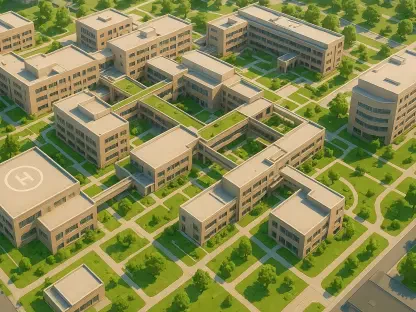
The campus architecture is meticulously designed to blend industrial utility with public accessibility, ensuring that the site serves as a vibrant community asset rather than an isolated clinical facility. A central component of the site plan is the co-location of a four-story pathology laboratory with a matching four-story educational building for Malcolm X College. These two structures are connected by a lushly landscaped shared plaza, which provides a welcoming green space for students, staff, and neighbors alike. To minimize the impact of institutional growth on the local residential fabric, the layout keeps vehicle movements largely within the campus boundaries. For instance, 54th Place is being widened to accommodate increased traffic flow while remaining open to the public, ensuring the campus integrates seamlessly into the existing neighborhood grid. This thoughtful approach to urban design reflects a commitment to creating an inclusive environment that encourages social interaction and community cohesion.
Beyond the academic and medical facilities, the campus includes significant public amenities designed to stimulate local economic activity and improve transit safety. A 630-space parking structure is planned to serve the campus and future developments, featuring a dedicated public transit waiting area to facilitate safer and more efficient use of the nearby Garfield Green Line station. This integration of transit-oriented development principles ensures that the campus is accessible to those traveling from across the city while prioritizing the safety of local commuters. Furthermore, the ground floor of the clinical laboratory will house a publicly accessible food hall. This space is specifically intended to host local and South Side-owned vendors, providing a platform for neighborhood entrepreneurs to thrive within the new institutional footprint. This strategy ensures that the economic benefits of the development extend to the small business community, creating a multi-layered impact on the local economy.
Economic Growth: Expanding Clinical Capabilities Locally
The development of the $171 million clinical laboratory serves as a major economic driver for Washington Park, consolidating pathology services that were previously scattered across various locations. By modernizing and expanding its diagnostic capabilities, UChicago Medicine expects to achieve a 17% increase in testing volume within the first year of operation. This expansion allows the health system to perform specialized molecular and genomic testing locally, rather than outsourcing these critical services to out-of-state facilities. Repatriating these tests not only improves patient care through significantly faster turnaround times but also strengthens the regional healthcare infrastructure. The facility is designed to handle high-volume diagnostic testing and complex analysis, positioning the South Side at the forefront of medical technology and ensuring that residents have access to state-of-the-art diagnostic services in their own backyard.
From a labor perspective, the laboratory will support approximately 550 professional roles, ranging from routine blood work technicians to complex genomics specialists for cancer trials. While a portion of these positions will transition from the existing Hyde Park campus, 200 of these roles are brand-new, entry-level opportunities specifically designed to be filled by graduates of the neighboring Malcolm X College programs. This creates a rare synergy where the employer and the training center are adjacent, allowing for immediate workforce integration. The presence of these high-quality jobs in Washington Park provides a stable economic anchor for the neighborhood, attracting daily workers who will support local businesses and contribute to the area’s overall vitality. By focusing on career paths that offer living wages and advancement opportunities, the project aims to foster long-term economic stability for hundreds of South Side families.
Educational Advancement: Bridging the Career Gap
Vocational Excellence: Specialized Training at Malcolm X College
The Malcolm X College South Campus is poised to become a premier educational destination, serving over 800 students annually with a curriculum specifically tailored to the needs of the modern healthcare industry. It will be the only community college in Chicago to offer comprehensive programs for both Medical Laboratory Assistants and Medical Laboratory Technicians, directly addressing a regional shortage of 500 qualified applicants per year. These programs are designed to be both accessible and efficient, allowing students to earn the credentials needed for stable, living-wage careers in as little as one or two years. By focusing on these high-demand technical roles, the college ensures that its graduates are not just entering the workforce, but are doing so in fields where their skills are desperately needed and highly valued. This strategic alignment between education and market demand is a key component of the project’s success.
The educational model employed at the new campus emphasizes hands-on learning and immediate professional exposure. Because the college is located adjacent to a working, state-of-the-art laboratory, students have the unique opportunity to complete clinical rotations and practical training within the same complex where they may eventually find permanent employment. This proximity lowers the geographic and economic barriers that have historically prevented many South Side residents from pursuing specialized healthcare careers. Beyond laboratory-specific training, the campus will also offer certifications for phlebotomists and community health workers, providing a diverse range of entry points into the medical profession. This comprehensive approach to vocational training ensures that a wide variety of students, regardless of their prior educational background, can find a pathway to a meaningful and sustainable career within the local healthcare ecosystem.
Community Planning: Ensuring Inclusive Neighborhood Growth
A defining characteristic of this development is its strict adherence to long-standing, community-led planning frameworks, such as the Washington Park Quality of Life Plan and the Green Healthy Neighborhoods Plan. Throughout the development process, institutional leaders have worked closely with local representatives and residents to ensure that the campus reflects the priorities and aspirations of the neighborhood. Alderman Pat Dowell has been a vocal advocate for the project, emphasizing the need for the campus to create clear educational and career pathways for students at nearby schools like Burke Elementary and Dyett High School. This focus on local youth ensures that the next generation of Washington Park residents is prepared to take advantage of the opportunities being created in their community. By integrating local school outreach into the campus mission, the partners are building a long-term pipeline of talent.
Feedback from community meetings has directly influenced several key aspects of the site design and operational strategy, particularly regarding environmental impact and economic inclusivity. Residents pushed for the inclusion of more green space and a retail strategy that prioritizes local vendors over national chains, leading to the creation of the landscaped plaza and the locally focused food hall. Furthermore, the project teams have committed to meeting rigorous city hiring and contracting goals to ensure that the “good jobs” generated during both the construction and operational phases are accessible to those who currently live in the neighborhood. This collaborative approach transformed the project from a standard institutional expansion into a genuine partnership for neighborhood revitalization. By respecting and incorporating local insights, the developers have built a project that enjoys broad community support and is deeply rooted in the social fabric of the South Side.
Project Implementation: Milestones and Future Outlook
Construction Strategy: Investing in Local Labor
The construction phase of the Washington Park healthcare campus serves as an immediate vehicle for local investment and workforce development. Two prominent South Side-based firms, BOWA Construction and UJAMAA Construction, are taking lead roles in the building process, ensuring that the physical transformation of the neighborhood is managed by companies with a deep stake in the community. The creation of the laboratory and parking structure alone is expected to generate approximately 1,380 temporary construction jobs. To maximize the local impact, the project teams have hosted a series of job fairs and outreach events aimed at recruiting tradespeople and laborers from the surrounding wards. This strategy ensures that the neighborhood’s workforce participates in the economic benefits of the project from day one, providing immediate financial injections into the local economy through payroll and sub-contracting opportunities.
This focus on local hiring aligns with a broader urban planning trend that utilizes major institutional “anchors” to stimulate development in residential corridors that have seen little investment for decades. By demonstrating that large-scale, complex infrastructure projects can be successfully executed using local labor and local firms, the Washington Park development provides a blueprint for future projects across the city. The construction process itself is being used as a training ground, with many of the temporary roles offering opportunities for apprenticeships and skill development in the building trades. This approach ensures that the project leaves behind more than just a new set of buildings; it leaves a more skilled and experienced local workforce. As the campus takes shape, it serves as a visible symbol of reinvestment and a catalyst for further retail and residential development along the Garfield Boulevard corridor.
Strategic Roadmap: Finalizing the Washington Park Vision
The path toward full campus activation involved navigating a complex landscape of regulatory approvals and environmental remediation efforts. Following the successful submission of the certificate of need to the Illinois Health Facilities and Services Review Board, the project moved into the final stages of site preparation. This included the demolition of obsolete structures and the remediation of former industrial sites to prepare the ground for new construction. With building applications expected to be finalized soon, the project remains on track for construction to begin in earnest by the spring of 2027. This timeline reflects a disciplined approach to development, ensuring that all environmental and structural requirements are met before the first foundations are poured. The projected opening in 2029 will mark the culmination of years of collaborative planning and the beginning of a new era for healthcare on the South Side.
The successful implementation of this integrated campus model provided a clear framework for how urban centers can address the dual challenges of healthcare shortages and economic disinvestment. It was clear that the key to the project’s durability was the early and consistent alignment between institutional goals and community needs. Future developments in similar urban contexts should look to the Washington Park initiative as a lesson in “inclusive growth,” where the expansion of a major medical system was strategically tied to the vocational success of the local residents. By prioritizing specialized certifications that led directly to local jobs, the project secured a sustainable workforce while fostering health equity. Stakeholders in other cities might consider adopting similar co-location strategies to maximize the social return on institutional investment, ensuring that large-scale developments act as true engines of neighborhood prosperity rather than isolated islands of activity.