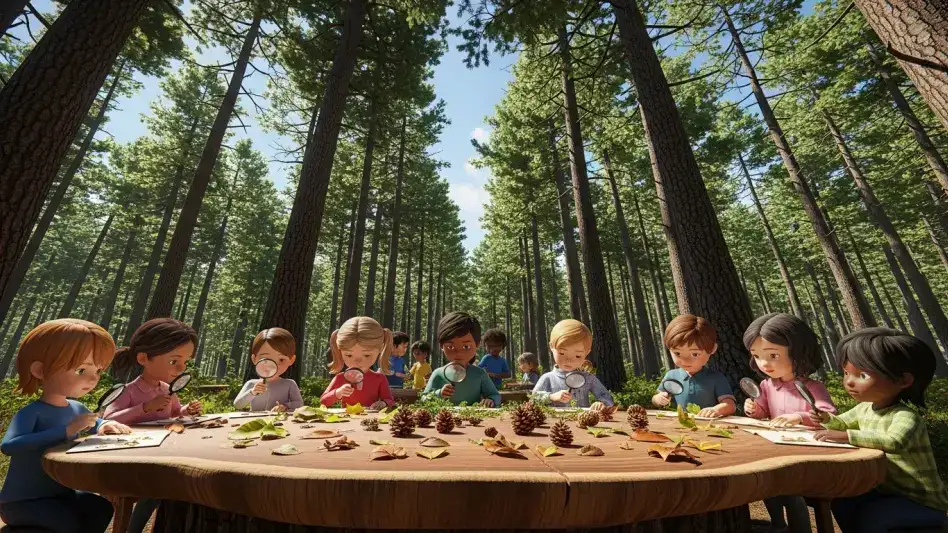

The rapid expansion of digital socialization and sedentary leisure activities has fundamentally altered the developmental landscape for children, leading to a significant rise in pediatric mental health concerns across the globe. While technological proficiency remains a vital skill in the modern economy, the biological requirement for sensory-rich, natural environments has not diminished, creating a stark disconnect between human evolution and contemporary lifestyles. Research conducted throughout the current decade suggests that children who lack regular access to green spaces exhibit higher levels of physiological stress and diminished cognitive endurance compared to those who engage in frequent outdoor play. This phenomenon, often referred to as nature deficit, correlates strongly with the prevalence of attention-related disorders and emotional instability. As academic pressures mount and urban density increases, the opportunity for unstructured exploration in the wilderness has become a luxury rather than a standard component of childhood, prompting a critical reevaluation of how physical environments influence the developing mind.
The Cognitive Benefits: Environmental Exposure
Attention Restoration: the Science of Focus
The mechanism through which natural environments improve mental clarity is largely explained by Attention Restoration Theory, which posits that urban settings deplete cognitive resources. Urban life requires “directed attention,” a draining process used to ignore distractions and focus on specific tasks, whereas natural settings invoke “soft fascination.” This effortless engagement allows the prefrontal cortex to recover from the exhaustion caused by constant digital notifications and structured school environments. Studies involving high-resolution neuroimaging have demonstrated that even brief periods of exposure to foliage, water, or diverse topographical features significantly lower the activity in the subgenual prefrontal cortex, an area associated with rumination and negative emotional processing. By providing a low-demand stimulus environment, the outdoors serves as a functional reset for the brain’s executive functions. This restoration is particularly crucial for students who struggle with concentration, as it offers a non-pharmacological method to enhance performance and reduce irritability.
Physiological Stability: Biological Responses to Greenery
Beyond cognitive recovery, the physical presence of organic matter and open air facilitates a measurable decrease in the body’s sympathetic nervous system activity. When children participate in outdoor activities, their cortisol levels—a primary biomarker for stress—drop more rapidly than during indoor physical exercise. The inhalation of phytoncides, which are antimicrobial allelochemicals released by trees, has been shown to boost the production of natural killer cells and enhance overall immune function, indirectly supporting mental health by improving physical resilience. Furthermore, the visual complexity of fractals found in nature, such as the patterns in tree branches or clouds, triggers a relaxing neural response that reduces autonomic arousal. This calming effect is essential for children navigating the social anxieties and performance pressures of the modern world. By engaging the senses through varying textures, temperatures, and sounds, the natural world provides a grounding experience that stabilizes the endocrine system and fosters a sense of safety and belonging that artificial environments struggle to replicate effectively.
Implementing Nature-Based Strategies: Life and Learning
Educational Evolution: the Rise of Forest Schools
The integration of environmental engagement into formal education has seen a significant shift toward the forest school model, where the landscape serves as the primary classroom. This pedagogical approach prioritizes experiential learning over rote memorization, encouraging children to assess risks and solve problems in a dynamic, unpredictable setting. By building shelters, identifying flora, or navigating uneven terrain, students develop a sense of self-efficacy and resilience that is difficult to cultivate within the safety-restricted confines of a traditional playground. These outdoor curricula have proven effective in reducing behavioral incidents and increasing student engagement, as the variety of sensory inputs caters to diverse learning styles. Educators have noted that children who participate in these programs demonstrate improved social collaboration and empathy, as the collaborative nature of outdoor tasks necessitates clear communication and mutual support. As schools adapt to the mental health needs of their students, the movement toward incorporating “green time” into the academic day has gained momentum as a foundational strategy for emotional development.
Strategic Integration: Practical Steps for Urban Development
The necessity of reconnecting children with the natural world prompted a decisive shift in how urban developers and public health officials approached neighborhood infrastructure. City planners prioritized the creation of “wild pockets” within metropolitan areas, ensuring that green spaces were not merely aesthetic additions but functional zones for unstructured play. Public policy transitioned toward mandating minimum outdoor hours within childcare facilities, reflecting a broader recognition of nature as a vital component of public health. Local governments invested in accessible transportation to regional parks, removing the socioeconomic barriers that previously limited wilderness exposure to affluent communities. These initiatives established a framework where the therapeutic benefits of the environment were integrated into the daily routine of every child, regardless of their geographic location. Stakeholders acknowledged that the mental health crisis required more than just clinical solutions; it demanded a return to the natural conditions that supported human growth for millennia. This collective action ensured that the next generation possessed the psychological resilience needed to thrive in an increasingly complex and digital world.