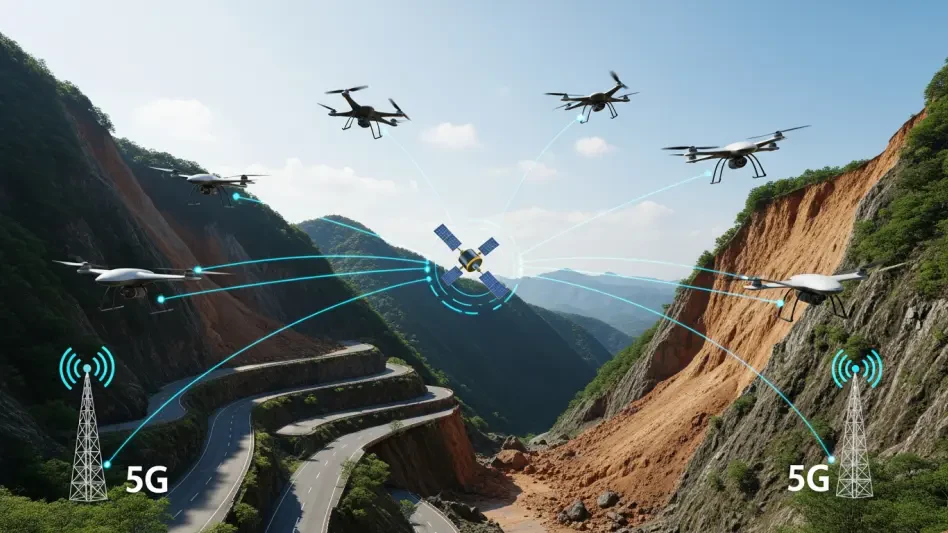

In the rugged mountainous terrain of northern Thailand, where monsoon-induced landslides frequently sever vital road links, the speed of medical intervention has historically been dictated by geography rather than clinical urgency. This geographical reality has often left remote communities vulnerable, creating a divide where those in urban centers receive immediate care while those in the highlands wait hours or days for essential medicine. However, the introduction of the SkyBridge platform has fundamentally altered this landscape, signaling a departure from traditional ground-based logistics. This initiative, born from a partnership between the Ministry of Public Health and True Corporation, represents more than a technological experiment; it is a strategic reconstruction of the national healthcare delivery system. By integrating autonomous drone technology into the public health infrastructure, the government has begun to neutralize the physical barriers of steep slopes and impassable roads. The platform serves as a vital artery, ensuring that life-saving supplies such as antivenom, blood products, and vaccines reach their destination with surgical precision. This shift reflects a commitment to leveraging 5G and satellite connectivity to solve long-standing humanitarian challenges. As these unmanned aerial vehicles become a common sight in the Thai skies, the focus has moved from merely surviving the golden hour to actively managing patient outcomes through a data-driven, airborne logistics network that prioritizes human life over topographic constraints.
Strategic Foundation and Collaborative Governance
The Priority: National Health Equity and Frontier Inclusion
The launch of the Medical Unmanned Aircraft Operations Project in mid-2026 within the borders of Nan Province acted as a profound tribute to the kingdom’s national priorities regarding equitable healthcare distribution. By centering the initial deployment in one of the most topographically challenging regions, the Ministry of Public Health sent a clear message that the benefits of high-speed connectivity and autonomous systems are not reserved solely for the residents of Bangkok or other metropolitan hubs. This project specifically targeted underserved frontier regions, where the disparity between state-of-the-art urban hospitals and isolated highland clinics has often been a matter of life and death. The strategic selection of Nan, with its winding roads and elevation changes, provided a rigorous testing ground to prove that no citizen should be marginalized by their zip code. The government’s initiative sought to bridge this historical gap by creating an aerial corridor that effectively brings the resources of a central hospital to the doorstep of a remote village. This inclusivity ensures that every community, regardless of how far it sits from a major highway, remains tethered to the national health safety net through a system that values human equity over the convenience of proximity.
Moving beyond mere inclusivity, this strategic shift acknowledges that traditional road-building and maintenance in highland areas are often insufficient for emergency medical needs. During the rainy season, these regions face constant threats of isolation, which previously forced healthcare workers to rely on expensive and weather-dependent helicopter flights or high-risk ground transport. The SkyBridge system offered a sustainable and scalable alternative that operates independently of the quality of ground infrastructure. By prioritizing these vulnerable areas, the government effectively shifted the focus of national health policy from a reactive model to a proactive, technology-led framework. This approach has empowered local health officials in remote districts to request and receive critical supplies in a fraction of the time previously required. The initiative demonstrated that when the state invests in high-tech solutions for its most remote citizens, it strengthens the resilience of the entire nation. By dismantling the barriers of distance, the program has fostered a new era of trust between the central government and the frontier populations, reinforcing the idea that quality medical care is an inherent right rather than a privilege of urban living.
Regulatory Synergy: Navigating the Air Traffic Landscape
The operational success of this massive drone network is rooted in an unprecedented level of multi-stakeholder cooperation that involves several key regulatory and technical bodies. To ensure that medical drones could fly safely alongside manned aircraft, the project brought together the Civil Aviation Authority of Thailand (CAAT), the National Broadcasting and Telecommunications Commission (NBTC), and AEROTHAI. This unified approach was essential for establishing a secure and organized framework that could manage unmanned traffic without compromising national airspace security. Each agency played a specific role: CAAT defined the safety regulations and flight envelopes, NBTC managed the communication frequencies necessary for remote control and data transmission, and AEROTHAI integrated these flights into the broader air traffic control system. This collaborative governance ensured that the SkyBridge platform was not an isolated project but a permanent and reliable component of the national aviation infrastructure. By aligning the interests of the private sector with government regulatory standards, the initiative created a stable environment where technology could flourish under strict safety protocols, preventing the chaotic deployment of autonomous systems.
This high level of institutional coordination also addressed the complex issues of digital security and spectrum management, which are often the primary hurdles for large-scale drone operations. The use of True Corporation’s 5G network allowed for low-latency communication and real-time data streaming, which was monitored by the NBTC to prevent interference with other critical communication channels. Meanwhile, AEROTHAI’s involvement meant that medical drone routes were pre-cleared and monitored just like commercial airline flights, reducing the risk of mid-air collisions. This multi-agency synergy was not just about technology but about creating a new blueprint for governance in the age of autonomous systems. It allowed the Ministry of Public Health to focus on clinical outcomes while knowing that the logistical backbone was managed by experts in aviation and telecommunications. This structured framework provided the necessary confidence for local health workers to rely on the system for daily operations. The success of this regulatory model has set a precedent for how other industries might eventually integrate unmanned systems into the national economy, proving that a unified government response can overcome the technical and legal complexities of the modern digital era.
Technical Architecture and Operational Impact
Technical Architecture: The Intelligence Behind the SkyBridge
At the heart of this logistics revolution is the SkyBridge platform, which serves as the centralized brain for managing complex medical missions across diverse geographies. This platform is not limited to a single type of aircraft; instead, it is an integrated ecosystem capable of controlling various drone models, from small multi-rotors for local deliveries to larger fixed-wing craft for long-distance transport. Utilizing advanced artificial intelligence, the platform automates the most difficult aspects of flight planning, including terrain avoidance and optimized route selection. This AI-driven architecture allows health officials to initiate missions with minimal technical training, as the system handles the complexities of navigation and payload balancing. Real-time flight tracking provides a transparent view of every mission, allowing operators at the central command center to monitor the drone’s progress and intervene if environmental conditions change. By centralizing the management of these assets, SkyBridge ensures that every medical delivery is executed with a level of precision that exceeds manual human piloting, reducing the likelihood of errors during critical missions.
The technical robustness of the platform is further enhanced by its ability to withstand Thailand’s specific environmental challenges, which range from extreme tropical heat to sudden torrential downpours. The engineers behind SkyBridge implemented a fully auditable digital trail for every delivery, which is a mandatory requirement for transporting sensitive items such as biopsy samples or temperature-sensitive vaccines. The platform integrates IoT sensors within the drone’s cargo hold to maintain a constant cold chain, providing real-time data to the receiving health center regarding the integrity of the supplies. This ensures that when a vaccine arrives at a mountain clinic, the local doctor has immediate digital verification that it remained within the required temperature range throughout the flight. Furthermore, the platform’s resilience against wind turbulence and high humidity makes it a dependable tool in a climate where other electronic systems might fail. This level of technical sophistication transforms the drone from a simple delivery tool into a sophisticated mobile laboratory and logistics hub, capable of maintaining the highest standards of medical safety and efficacy while in transit through some of the country’s most hostile environments.
Operational Success: Analyzing the Pua Model Results
The true test of the SkyBridge platform occurred through the implementation of the Pua Model in Nan Province, where the system was subjected to rigorous routine and emergency scenarios. In routine care missions, such as delivering monthly medications to elderly patients with chronic conditions, the drones successfully reduced delivery times by 50% compared to traditional motorcycle couriers. This improvement meant that patients who previously had to travel all day to reach a hospital could now receive their prescriptions at a local community health center. More impressively, the platform demonstrated its life-saving potential during simulated disaster responses where road access was completely blocked by landslides. In these scenarios, the drones completed their missions 70% faster than any ground vehicle, turning a dangerous two-hour mountain journey into a swift 35-minute flight. These statistics were not just theoretical metrics but represented a tangible shift in the speed of care, directly impacting the survival rates of patients in critical condition. The Pua Model proved that autonomous aviation could reliably replace ground logistics in areas where time is the most critical factor.
Building on the data gathered from the Pua Model, the Ministry of Public Health identified the potential to expand this network to ten additional remote locations across Thailand. The operational results showed that by automating the documentation process and removing the variables of traffic and road conditions, healthcare workers were able to spend more time on patient diagnostics rather than administrative or logistical tasks. The success of the pilot also highlighted the cost-effectiveness of the system; while the initial investment in drone technology was significant, the long-term savings in fuel, vehicle maintenance, and avoided medical complications justified the expenditure. This transition toward an autonomous, data-driven network positioned Thailand as a regional pioneer in the application of fourth-industrial-revolution technologies to public health. The lessons learned in Nan provided a comprehensive guidebook for scaling the operations, ensuring that future deployments could be launched with greater efficiency. By proving that drones could operate as a routine part of the healthcare system, the project paved the way for a national aerial logistics network that would eventually cover the country’s most inaccessible regions.
Strategic Evolution: Expanding the Reach of Aerial Logistics
The implementation of the SkyBridge platform effectively redefined the boundaries of medical accessibility across the kingdom’s most challenging terrains. By the time the initial rollout in Nan Province concluded, the integration of autonomous flight systems had successfully reduced the dependency on aging road infrastructure and high-risk ground transport. This transition proved that the digital divide could be bridged through purposeful public-private collaboration and a steadfast commitment to technological sovereignty. The initiative established a robust precedent for other nations facing similar logistical hurdles, showing that the marriage of 5G networks and unmanned aviation was a viable solution for complex public health crises. Health officials observed a marked stabilization in the supply chain for temperature-sensitive medications, which previously suffered from high spoilage rates during long mountain transits. The operational data gathered during this phase served as a comprehensive guide for the expansion into ten more provinces, ensuring that the lessons learned from the pilot were embedded into the national healthcare strategy.
Ultimately, the project moved the needle from theoretical innovation to an indispensable utility, transforming how medical professionals conceptualized the delivery of care to the most remote corners of the nation. The success of the Pua Model dictated that the next phase of development focused on increasing the payload capacity of the drones and further automating the landing and recharging stations. These advancements were identified as critical for supporting larger hospitals and handling more frequent delivery cycles during peak health crises. As the system matured, it fostered a new generation of skilled operators and technicians who specialized in medical aviation, creating a new economic niche within the country’s technology sector. The government continued to refine the regulatory framework, ensuring that the aerial corridors remained exclusive for emergency services, thereby maintaining the speed and safety of the network. This comprehensive overhaul of the logistics chain demonstrated that the future of healthcare was not just about the quality of the hospital, but about the speed and reliability of the path that led to the patient.