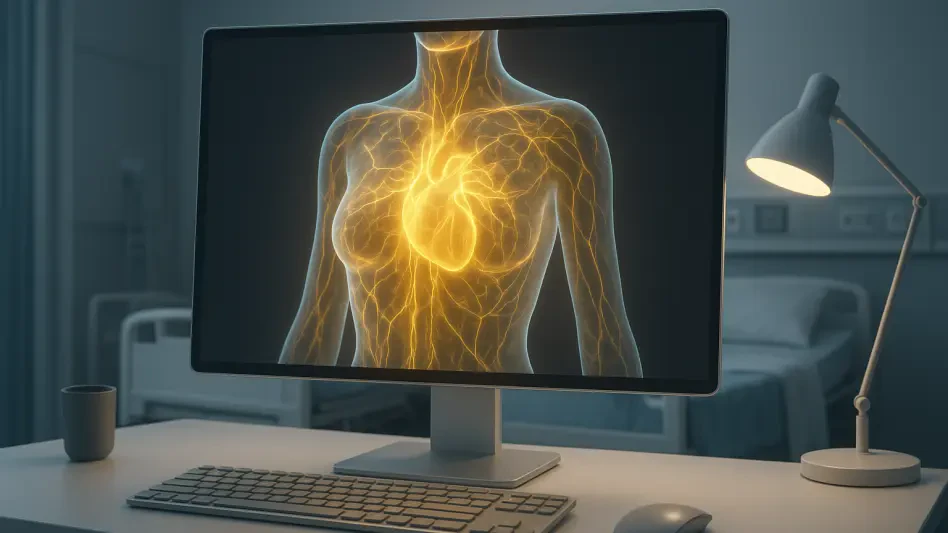

Current radiological practices involving double-reading by human experts could be significantly enhanced by AI tools capable of recognizing pre-diagnostic signs of cellular changes. This possibility stems from a deep analysis of historical mammography data, where advanced algorithms have demonstrated an uncanny ability to spot anomalies long before they manifest as clinically detectable tumors. In a comprehensive investigation involving the VAI-B database in Sweden, researchers scrutinized approximately 89,000 mammograms from over 31,000 patients. By applying commercial AI-driven computer-aided detection systems to images captured previously, the study revealed that these digital observers could flag suspicious patterns years in advance. This capability suggests a fundamental shift from reactive diagnosis to proactive surveillance, potentially altering the survival trajectory for thousands of women. The ability to peer into the biological future of a patient represents a milestone in oncological screening, where the subtle interplay of pixel density and structural symmetry provides clues that elude even the most seasoned human eyes.
The Mechanics: Quantifying Risk Through Algorithms
The efficacy of these AI systems is rooted in their high specificity and the generation of tumor prediction scores that correlate with the likelihood of future malignancy. In the Swedish study, at a specificity level of 90%, the AI models successfully identified nearly 20% of breast cancer cases up to six years before they were officially diagnosed by traditional medical means. This predictive accuracy showed a marked increase as the timeframe narrowed; when the systems analyzed mammograms taken only two years prior to diagnosis, they flagged nearly 40% of the eventual cancer cases. These findings highlight a critical distinction between traditional radiology, which seeks to identify existing masses, and predictive AI, which identifies the fertile ground or early precursors of disease. The high scores assigned to future cancer cases contrasted sharply with the significantly lower scores given to women who remained healthy, demonstrating a robust ability to stratify risk. Such precision suggests that the software is not merely guessing but is recognizing specific, recurring biological markers that precede visible tumor formation.
This technological leap facilitates a transition toward a more personalized and proactive model of public health, moving away from rigid, age-based screening schedules. Instead of treating every patient with a standard biennial or annual mammogram, AI-generated scores allow healthcare providers to implement closer monitoring for those identified as high-risk. Research coordinators emphasized that approximately one-fifth of breast cancer instances show detectable signs through AI long before current clinical protocols would trigger an alarm. By augmenting the traditional double-reading process, where two radiologists independently review images, with these automated insights, the medical community can create a safety net that catches aggressive or slow-growing cancers earlier. This approach naturally leads to a scenario where resources are allocated more efficiently, focusing intense diagnostic scrutiny on individuals who exhibit these early, high-risk digital signatures. Moreover, this methodology reduces the anxiety associated with late-stage discoveries by offering a window for intervention during the earliest phases of cellular transition.
Clinical Integration: Navigating Expert Perspectives
Despite the statistical promise of these findings, the integration of predictive AI into daily clinical practice requires a balanced perspective that acknowledges both potential and limitations. Medical experts and directors of oncology urge a degree of professional caution regarding the immediate application of these retrospective results. Identifying patterns that correlate with future cancer is a significant breakthrough, but it does not equate to a confirmed diagnosis of an active disease state in the present. The challenge lies in determining the appropriate clinical response when an AI flags a pre-diagnostic sign in a mammogram that otherwise appears normal to human eyes. Over-diagnosis and unnecessary biopsies are valid concerns that must be addressed through rigorous prospective trials starting from 2026. The goal is to ensure that these predictive scores lead to improved health outcomes rather than just increasing the volume of medical interventions. Consequently, the medical community is tasked with defining new protocols for managing patients who fall into this high-risk AI category but do not yet have visible lesions.
The synthesis of this longitudinal data pointed toward a future where artificial intelligence acted as a sophisticated early-warning system within the broader framework of preventative medicine. Moving forward, the most logical next step involved the initiation of large-scale, prospective clinical trials designed to validate these retrospective findings in real-time environments. Stakeholders in the healthcare sector prioritized the development of clear ethical and operational guidelines to govern how AI-driven risk scores were communicated to patients. Furthermore, researchers focused on integrating these radiological AI tools with other diagnostic data, such as genetic markers and lifestyle factors, to create a holistic risk profile. The evolution of this technology required a commitment to scientific rigor, ensuring that every algorithmic advancement translated into a tangible reduction in breast cancer mortality. By embracing a collaborative model between human expertise and machine precision, the medical field moved closer to a paradigm where cancer was not just treated, but anticipated and intercepted. These efforts solidified the role of AI as an indispensable partner in the ongoing effort to modernize oncological care.