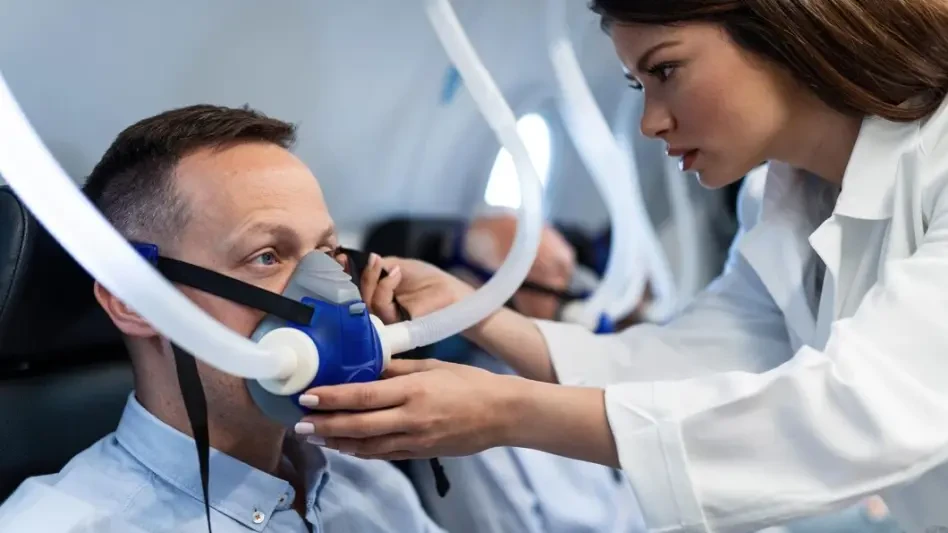

A gleaming cylinder of compressed oxygen stands as a powerful symbol of modern medicine, yet its potential to save a life is entirely contingent on a complex, often invisible, network of human expertise. While the availability of medical oxygen is a critical first step, the global health community is increasingly recognizing that the true measure of a respiratory care system lies not in its inventory of equipment, but in the capabilities of the people who operate it. The journey from a simple oxygen tank to effective patient care is paved with knowledge, skill, and a robust infrastructure designed to support the frontline health worker. This report examines the systemic shift from supplying hardware to building human capacity, analyzing the strategies that are successfully closing the gap between oxygen availability and its lifesaving application.
From Cold Steel to Warm Hands: Mapping the Global Respiratory Care Ecosystem
The global conversation around medical oxygen delivery has matured significantly. The focus is rapidly shifting away from a purely logistical challenge of equipment supply and toward a more nuanced understanding of systemic capacity building. This new paradigm acknowledges that a resilient respiratory care ecosystem is a complex interplay of technology, policy, and, most importantly, skilled human resources. It represents a move from temporary aid to the development of permanent, self-sustaining health infrastructure.
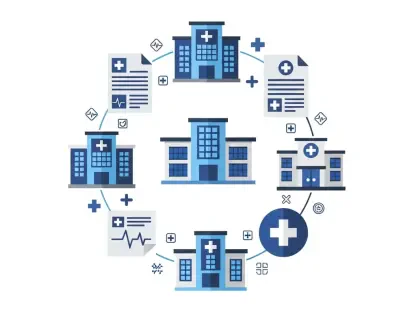
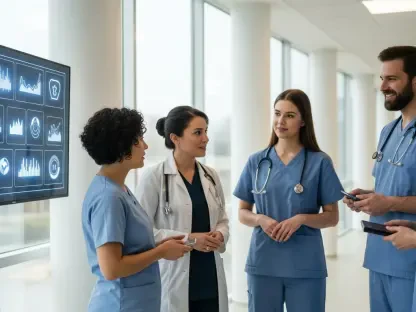
At the heart of this ecosystem are a diverse group of stakeholders whose collaboration is essential for success. International health organizations often act as catalysts, providing technical expertise and initial funding. However, true progress is driven by national ministries of health, which set policy and integrate new standards into the national framework. Academic institutions and vocational training authorities play a crucial role in formalizing education, while frontline health workers and biomedical engineers are the ultimate implementers, translating training into improved patient outcomes.
The importance of these integrated systems is most pronounced in low- and middle-income countries (LMICs), which bear a disproportionate burden of death from respiratory illnesses like pneumonia, especially among newborns and children. In these settings, a resilient infrastructure is not a luxury but a fundamental necessity. This resilience is built on two pillars: the technological components, such as oxygen concentrators and patient monitors, and the human-resource components, including trained clinicians who can safely administer oxygen and technicians who can ensure the machinery remains functional long after its initial installation.
The Human Element: Current Trends and Future Projections in Skill Development
Beyond the Cylinder: The Rise of Skill Centric Training Strategies
The global health sector is undergoing a decisive transition from short-term equipment donations to sustainable, education-based interventions that empower local health systems. This evolution is rooted in the understanding that without skilled personnel, even the most advanced medical device is rendered ineffective. The current trend emphasizes building lasting capacity by institutionalizing knowledge, ensuring that skills are not just transferred for a single project but are embedded within a country’s own educational and professional structures for generations to come.
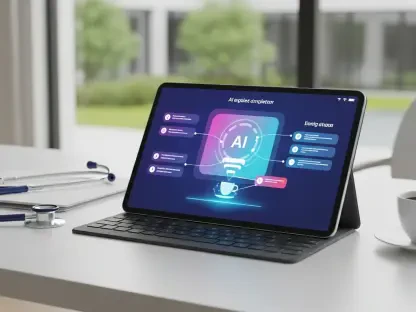
Three key trends define this new approach to capacity building. First is the institutionalization of national curricula, where standardized training on oxygen therapy is integrated into university and college programs. Second is the establishment of hands-on centers of excellence, which serve as regional hubs for immersive, practical training using simulation and real-world equipment. Finally, digital eLearning platforms are being leveraged to scale access to high-quality education, overcoming geographical barriers to reach thousands of health workers in remote and underserved areas.
This multifaceted approach is yielding tangible results. Across Africa and Asia, blended learning models are proving particularly effective. In the Democratic Republic of the Congo, for instance, a new university curriculum on oxygen delivery has been created from the ground up. In Malawi, a national training program has been adapted into an online module, reaching over 14,000 learners. These examples highlight a flexible and powerful strategy: combining the rigor of institutionalized education with the scalability of digital technology to create a new generation of competent and confident respiratory care providers.
Measuring Lives Saved: Performance Metrics and Growth Horizons
The impact of this skill-centric approach is quantifiable and profound. Over a recent three-year span, initiatives focused on integrated training have equipped more than 17,800 health workers across over 500 facilities with essential respiratory care skills. These numbers translate directly into measurable improvements in patient outcomes. In India, a telemedicine initiative supporting special newborn care units has demonstrated a nearly 50 percent reduction in newborn mortality in one district by providing remote mentorship and expert consultation, proving that upskilling providers saves lives.
The future growth of these programs appears strong, fueled by the scalability of eLearning and telemedicine. As digital infrastructure improves globally, online training modules and remote mentorship platforms offer a cost-effective method for reaching a near-limitless audience of health workers. This allows for continuous professional development to become the norm rather than the exception, even in the most resource-constrained environments. Projections indicate that these technology-driven solutions will be central to achieving widespread competency in respiratory care over the next decade.
Ultimately, sustained investment in training does more than address current health needs; it fortifies national health systems against future crises. A well-trained, adaptable healthcare workforce is a nation’s most valuable asset in public health. By building a deep reservoir of local expertise in critical areas like oxygen therapy and equipment maintenance, countries are better prepared to manage routine patient loads and respond effectively to unexpected surges in demand, such as those seen during a pandemic.
Closing the Critical Gap: Overcoming Barriers to Effective Oxygen Delivery
The most significant challenge in global respiratory care remains the critical gap between the availability of oxygen and the presence of skilled personnel to administer it safely and maintain the necessary equipment. Hospitals may receive state-of-the-art oxygen concentrators, but without clinicians trained to titrate dosage for a premature newborn or engineers who can diagnose a faulty compressor, these devices fail to deliver on their lifesaving promise. This disconnect between hardware and humanware is the central barrier to effective oxygen delivery.
This challenge is compounded by significant logistical hurdles. Training a large and geographically dispersed health workforce requires a strategy that can overcome distance and variability in local infrastructure. Furthermore, ensuring the long-term maintenance of complex machinery in remote facilities presents an ongoing problem. A one-time training session is insufficient; a continuous system of support, mentorship, and skills refreshment is needed to ensure that knowledge is retained and applied correctly over time.
To address these barriers, implementing partners are deploying a trio of strategic solutions. The development of standardized national curricula creates a uniform benchmark for quality and ensures that all health workers receive a consistent and validated education. The creation of centralized training hubs, or centers of excellence, provides a dedicated space for advanced, hands-on learning that may not be possible at smaller, local facilities. Finally, technology is being leveraged to bridge distances through remote mentorship, virtual technical assistance, and online continuing education, creating a sustainable support network for frontline providers.
Building on Bedrock: How Policy and Partnerships Forge Lasting Change
The long-term success of any health system strengthening initiative depends on a solid foundation of supportive policies and robust partnerships. Effective collaboration between non-governmental organizations, government bodies, and local educational authorities is non-negotiable. When ministries of health and vocational training authorities are involved from the outset, new training programs are more likely to align with national priorities and be integrated into existing structures, paving the way for sustainability.
A key mechanism for ensuring that training translates into lasting practice is its formalization within national systems. This can take several forms, including the creation of official national certifications or skills awards that recognize and validate a provider’s competency in oxygen therapy and equipment maintenance. Integrating these training modules into mandatory continuing medical education (CME) requirements for licensure further embeds these skills into the professional lifecycle of every health worker, shifting the expectation from a one-time workshop to a career-long standard of care.
Ultimately, this high-level regulatory buy-in and the cultivation of public-private partnerships are what guarantee the long-term viability of these programs. When a government officially adopts a curriculum or a ministry of health takes full ownership of a national training center, it signals a critical transition from an externally supported project to a sovereign national asset. This ownership ensures that the programs will continue to be funded, staffed, and expanded using domestic resources, securing a legacy of improved respiratory care for years to come.
The Road Ahead: Scaling Innovation and Ensuring Local Sovereignty
The future of respiratory care is defined by the deliberate transition from externally supported projects to nationally owned and operated systems. The ultimate goal is to foster local sovereignty, where countries possess the internal capacity to train, manage, and innovate within their own health systems. This shift marks the final phase of sustainable development, where international partners evolve from direct implementers to technical advisors, supporting a country’s own experts in leading the way.
Emerging technologies are set to play a transformative role in accelerating this transition. Advanced telemedicine models, such as tele-SNCUs that connect rural clinics with urban specialists, and highly accessible eLearning platforms are disrupting traditional, centralized training models. These innovations are democratizing access to specialized knowledge, allowing for continuous, on-demand learning and mentorship that is no longer constrained by geography. This technological leap will be critical in reaching the last mile and ensuring equitable access to high-quality care.
Looking forward, future growth will be centered on expanding into more specialized areas of care and building a self-reliant talent pipeline. The foundational skills in basic oxygen delivery create a platform upon which more advanced competencies, such as neonatal and adult critical care, can be built. Simultaneously, a concerted focus on training a new cadre of skilled biomedical engineers and technicians is essential to ensure that the technological infrastructure of respiratory care is as sustainable as the clinical expertise.
The Final Diagnosis: Why Investing in People Is the Ultimate Prescription
The core finding of this analysis was clear: the transformation of inert oxygen tanks into dynamic, lifesaving care depended almost entirely on a deliberate and sustained investment in the knowledge and skills of healthcare providers. Equipment alone was never the solution; the critical catalyst was the empowered clinician and the proficient technician.
The documented success of a multifaceted, human-centered approach to health system strengthening offered a proven blueprint. Initiatives that integrated curriculum development, hands-on training, and digital learning demonstrated measurable improvements in both provider competency and patient outcomes across diverse settings. This strategy proved to be not only effective but also adaptable and scalable.
It became evident that for global health funders, policymakers, and implementing partners, the most strategic path forward was to prioritize these integrated training models. Fostering local ownership and building human capacity were not merely components of a successful project; they were the essential conditions for creating enduring and resilient health systems capable of meeting the needs of their populations today and in the future.