
Revolutionizing Healthcare Education to Combat a Growing National Crisis
The modern medical landscape faces an unprecedented demographic shift as the demand for skilled practitioners consistently outpaces the rate of academic degree conferral. The current state of the United States healthcare workforce reveals a widening provider gap that threatens long-term patient safety and accessibility across nearly every zip code. Consequently, academic institutions have emerged as the primary stabilizers of this fragile medical infrastructure, shifting their focus toward rapid but high-quality professional development.
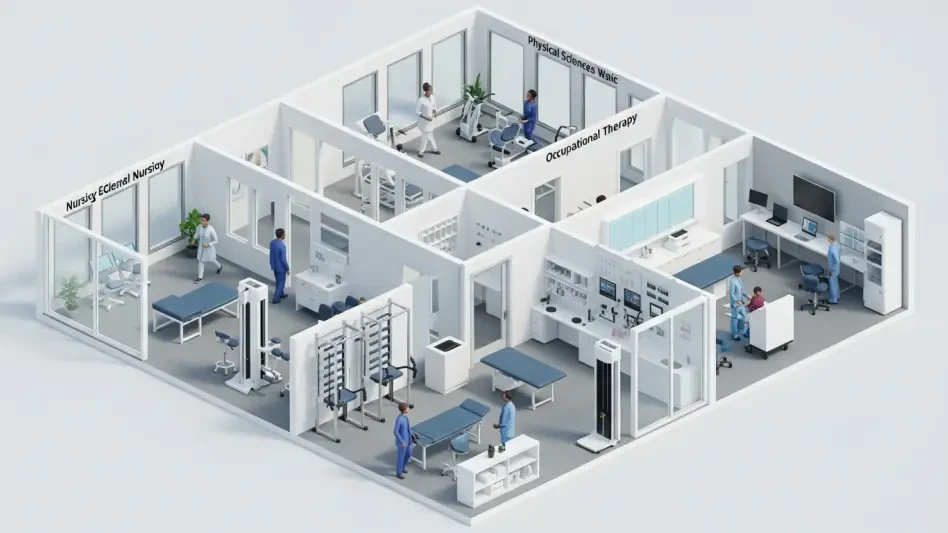
Texas Woman’s University recently addressed this national urgency by launching a 107 million dollar Health Sciences Center in Denton. This massive investment represents a strategic effort to integrate nursing, physical therapy, and occupational therapy into a unified pedagogical ecosystem. By combining these disciplines under one roof, the university aims to streamline the transition from classroom to clinic, ensuring that the next generation of providers can handle the multifaceted demands of modern healthcare.
Pioneering Trends in Simulation-Based Medical Training
The medical education industry is witnessing a massive transition toward multimodal and immersive learning environments that replace traditional lectures with hands-on experience. High-fidelity mannequins now serve as the centerpiece of this shift, offering realistic physiological traits such as detectable heartbeats and lung sounds. These mannequins are often multilingual, allowing students to practice patient-provider communication in a way that mirrors the diverse demographic reality of contemporary clinical settings.
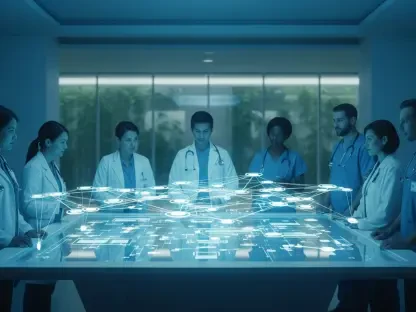
Virtual reality also plays a vital role in replicating high-pressure environments like disaster zones or neonatal intensive care units. These digital settings allow students to practice life-saving interventions without risking patient safety. Moreover, interdisciplinary collaboration is fostered through shared digital spaces where nursing and therapy students must coordinate care in real time, mimicking the collaborative nature of a functional hospital ward.
Data-Driven Projections for the Texas Healthcare Labor Market
From 2026 to 2036, Texas expects a significant surge in the demand for nursing and therapy graduates to support its growing population. Performance indicators from the new center suggest that students who engage with high-tech simulation show higher levels of clinical competency and emotional readiness compared to those in traditional programs. These data points are critical for state planners who view specialized education as a primary tool for economic and social stability.
Furthermore, these technological advancements are projected to reduce long-term turnover rates among new graduates. By providing a realistic training ground that mimics the equipment and pressure of a modern hospital, the university mitigates the professional burnout often caused by lack of preparation. This forward-looking perspective positions the institution as a vital contributor to the state labor market, ensuring a steady pipeline of resilient healthcare professionals.
Overcoming Structural and Clinical Obstacles in Provider Readiness
One of the most significant challenges in modern medical training is the severe shortage of clinical placement sites within traditional hospital settings. As medical facilities reach capacity, students often struggle to find the hours necessary for graduation and licensing. The Health Sciences Center addresses this bottleneck by providing high-fidelity simulation labs that serve as approved substitutes for certain clinical hours, allowing for a more consistent and controlled educational experience.
The center also focuses on mitigating the reality shock faced by new graduates entering specialized fields such as labor and delivery or neonatal care. By utilizing centralized simulation control rooms, faculty can standardize assessment across various disciplines, ensuring every student meets a baseline of technical excellence. This approach is particularly effective for preparing clinicians to work in rural and underserved communities where resources are often limited and versatility is essential.
Navigating Regulatory Standards and Accreditation in Digital Health Education
Ensuring compliance with national healthcare education standards and licensing board requirements is a complex endeavor in a digital-first environment. The center operates under strict protocols to ensure that every simulation-based hour meets the rigorous benchmarks set by accrediting bodies. This alignment is necessary to guarantee that students remain eligible for national certification while benefiting from the latest technological tools.
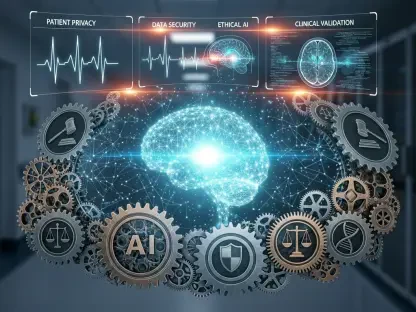
Security measures and data integrity are also prioritized within the centralized lab monitoring systems. As student performances are recorded and analyzed, maintaining the privacy of these educational records is paramount. By aligning the high-tech curriculum with evolving national healthcare safety protocols, the university ensures that its graduates are not only technically proficient but also well-versed in the ethical and regulatory demands of the industry.
The Future of Care: Integrating Innovation with Human-Centered Practice
Future growth in healthcare education will likely involve the integration of AI-driven patient scenarios that adapt to a student’s specific decision-making process. These adaptive systems can simulate complex, evolving medical crises, requiring students to pivot their strategies in real time. Additionally, remote telehealth training is becoming a core component of the curriculum, reflecting the industry-wide shift toward digital consultations and remote patient monitoring.
The success of these programs relies on a high-tech, high-touch philosophy that keeps the patient at the center of every technological intervention. Market disruptors, such as mobile simulation units and expanded virtual reality medical libraries, are expected to further democratize access to elite training. The evolution of the 21st-century clinician requires a balance between being a technical specialist and an empathetic practitioner, a duality that is reinforced through sophisticated simulation.
Strengthening the Healthcare Pipeline Through Technological Excellence
Texas Woman’s University solidified its role as a cornerstone for the state’s medical infrastructure by prioritizing advanced simulation. This strategic investment allowed the institution to address the provider gap with a scalable and highly effective academic model. Leaders in the field noted that the integration of virtual reality and high-fidelity mannequins provided students with a level of clinical mastery that traditional methods could not replicate.
The long-term impact of the Health Sciences Center focused on workforce retention and the stabilization of rural healthcare networks. Stakeholders recommended continued investment in these simulation-based models to ensure that clinical readiness kept pace with technological innovation. This approach successfully bridged the gap between academic theory and the practical demands of the medical field, providing a sustainable solution to a national crisis.