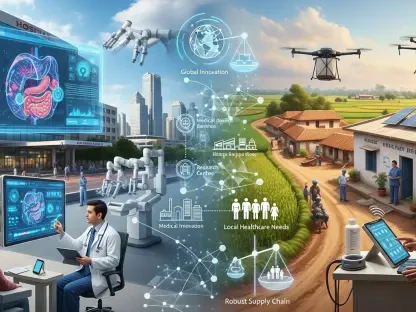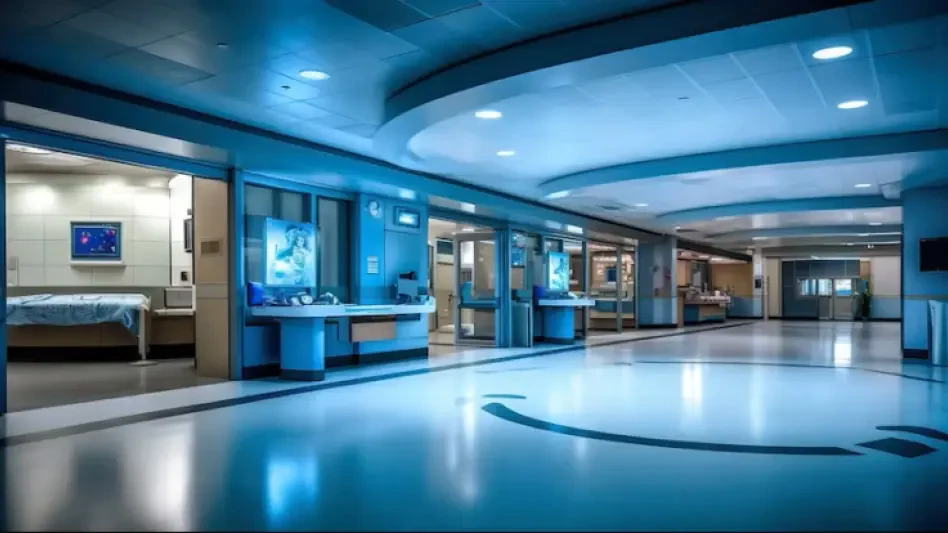

A wave of multi-million-dollar construction projects is reshaping public university campuses into the front lines of America’s response to a critical healthcare workforce shortage. Across the country, institutions are moving beyond minor renovations and embarking on ambitious, large-scale initiatives to build the next generation of healthcare education facilities. This trend represents a fundamental re-evaluation of how future medical professionals are trained, driven by the dual pressures of replacing outdated infrastructure and meeting the escalating demand for skilled practitioners. These new buildings are not merely academic halls but are being designed as sophisticated, technology-rich ecosystems that integrate learning, advanced simulation, and community health services under one roof.
This national construction boom is creating a significant and sustained pipeline of opportunities for the architecture, engineering, and construction industries. As public sector owners funnel hundreds of millions of dollars into these complex projects, they are signaling a long-term commitment to modernizing the nation’s healthcare education infrastructure. The result is the emergence of a new, hybrid asset class that blends the specifications of advanced medical centers with the collaborative environments of modern academic institutions, presenting both unique challenges and substantial rewards for firms positioned to deliver on these complex requirements.
A National Blueprint for Healthcare Education’s Future
The current wave of development marks a definitive paradigm shift away from traditional, siloed academic buildings toward fully integrated health ecosystems. The model of the past, characterized by separate lecture halls, basic labs, and off-site clinical rotations, is being replaced by consolidated centers that foster interdisciplinary collaboration and immersive learning. This new approach physically co-locates programs in nursing, medicine, and allied health, creating an environment that mirrors the team-based reality of modern healthcare delivery.
This widespread investment is a direct and strategic response to a well-documented national shortage of healthcare workers, a problem exacerbated by an aging population and workforce retirements. State governments, recognizing the threat this poses to public health and economic stability, are allocating significant capital funding to public universities and community colleges. These institutions are seen as the primary engines for training and retaining the next generation of nurses, doctors, and technicians. By building state-of-the-art facilities, states aim not only to expand enrollment capacity but also to attract top-tier students and faculty, thereby strengthening regional healthcare networks and ensuring a resilient workforce for decades to come.
The key players in this movement form a collaborative triad of public universities, community colleges, and state-level governing bodies. Universities are launching flagship projects to expand their medical and nursing schools, while community colleges are upgrading their facilities to meet the high demand for allied health professionals like surgical technologists and paramedics. State governments provide the critical funding and legislative support, framing these projects as essential public infrastructure investments. The significance of these modern facilities extends beyond the campus, as they become vital regional assets that improve local healthcare access, support economic growth through construction and staffing, and ultimately enhance the quality of life for the entire community.
Catalysts and Projections Shaping Campus Development
From Lecture Halls to Lifelike Labs: The Experiential Learning Revolution
The core driver behind the design of these new facilities is a pedagogical pivot toward high-fidelity simulation and hands-on clinical training. Educational leaders are moving away from passive, lecture-based instruction and embracing experiential learning that prepares students for the high-stakes, fast-paced nature of patient care. These new buildings are anchored by extensive simulation centers that meticulously replicate real-world clinical settings, from fully equipped operating theaters and emergency rooms to intensive care units and home health environments. Here, students can practice complex procedures and develop critical decision-making skills on advanced mannequins in a controlled, risk-free setting.
This revolution in learning is further amplified by the integration of emerging technologies like virtual and augmented reality. Institutions are dedicating space for VR and AR labs where students can visualize complex anatomical structures, practice surgical techniques in a digital environment, or simulate diverse patient scenarios that would be difficult to replicate physically. Furthermore, a growing trend involves merging academic instruction with direct community health services. Several planned facilities include outpatient clinics that will offer primary or urgent care to the public, providing students with invaluable real-world patient interaction under faculty supervision while simultaneously addressing local healthcare needs.
Ultimately, this educational evolution necessitates the replacement of obsolete infrastructure. Many existing health science buildings, constructed decades ago, lack the flexible space, robust IT infrastructure, and specialized mechanical systems required to support modern simulation technology and interdisciplinary collaboration. Consequently, universities are investing in new, adaptable environments designed to be tech-rich from the ground up. These facilities are planned with an eye toward future innovation, ensuring they can accommodate the next wave of educational and medical technologies as they emerge.
The Billion-Dollar Bet: Sizing Up the Campus Healthcare Construction Boom
The scale of this campus healthcare construction boom is substantial, with flagship projects commanding investments in the tens and even hundreds of millions of dollars. The University of New Mexico, for example, is advancing a monumental $600 million project to construct a new School of Medicine facility. Slated to begin construction next year, this initiative will replace an aging complex with modern classrooms and upgraded clinical training environments, including extensive simulation suites. Similarly, Austin Community College in Texas is planning a $100 million Health Sciences and Nursing facility, a central hub for all its health programs, with construction anticipated to commence this year.
This surge in high-value projects is creating a sustained procurement pipeline for the architecture, engineering, and construction sectors that is projected to last for the better part of a decade. Kentucky State University has approved a $54 million Health Sciences Center scheduled to break ground late this year or early next year, while Northern Arizona University is moving forward with a $50 million nursing building set for an August 2027 construction start. In New York, the University at Buffalo is preparing to issue design solicitations for a $34 million system-wide Nursing Simulation Center of Excellence, with construction planned for the 2027–2028 academic year.
These developments are also forecasting significant growth in demand for specialized supporting industries. The construction of these facilities will drive a parallel need for advanced medical training equipment, from high-fidelity patient simulators and clinical headwalls to mock-imaging devices and surgical technology tools. Concurrently, the emphasis on digital learning is creating a burgeoning market for educational software, virtual reality simulation platforms, and integrated audiovisual systems designed for both instruction and clinical debriefing.
Navigating the Hurdles of High-Tech Construction and Integration
Despite the clear demand, bringing these multi-million-dollar facilities from concept to reality is fraught with financial complexities and funding challenges. Securing capital appropriations of this magnitude often requires a multi-year effort involving legislative approval and alignment with state budget priorities. Public institutions must present a compelling case that demonstrates a clear return on investment in terms of workforce development and regional economic impact, a process that can be both politically sensitive and time-consuming.
Beyond financing, project teams face considerable technical obstacles in integrating the advanced simulation and medical technologies that define these buildings. These facilities require a sophisticated and robust IT backbone, specialized HVAC and plumbing systems for lab and clinical spaces, and complex audiovisual networks to record, broadcast, and debrief simulation exercises. Ensuring that these disparate systems function seamlessly as a cohesive whole demands a high level of expertise and close collaboration between architects, engineers, IT specialists, and medical equipment vendors from the earliest stages of design.
Furthermore, there are significant strategic difficulties in balancing the diverse needs of a building that serves academic, clinical, and community functions. Designers must create spaces that are flexible enough to accommodate different teaching styles, durable enough for hands-on lab work, and, in some cases, welcoming and accessible for public patients. This requires careful planning to manage traffic flow, ensure privacy where needed, and create an environment that is simultaneously a place of learning and a center for care. Overcoming these challenges is often compounded by the physical space constraints of building on dense, established campuses and the logistical hurdles of phasing construction around ongoing academic operations.
Building to Code: Compliance in Education and Patient Care
The hybrid nature of these next-generation facilities introduces a unique and complex set of building codes and standards. Because they often house environments that replicate or function as clinical and laboratory settings, they must adhere to regulations far stricter than those for a typical academic building. This includes specialized requirements for ventilation, air filtration, medical gas lines, sanitation, and the use of durable, non-porous materials, all of which are designed to ensure the safety of students, faculty, and, potentially, patients.
The requirements set by educational accreditation bodies also play a crucial role in shaping facility design. Organizations that accredit nursing, medical, and other health professional programs have specific standards regarding the quality and capacity of skills labs, simulation centers, and other instructional spaces. To maintain accreditation, universities must design their facilities to meet or exceed these benchmarks, which often dictate everything from the student-to-simulator ratio to the availability of debriefing rooms and modern equipment.
Moreover, when a facility incorporates a clinic that offers direct patient services, it falls under the purview of healthcare regulations like the Health Insurance Portability and Accountability Act (HIPAA). Compliance with HIPAA requires careful design considerations to protect patient privacy and secure confidential health information. This impacts architectural choices, such as the layout of reception areas and exam rooms, as well as the IT infrastructure needed to safeguard digital records. State and federal regulations governing healthcare delivery and laboratory operations can further influence project design, construction, and long-term operational protocols, adding another layer of complexity to these projects.
Beyond the Classroom: The Future Role of Universities in Community Health
The long-term impact of these next-generation facilities is envisioned to extend far beyond improving the quality of the healthcare workforce. By training students in realistic, team-based environments with cutting-edge technology, universities are preparing a new generation of professionals who are better equipped to handle the complexities of modern medicine from their first day on the job. This is expected to lead to improved patient outcomes, enhanced safety, and greater efficiency within the regional healthcare systems these graduates will eventually join.
These campus facilities are also predicted to evolve into permanent community health and wellness hubs. The inclusion of outpatient clinics, nutrition centers, and public health outreach programs, as seen in the plans for Kentucky State University, signals a deeper integration between the university and its surrounding community. These centers have the potential to address local gaps in healthcare access, provide preventative care and health education, and serve as a vital resource for underserved populations, transforming the university’s role from a detached academic institution into an active partner in public health.
Ongoing technological innovation will continue to shape the evolution of healthcare education, and these new buildings are being designed with the adaptability to keep pace. As artificial intelligence, advanced robotics, and personalized medicine become more prevalent, these facilities will serve as the laboratories for integrating new tools and techniques into the curriculum. This forward-thinking approach also opens the door to new public-private partnerships in facility development and operation. Collaborations with healthcare systems, technology companies, and medical device manufacturers could emerge, creating symbiotic relationships that accelerate innovation, share operational costs, and ensure that academic training remains aligned with the real-world needs of the healthcare industry.
The Strategic Imperative: Capitalizing on the New Healthcare Education Ecosystem
The sustained trend of public investment in advanced healthcare facilities was clear. Public universities and community colleges were not merely upgrading classrooms; they were fundamentally redefining their role in the public health infrastructure. These projects represented a new, hybrid asset class that merged the rigorous demands of healthcare with the dynamic needs of higher education, creating a distinct and growing market sector.
This evolution presented a strategic imperative for private-sector firms. Companies in the architecture, engineering, and construction fields recognized that success in this niche required more than general contracting expertise. It demanded a specialized understanding of clinical workflows, medical equipment integration, and the unique regulatory landscape governing both education and patient care. Consequently, the most competitive firms were those that developed dedicated teams with proven experience in this hybrid space. The outlook for industries supporting this educational transformation remained exceptionally strong, with a clear and predictable pipeline of high-value contracts poised to reshape campuses and communities nationwide.