
As Bangladesh stands at a critical juncture in its public health journey, a sweeping new government initiative is poised to fundamentally reshape the very foundation of its medical, nursing, and population education services through an ambitious digital overhaul. The project, titled “Integrated Improvement in the Management of Activities of the Directorate General of Medical Education (DGME), NIPORT and the Directorate General of Nursing and Midwifery (DGNM),” signifies a major strategic pivot. With an investment of Tk 211.90 crore, this one-year plan aims to move beyond temporary solutions and build a permanent, technologically advanced framework for training the nation’s healthcare professionals.
The Current Landscape Reforming Bangladeshs Health Education Infrastructure
For decades, the Health, Population and Nutrition Sector Programme (HPNSP) served as a primary vehicle for healthcare initiatives in Bangladesh. However, the conclusion of its fourth phase in June 2024 prompted a strategic reevaluation. The government recognized that a program-based approach, while effective for specific interventions, lacked the structural permanence needed for long-term capacity building. The new project represents a decisive shift away from this model, aiming to integrate the HPNSP’s most vital functions into the permanent, recurring budgets of the nation’s core health education institutions.
This transition directly addresses the structural limitations identified within the HPNSP framework. Overlapping operational plans and duplicated tasks often led to significant inefficiencies, hindering a unified approach to healthcare education and management. To rectify this, the new initiative consolidates responsibilities under three key stakeholders: the Directorate General of Medical Education (DGME), the National Institute of Population Research and Training (NIPORT), and the Directorate General of Nursing and Midwifery (DGNM). By absorbing the critical activities of the HPNSP, these agencies are positioned to create a more streamlined and coherent system.
The overarching strategic goal of this reform is to establish a foundation of sustainability and stability for health education. Moving essential functions to a permanent institutional framework with a reliable budget ensures that training, research, and management are not subject to the uncertainties of project-based funding cycles. This structural change is designed to foster consistent quality, enable long-term planning, and build a resilient educational infrastructure capable of meeting the evolving health needs of the population.
Fueling the Digital Leap Key Drivers and Projections
The Technological Tsunami Modernizing Training Methodologies
A cornerstone of this transformation is the aggressive adoption of modern technology to revolutionize training methodologies. The project mandates the establishment of state-of-the-art simulation laboratories in five government medical colleges, providing a platform for students to gain hands-on clinical experience in a controlled, sophisticated environment. This move toward competency-based learning is supported by the development of ten customized software modules designed for comprehensive management of academic and administrative processes, from student records to hospital operations.
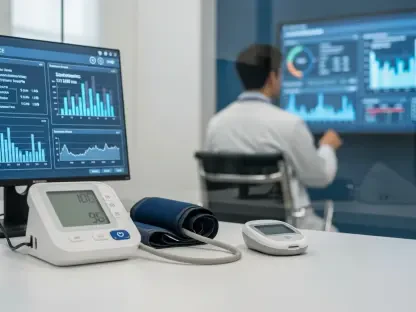
Further strengthening this digital infrastructure is a focus on centralized data management and accessibility. The initiative will enhance the existing Performance Management Information System (PMIS), improve digital record-keeping for medical students, and expand online-based e-library services to ensure widespread access to academic resources. A unified digital platform under the DGME will consolidate all data, creating a single source of truth that promises to boost operational efficiency. Crucially, the plan includes upskilling the educators themselves, with dedicated training programs to ensure faculty members are proficient in using these new digital tools and can effectively integrate them into their curricula.
By the Numbers Quantifying the Projects Scope and Impact
The project’s ambition is matched by its significant investment and clearly defined targets. The government has allocated Tk 211.90 crore for this intensive one-year transformation, scheduled for implementation from July 2025 to June 2026. A substantial portion of this budget is dedicated to a massive procurement plan aimed at overcoming existing deficiencies in physical resources. This includes acquiring over 3,000 units of medical and surgical equipment, nearly 2,400 educational tools, and thousands of IT and furniture items to properly equip institutions nationwide.
Human capital development lies at the heart of the initiative, with ambitious training goals set for the implementing agencies. NIPORT is tasked with conducting 600 training batches to upskill 15,000 professionals, while the DGNM will manage 320 batches for an additional 9,600 nurses and midwives. Beyond direct training, the project emphasizes the importance of data-driven policymaking. NIPORT will lead two critical national surveys—the Bangladesh Demographic and Health Survey (BDHS) and the Bangladesh Health Facility Survey (BHFS)—to generate the robust evidence needed to inform future national health, population, and nutrition strategies.
Navigating the Hurdles From Legacy Systems to Digital Excellence
Perhaps the most significant challenge is the operational complexity of transitioning activities from the long-standing HPNSP into a permanent government structure. This involves meticulously untangling responsibilities, reallocating resources, and integrating diverse processes without disrupting ongoing educational and service delivery. Successfully managing this change requires careful coordination among the DGME, NIPORT, and DGNM to ensure a seamless and efficient absorption of functions.
Administrative bottlenecks, a common impediment in legacy systems, are being targeted with digital solutions. The introduction of digital registries for personnel and resources, alongside the automation of routine tasks like hostel allocations and fee management, is expected to significantly reduce bureaucratic friction. Simultaneously, the project confronts the challenge of inadequate physical infrastructure by allocating resources to upgrade utilities, administrative systems, and critically needed equipment. Addressing these foundational deficiencies is essential for the new digital systems to function effectively.
Ultimately, the success of this digital leap hinges on widespread adoption and user proficiency. Technology is only as effective as the people who use it. Consequently, the project incorporates targeted training programs designed to ensure that everyone from faculty and students to administrative staff can confidently navigate the new digital tools. Overcoming resistance to change and building digital literacy across the entire health education ecosystem will be crucial for realizing the project’s full potential.
The Governance Framework Policy Alignment and National Goals
The project has received strong institutional backing, having undergone a rigorous evaluation process. A pre-appraisal assessment confirmed the technical viability of its proposals, and the Project Evaluation Committee (PEC) recommended its approval, contingent upon certain modifications. The Ministry of Health and Family Welfare has since committed to restructuring the project proposal to align with the PEC’s recommendations, signaling a clear path toward implementation.
This initiative is not a standalone effort but is strategically aligned with Bangladesh’s broader national development agenda and global commitments. Its objectives are directly linked to the country’s long-term vision for public health and population management. By strengthening the health workforce and improving service delivery, the project contributes directly to the goals outlined in foundational national policy documents.
Specifically, the project is designed to advance progress toward Sustainable Development Goal 3, which aims to ensure good health and well-being for all. It also directly supports the objectives of the Bangladesh Population Policy 2025 by enhancing family planning services and education. This alignment ensures that the project’s outcomes will have a far-reaching impact, reinforcing the nation’s commitment to building a healthier and more prosperous future for its citizens.
Envisioning Tomorrow The Future of Health Education in Bangladesh
Through this comprehensive digital overhaul, Bangladesh is fostering a new era of competency-based clinical education. The integration of simulation labs, e-libraries, and unified data platforms moves learning beyond traditional classroom lectures, equipping future healthcare professionals with the practical skills and knowledge required to meet modern medical challenges. This focus on digital innovation is set to elevate the quality and relevance of health education across the country.
A key outcome of this project will be a marked increase in institutional transparency and accountability. By centralizing academic and administrative data on a single digital platform, the system creates an accessible and verifiable record of performance, resource allocation, and educational outcomes. This data-driven approach not only streamlines management but also empowers policymakers with the insights needed to make informed decisions and hold institutions accountable for results.
Ultimately, these improvements in education and management are designed to create a more responsive and efficient health service delivery system nationwide. A better-trained, digitally literate workforce is better equipped to provide high-quality care, manage patient information securely, and adapt to new medical technologies. The long-term vision is clear: to ensure that every citizen in Bangladesh has access to quality health education and affordable, high-standard healthcare services, creating a sustainable legacy of public well-being.
A Prescription for Progress Synthesizing the Digital Transformation
This project’s core objectives are centered on the modernization of training, the integration of fragmented systems, and the long-term sustainability of health education. It represents a strategic shift from temporary programs to a permanent, institutionalized framework powered by digital technology. The initiative’s success is measured not only by the systems it builds but by its capacity to create a more competent and responsive healthcare workforce.
The potential for this project to cultivate a robust and efficient healthcare ecosystem is immense. By equipping institutions with modern tools, upskilling thousands of professionals, and establishing a foundation for data-driven policymaking, Bangladesh is laying the groundwork for a new standard of public health. This transformation promises to enhance the quality of care and improve health outcomes for millions of citizens across the nation.
For successful implementation and future growth, continuous monitoring and an agile approach will be paramount. Establishing clear key performance indicators, soliciting feedback from end-users, and adapting to technological advancements are critical next steps. Furthermore, exploring public-private partnerships could introduce additional innovation and resources, accelerating the pace of digital transformation in the years to come.
The lasting impact of this initiative is the creation of a digitally empowered health education ecosystem. This modernized framework is not merely an upgrade of existing systems but a fundamental reimagining of how healthcare professionals are trained and how institutions are managed. It is a prescription for progress that positions Bangladesh to meet the health challenges of tomorrow with confidence and competence.