
Dalhousie University’s School of Health Sciences has unveiled an innovative solution to simultaneously address two of the most persistent challenges in modern healthcare: the shortage of clinical training opportunities for students and the lengthy wait times for essential public medical services. The university’s new Diagnostic Medical Ultrasound Clinic is a pioneering model that functions as both a state-of-the-art educational facility and a vital community health resource. By integrating student learning directly with patient care, this initiative is set to significantly enhance the practical skills of future sonographers while actively reducing the diagnostic imaging backlog in Nova Scotia, establishing a new paradigm for how academic institutions can serve the public good.
Forging the Next Generation of Sonographers
Addressing the Training Bottleneck
The clinic’s inception was a direct and strategic response to a recent, ambitious expansion within the School of Health Sciences. In the fall of 2023, the ultrasound program made the crucial decision to double its student intake from eight to sixteen, a move designed to address the province’s escalating demand for qualified sonographers. While this expansion was a necessary step toward building a more robust healthcare workforce, it immediately created a significant logistical hurdle: a critical scarcity of high-quality clinical placement opportunities. These placements are the cornerstone of medical education, providing the indispensable, hands-on experience that transforms theoretical knowledge into clinical competence. The lack of available spots threatened to become a major bottleneck, potentially compromising the quality of training for the enlarged student cohort. The new clinic was therefore conceived not merely as an additional facility but as a foundational solution to this pressing constraint. It establishes a dedicated, university-controlled environment meticulously designed to guarantee that every student receives the comprehensive practical training required to excel in their field.
This proactive approach circumvents the traditional reliance on external hospital and clinic placements, which are often subject to their own operational pressures and limited capacity. By creating an in-house training center, the university gains complete control over the quality, consistency, and availability of clinical education. This model ensures that the educational needs of students are the primary focus, rather than being a secondary consideration within a busy, service-oriented healthcare facility. The clinic’s structure is designed to support a curriculum that can scale alongside student enrollment, providing a sustainable solution to the training challenge. This forward-thinking strategy not only resolves the immediate placement shortage created by the 2023 program expansion but also future-proofs the program against similar challenges, allowing it to adapt to the evolving needs of the healthcare system without compromising the integrity of its educational standards. The initiative represents a significant investment in the future of sonography in the province, ensuring a steady pipeline of well-trained professionals ready to enter the workforce.
A Structured Learning Environment
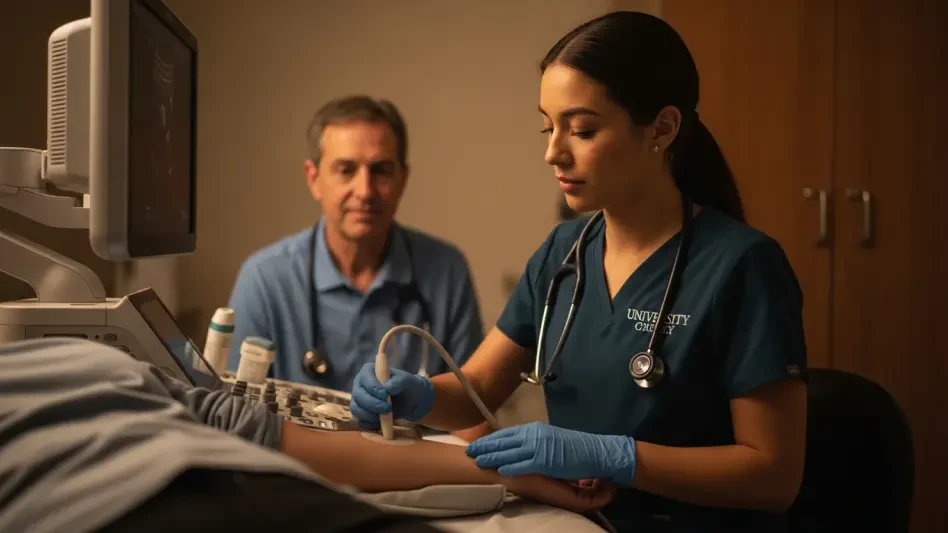
The operational framework of the clinic is meticulously designed to function as an integrated learning hub that accommodates students at various stages of their academic journey. Learners from the first, second, and third years of the Bachelor of Health Sciences program in Diagnostic Medical Ultrasound Technology are scheduled for rotations within the clinic, with their responsibilities and level of involvement carefully tailored to their current knowledge base and skill level. A defining characteristic of this model is the provision of constant and direct supervision by highly experienced School of Health Sciences instructors, who serve as dedicated preceptors. This arrangement fosters a structured, supportive, and closely mentored setting where students can systematically build their technical abilities and professional confidence. This controlled environment stands in stark contrast to traditional clinical placements, where the high-pressure pace and unpredictable demands of a busy hospital can be overwhelming for novice learners, often limiting opportunities for in-depth feedback and skill refinement. This deliberate structure ensures a more pedagogical and less stressful introduction to clinical practice.
The benefits of this structured approach are multifaceted, focusing on both skill acquisition and professional development. For first-year students, the clinic will offer an immersive eight-week clinical block running five days a week, providing a foundational, supervised experience before they transition to more demanding external placements. This initial phase is crucial for building a solid base of practical skills in a low-stakes environment. For more advanced students, the clinic offers an opportunity to refine complex techniques and take on greater responsibility under the watchful eye of their instructors. The consistent presence of dedicated preceptors ensures that feedback is immediate, constructive, and directly aligned with the curriculum’s learning objectives. This consistent mentorship helps students connect theoretical concepts from the classroom to their real-world application, fostering a deeper understanding of diagnostic procedures and patient interaction. Ultimately, this graduated, supportive model is designed to produce sonographers who are not only technically proficient but also confident and adaptable professionals from the moment they enter the workforce.
A Model of Collaboration and Innovation
Seamless Integration with Provincial Healthcare
A crucial element underpinning the clinic’s success is its deep and symbiotic collaboration with Nova Scotia Health. The facility operates in close partnership with the NSH Central Zone Diagnostic Imaging department, a strategic alliance that ensures its activities are fully integrated with the broader provincial healthcare system rather than functioning in isolation. This integration is most clearly demonstrated in its patient referral and booking process. All patients scheduled for examinations at the university clinic are referred directly from the official NSH Central Zone waitlist, which means the clinic is directly addressing the existing public demand for services. This alignment guarantees that the clinic’s operational capacity contributes meaningfully and measurably to reducing the provincial backlog for diagnostic imaging, providing tangible relief to a strained system. This collaborative framework ensures that the clinic’s efforts are targeted where they are most needed, making it a valuable partner in the province’s public health mission.
To further solidify its role within the provincial diagnostic framework and uphold the highest standards of patient care, every ultrasound examination conducted at the student clinic is subject to a rigorous quality control process. Following the completion of an exam by students under instructor supervision, all images and findings are professionally interpreted and formally reported by certified radiologists at the QEII Health Sciences Centre. This critical step ensures that every patient receives a diagnosis that meets the established medical standard of care, maintaining seamless continuity with the services provided in any other NSH facility. This integration not only provides an invaluable safety net for patients but also offers an important learning opportunity for students, who can see how their work contributes to the final diagnostic report. This partnership between academia and the public health system exemplifies a modern, efficient approach to healthcare delivery, where resources are shared and aligned to maximize benefits for both students and the community.
Optimizing the Educational Experience
The clinic offers a unique pedagogical environment that bridges the critical and often challenging gap between theoretical classroom learning and the dynamic complexities of real-world clinical practice. The value of this specialized setting was highlighted by Sophie Carmichael, a third-year student, who emphasized the significant benefits of learning in a “slower-paced environment.” She noted that the deliberately managed patient load and the dedicated one-on-one time with preceptors allow for a more thorough and unhurried exploration of each clinical case. This atmosphere provides ample opportunity for detailed, constructive feedback on scanning techniques, image optimization, and patient communication skills. This iterative process of practice and personalized guidance is instrumental in building not only the technical proficiency required for accurate diagnostics but also the clinical confidence that is essential for effective professional practice. The environment is designed to foster deep learning rather than just procedural repetition.
To further enhance this seamless transition from student to professional, the clinic has been intentionally equipped with GE HealthCare LOGIQ E10 ultrasound machines. This decision was strategic, as these are the identical models used across other clinical sites and hospitals in Nova Scotia. By training on the exact equipment they will encounter in their future careers, students develop a high level of proficiency and familiarity that streamlines their integration into the workforce upon graduation. This standardization eliminates the learning curve often associated with adapting to different technology in a new workplace, allowing graduates to become productive team members more quickly. This thoughtful approach to technology and training underscores the clinic’s dual commitment: providing an exceptional educational experience while simultaneously preparing students to meet the immediate needs of the provincial healthcare system with the highest level of competence and confidence. The result is a more effective and efficient pipeline of skilled professionals ready to serve the community.
A “Win-Win” for Patients and the Province
Delivering Tangible Public Benefits
Beyond its primary educational mandate, the clinic delivers a tangible and immediate impact on patient care and the broader healthcare system. By adding new, dedicated capacity to the province’s overall diagnostic imaging resources, it directly helps to alleviate the significant and persistent pressure on existing ultrasound services. It is estimated that the clinic, once fully operational, will have the capacity to serve over 200 patients per month. This figure represents a substantial contribution to reducing wait times for these essential diagnostic procedures, translating into faster diagnoses and more timely access to treatment for hundreds of Nova Scotians. This dual-benefit model was aptly described by School of Health Sciences Director Catherine Gunn as a “true win-win,” a scenario where the university actively trains the next generation of highly skilled sonographers while simultaneously providing a much-needed and high-demand service to the public.
The initiative’s positive impact has been recognized at the provincial level as a powerful example of effective problem-solving. Nick Hilton, Ministerial Assistant to the Minister of Health and Wellness, praised the clinic as a prime example of how “innovation, education and collaboration can come together to better support Nova Scotians.” This sentiment reflects a growing understanding that addressing complex healthcare challenges requires creative, multi-faceted solutions that transcend traditional institutional boundaries. By leveraging its educational resources to meet a public health need, Dalhousie University is not only strengthening the future workforce but also making a direct, measurable difference in the lives of patients today. The clinic stands as a testament to the power of strategic partnerships and innovative thinking in creating a healthier and more resilient healthcare ecosystem for the entire province, proving that academic institutions can play a pivotal role in public service delivery.
A Blueprint for Future Healthcare Solutions
This innovative educational and service delivery model has positioned Dalhousie University as a leader in experiential health sciences education, establishing a robust framework that could be replicated in other disciplines and jurisdictions. The SHS Diagnostic Medical Ultrasound Clinic is only the second of its kind in Canada, its development carefully informed by the pioneering efforts of a similar clinic launched in 2023 by Camosun College and the Pacific Health Partnership in Victoria, BC. By researching, adapting, and building upon this proven concept, Dalhousie’s School of Health Sciences demonstrated a creative and collaborative approach to solving the intertwined issues of healthcare workforce shortages and patient access to care. The clinic’s successful launch showcased how academic institutions could become direct partners in the healthcare system, transforming a training requirement into a public service asset. It served as a powerful demonstration that investing in education could yield immediate returns for community well-being, a principle with far-reaching implications.
The clinic’s initial operations, which began with two general ultrasound rooms running one to two days per week, laid the groundwork for a planned expansion. This growth was designed to further integrate the clinic into the curriculum, particularly through an immersive eight-week placement for first-year students. This strategic plan highlighted the model’s scalability and its potential for long-term impact on both student outcomes and provincial health metrics. In its execution, the project confirmed that a symbiotic relationship between education and public health was not only possible but highly effective. The initiative stood as a multifaceted solution that strengthened the healthcare system, enhanced student success, and delivered real, measurable benefits to the people of Nova Scotia. This thoughtful integration of academic goals and community needs offered a compelling blueprint for how future challenges in healthcare education and service delivery could be addressed across the country.