
In the high-stakes world of healthcare, the gap between classroom knowledge and the chaotic reality of a clinical emergency can be a formidable challenge for even the most promising nursing professionals. Sentara Northern Virginia Medical Center has introduced a groundbreaking solution to bridge this divide, launching an innovative virtual reality training program designed to sharpen the skills of its nursing staff. This initiative moves beyond traditional training methods by immersing nurses in highly realistic, interactive patient-care scenarios, allowing them to practice complex medical interventions and communication techniques in a controlled, zero-risk environment. By leveraging cutting-edge simulation technology, the hospital is not only enhancing the competence and confidence of its team but also setting a new standard for professional development, ensuring that both new graduates and seasoned veterans are better prepared for the pressures of modern patient care. This pioneering program represents a significant investment in the human element of healthcare, using digital tools to cultivate the critical thinking and hands-on expertise essential for delivering exceptional outcomes.
The Mechanics of Virtual Reality Training
Immersive Clinical Environments
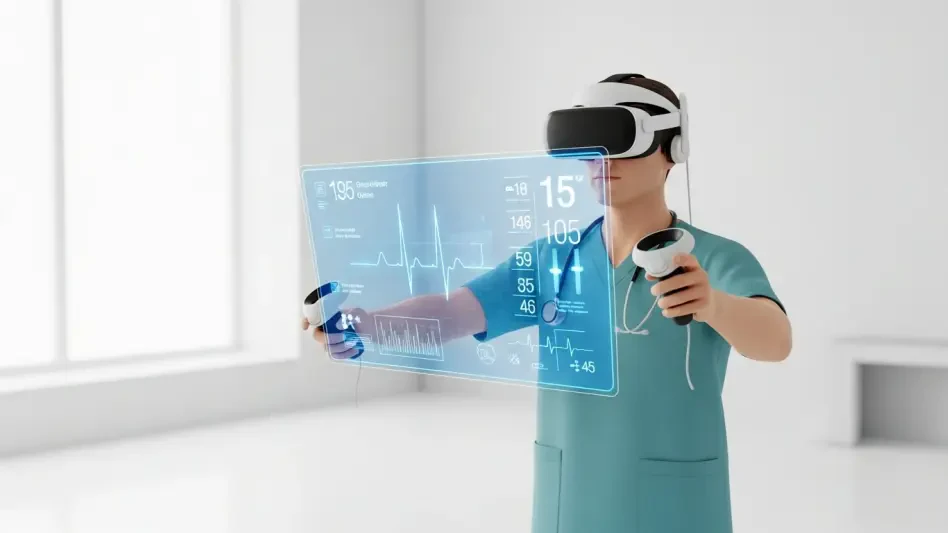
The core of the program transports nurses into a fully realized virtual treatment room, an environment meticulously crafted to replicate a genuine clinical setting. Within this digital space, participants are equipped with all the necessary medical tools and medications they would have in a real hospital room, allowing them to interact with their surroundings in a natural, intuitive manner. The central figure is the responsive virtual patient, an advanced simulation capable of exhibiting a wide range of medical conditions. In one scenario, a patient experiencing a heart attack can verbally describe their symptoms with startling realism, detailing the location and intensity of their pain while their vital signs react dynamically on the monitor. This level of immersion is critical, as it compels the nurse to engage not just on a technical level but also on a human one, practicing compassionate communication alongside procedural tasks. The system’s ability to mirror a genuine clinical encounter helps solidify theoretical knowledge, transforming abstract concepts from a textbook into tangible, memorable experiences that enhance knowledge retention and prepare nurses for the unpredictability of real-world emergencies.
Bridging Theory and Practice
This advanced simulation platform excels at closing the gap between academic learning and practical application by providing a dynamic space for hands-on practice. Nurses can directly apply their clinical knowledge in high-pressure situations, such as managing a patient in anaphylactic shock or respiratory distress, without any risk to a living person. A key feature of the training is the immediate feedback loop; the system demonstrates the real-time consequences of a nurse’s actions, showing how a correctly administered medication can stabilize the virtual patient or how an error can lead to a decline in their condition. This direct cause-and-effect relationship accelerates the development of critical thinking and decision-making skills far more effectively than traditional lectures or static mannequins. Furthermore, the technology supports a culture of continuous improvement by allowing for limitless repetition. Nurses can practice a complex procedure or navigate a challenging emergency scenario as many times as needed to achieve mastery and build confidence, ensuring they are thoroughly prepared when they encounter a similar situation in their clinical practice.
Strategic Implementation and Future Vision
A Commitment to Competence and Safety
The adoption of this virtual reality program is viewed by hospital leadership as a vital tool for building both competence and confidence among its clinical staff, reflecting a broader trend in healthcare toward safer and more effective training methodologies. By creating a psychologically safe environment for learning, the system allows nurses to make and learn from mistakes without the fear of causing patient harm. This approach not only sharpens technical abilities but also strengthens a nurse’s resolve and preparedness for high-stress events. The initiative, made possible through grant funding from the Potomac Health Foundation, is a significant investment in the hospital’s clinical team and a testament to its commitment to innovation and high-quality patient care. The ability to simulate a wide array of medical emergencies provides invaluable hands-on experience that might otherwise take years to accumulate, ensuring that every nurse is equipped with the skills needed to handle both common and rare clinical challenges. This forward-thinking strategy prioritizes a culture of preparedness and continuous professional growth.
Pioneering a New Standard of Care
Sentara Northern Virginia Medical Center has positioned itself at the forefront of medical education by becoming the first hospital within the larger Sentara Health system to implement this state-of-the-art VR technology. SNVMC President Jeff Joyner expressed pride in this pioneering step, highlighting the hospital’s role as an innovator in the region. This commitment to excellence was further emphasized by Chief Nursing Officer Christy Grabus, who connected the investment directly to the hospital’s prestigious “Magnet with Distinction” status, a top honor for nursing excellence. This initiative is not seen as a final destination but as the beginning of a larger transformation in clinical training. Hospital leadership has already announced ambitious plans to expand the program, eventually making this immersive training available to all clinicians on staff. This vision underscores a deep-seated belief that investing in advanced educational tools for the entire healthcare team is fundamental to elevating the standard of care and achieving the best possible patient outcomes, reinforcing the hospital’s reputation as a leader in both patient safety and professional development.
A New Paradigm for Clinical Education
The implementation of this virtual reality training system represented a pivotal moment in the evolution of nursing education. It moved beyond simply teaching procedures and instead cultivated a deeper, more intuitive understanding of patient care by allowing clinicians to experience the weight of their decisions in a controlled setting. The program proved to be more than a technological novelty; it was a transformative educational tool that honed not only technical proficiency but also the crucial communication skills and emotional resilience required in modern healthcare. The success of this initiative paved the way for a new standard in clinical preparedness, establishing a model that other institutions could follow. Ultimately, it helped forge a new generation of nurses who entered the workforce with a level of confidence and practical experience that was previously unattainable, promising a future of safer, more effective, and more compassionate patient care.