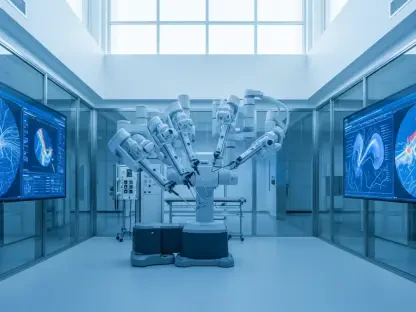

The world of nursing is undergoing a profound transformation as artificial intelligence begins to weave itself into the fabric of clinical practice and education. Leading this conversation is an expert with a deep commitment to global health equity and technological ethics, recently recognized with a Fulbright Specialist Award to collaborate with the Pontificia Universidad Javeriana in Bogotá. By bridging the gap between Jesuit values and modern innovation, this work explores how we can harness the power of AI while remaining steadfast in our mission to serve marginalized populations and protect the human element of care.
You are preparing to teach nursing faculty at a Jesuit university in Bogotá, Colombia. How does this kind of international collaboration expand the global reach of nursing education, and what specific cross-cultural exchanges do you believe are most vital for improving healthcare outcomes in different regions?
International collaborations allow us to see how universal values, such as those held by Jesuit institutions, translate across different borders and healthcare systems. When we interface with faculty and students in Latin America, we are not just sharing technical knowledge; we are building a unified front to address global health disparities. These exchanges are vital because they allow us to move beyond a local focus and understand how migration, policy, and technology impact nursing on a global scale. By working together, two Jesuit schools can embrace new technologies while ensuring that the core mission of “cura personalis,” or care for the whole person, remains central to our teaching.
Higher education is increasingly adopting AI platforms like Gemini to enhance the learning experience. What are the specific concerns regarding the environmental footprint of these tools, and what strategies can faculty use to prevent AI from being used to justify labor cuts or “doing more with less”?
As we integrate platforms like Gemini into our curricula, we must be critically aware that AI is here to stay, but it comes with a significant environmental cost in terms of energy and resource consumption. My concern is ensuring that we use these tools in a way that is not harmful to the planet or the people utilizing them, including our students and faculty members. We have to be vigilant that administration does not view AI as a replacement for human labor or a reason to demand higher productivity with fewer resources. The strategy must be to use AI as a supplement that enriches the learning experience rather than a tool to put people out of work or diminish the value of faculty expertise.
Many academic initiatives focus on social justice and migration issues at international borders. How do you bridge these humanitarian concerns with the technical requirements of modern nursing, and what specific methods can be used to ensure technology supports the mission of serving marginalized communities?
Bridging humanitarian concerns with technology requires us to look at nursing through a lens of social justice, much like the work done through the Center for Social Justice’s initiatives on the U.S.-Mexico border. We ensure technology supports the marginalized by questioning how these tools are programmed and who they are designed to serve, particularly in the context of migration and access to care. Our methods involve teaching students to evaluate AI for bias and to use data to highlight the needs of underserved populations rather than ignoring them. By grounding technical training in our mission to help others, we ensure that the digital evolution of nursing remains a tool for equity.
Clinical nursing requires a balance between technological proficiency and hands-on care. How do international partnerships enhance the reputation of a nursing program, and what steps should educators take to mentor students in navigating the ethical complexities of AI-driven healthcare?
A prestigious award like the Fulbright signals a deep commitment to academic excellence and global engagement, which significantly elevates the visibility of a nursing program. It shows the world that our clinicians are prepared to address health disparities not just at home, but on an international stage. As educators, we must serve as role models, mentoring students to navigate the ethical “gray areas” where AI-driven data might conflict with hands-on, compassionate care. We teach them that while technology provides the data, the nurse provides the ethical judgment and the human touch that no algorithm can replicate.
Faculty often serve as role models by engaging in global aid and community service. What are the long-term benefits for students who are exposed to international leadership, and how can these experiences be translated into better clinical practices for addressing health disparities at home?
When students are exposed to faculty who lead international research and aid initiatives, they gain a powerful model of professional engagement and scholarly impact. This exposure encourages them to think of themselves as global citizens, which directly translates into more empathetic and culturally competent clinical practice when they return to their local communities. They learn to identify the root causes of health disparities by seeing how similar issues manifest in different cultural contexts, such as the challenges faced by Jesuit institutions on both sides of a border. Ultimately, these experiences empower 42 or more students and graduates each year to pursue their own paths in global service and advocacy.
What is your forecast for the role of artificial intelligence in nursing education?
I believe AI will become an inseparable part of the nursing curriculum, but its success depends on our ability to maintain a human-centric approach. We will likely see AI used to simulate complex patient scenarios and personalize learning paths for students, yet we must remain cautious about the “do more with less” mentality that often follows technological booms. My forecast is that the most successful nursing programs will be those that master the technical proficiency of AI while doubling down on ethical training and social justice. If we can balance these elements, AI will not replace the nurse; it will instead free the nurse to focus more deeply on the human-to-human connection that is the heart of our profession.