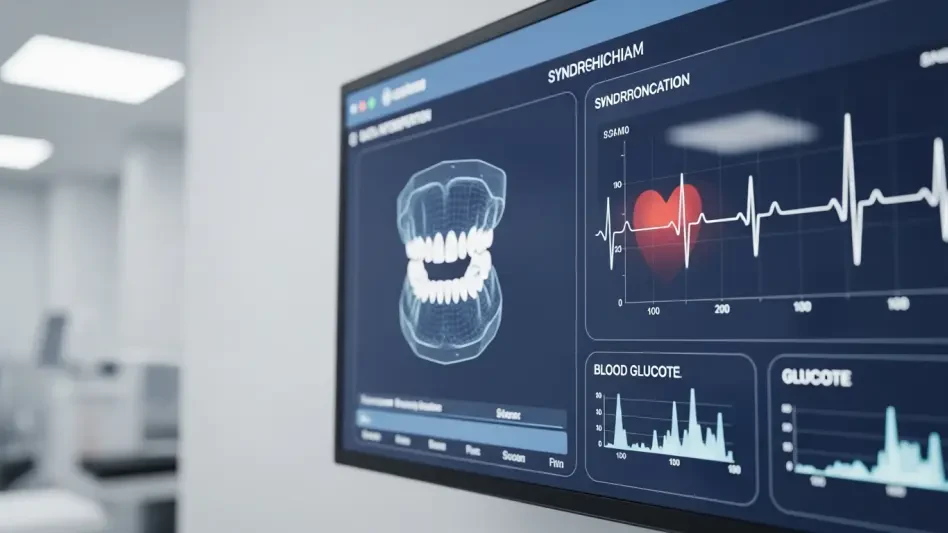

The human anatomy serves as a seamless biological masterpiece where every organ communicates in a silent, continuous dialogue, yet the modern healthcare system persists in treating the mouth as an isolated island disconnected from the rest of the body’s vital functions. If a patient presented at an emergency department with a severe, throbbing infection in their hand, no medical professional would suggest that the limb belongs to a separate healthcare ecosystem requiring its own specific insurance, specialized record-keeping software, and a completely different clinic across town. However, for over a century, this is exactly how the human mouth has been managed. Relegated to a “parallel universe” of dental schools and private practices that rarely communicate with primary care physicians, oral health remains the most neglected component of systemic wellness. This artificial divide does far more than complicate administrative paperwork; it creates a dangerous chasm in patient safety where systemic diseases flourish undetected and preventable infections spiral into life-threatening, costly emergencies.
The persistence of this dental-medical silos is a historical anomaly rooted in early 19th-century educational disputes rather than biological reality. When the first dental colleges were established, they were rejected by established medical universities, forcing dentistry to develop its own independent infrastructure of education, licensing, and insurance. Today, the legacy of this split is seen in the lack of interoperability between electronic health records, where a cardiologist might be unaware that a patient’s chronic inflammation is being fueled by advanced periodontitis. This separation ignores the fact that the mouth is the primary gateway to the body, serving as both a reservoir for bacteria and a mirror for internal pathology. To treat the body without considering the mouth is to ignore a critical sector of the human map, ultimately compromising the efficacy of modern medicine.
The Invisible Border Between the Mouth and the Body
The conceptual border between the head and the rest of the body remains one of the most significant barriers to achieving comprehensive wellness in the current landscape. While medical advancements have accelerated our understanding of the microbiome and systemic inflammation, the delivery of care remains stubbornly fragmented. Patients are forced to navigate two entirely different sets of provider networks, often with conflicting advice and disjointed treatment plans. This fragmentation is particularly evident for high-risk individuals, such as those with autoimmune disorders or cardiovascular conditions, who may undergo complex medical treatments without a basic oral health screening that could identify underlying sources of systemic stress. The result is a healthcare experience that feels transactional and piecemeal rather than holistic, leaving patients to act as their own unequipped intermediaries between two disparate systems.
Furthermore, this separation fosters a culture of reactive rather than proactive care. Because dental benefits are often treated as an optional “add-on” to standard health insurance, many individuals defer routine check-ups until a minor cavity evolves into an agonizing abscess. By the time a patient seeks help, the infection has often progressed beyond the scope of a simple filling, requiring invasive procedures or even hospitalization. This delay is not merely a matter of personal neglect; it is a systemic failure of a design that does not emphasize oral health as a foundational element of primary care. Without a unified approach that integrates dental screenings into routine physical exams, the healthcare system continues to miss vital opportunities to catch early markers of systemic disease that frequently manifest in the oral cavity first.
The Costly Reality of a Fragmented Healthcare System
The economic consequences of this fragmented approach are profound, representing a staggering drain on public and private resources alike. Every year, millions of Americans bypass the dental chair entirely and head straight to hospital emergency departments for non-traumatic dental pain. This trend is a symptom of a broken system, as ERs are typically unequipped to provide definitive dental treatments like extractions or root canals. Instead, physicians in these settings generally offer palliative care, such as prescription painkillers and antibiotics, which address the symptoms but leave the root cause of the infection untouched. This leads to a revolving door of readmissions and escalating costs, as patients return weeks later when the temporary relief fades and the infection spreads further into the jaw or bloodstream.
Data indicates that the system is hemorrhaging nearly $4 billion annually on these dental-related emergency visits, most of which could have been prevented with a $150 routine cleaning. This financial burden falls heavily on Medicaid programs and taxpayers, who subsidize the high overhead of emergency facilities. Beyond the immediate costs of the ER, the lack of integrated electronic health records creates a secondary layer of waste. When a primary care physician cannot see a patient’s dental history, they may miss critical information about bone density, nutritional deficiencies, or chronic infections that impact the management of systemic conditions. This lack of data transparency necessitates redundant testing and leads to less efficient treatment pathways, further driving up the total cost of care for both the provider and the patient.
The Biological Connection: How Oral Health Drives Chronic Disease
From a physiological perspective, the argument for integration is undeniable, as the mouth serves as a primary driver of systemic inflammation. The oral cavity is home to hundreds of species of bacteria, and when gum tissue becomes diseased, it loses its ability to act as a barrier. This allow pathogens to enter the bloodstream, a process known as bacteremia. Once these bacteria travel throughout the body, they can settle in the heart valves, contribute to the formation of arterial plaques, or aggravate the kidneys. The relationship between the mouth and the body is not a one-way street; it is a bidirectional feedback loop where oral health directly influences the severity of chronic diseases, and systemic health determines the body’s ability to fight off oral infections.
Perhaps the most well-documented example of this connection is the “vicious cycle” between diabetes and periodontitis. Research has consistently shown that severe gum disease makes it significantly harder for diabetic patients to regulate their blood sugar levels, as the body’s inflammatory response to the oral infection causes increased insulin resistance. Conversely, patients with uncontrolled high blood sugar are much more susceptible to developing aggressive gum disease, which further complicates their metabolic health. Beyond diabetes, experts from organizations like the American Dental Association have warned that hidden dental infections can pose significant risks for patients undergoing major surgeries. Bacteria from an untreated tooth can migrate to a surgical site, such as a newly implanted heart valve or a prosthetic joint, leading to devastating complications that prolong hospital stays and jeopardize the success of the procedure.
Lessons from the Front Lines: Success in Community Health Centers
While much of the private sector remains caught in the old ways of thinking, Community Health Centers have already established a successful blueprint for the future of whole-person health. These facilities often operate under a model where medical, dental, and behavioral health services are co-located within the same building. This physical proximity allows for what providers call “warm hand-offs,” where a primary care doctor can immediately introduce a patient to a dentist if an oral issue is spotted during a physical. This seamless transition eliminates the logistical barriers of scheduling and transportation that often prevent low-income or vulnerable populations from seeking necessary dental care. By breaking down the walls between disciplines, these centers ensure that no part of the patient’s health is overlooked.
In these integrated environments, the dental chair is reimagined as a vital diagnostic hub. Because many people visit their dentist more frequently than their primary care physician, dental teams are uniquely positioned to perform basic medical screenings. It is becoming common for dental hygienists in integrated centers to check a patient’s blood pressure or perform a finger-prick A1c test for blood sugar monitoring during a routine cleaning. These simple interventions have led to life-saving outcomes; there are numerous recorded instances where a dentist identified Stage Three oral cancer during a routine check for what the patient thought was a simple sore throat. By empowering dental professionals to act as an extension of the medical team, these centers are catching diseases in their earliest, most treatable stages, proving that collaboration is the key to improving population health outcomes.
Strategies for Overcoming Technical and Systemic Barriers
To move toward a truly integrated model on a national scale, the healthcare industry must first dismantle the technical barriers that keep data trapped in silos. The most critical step is the widespread adoption of interoperable electronic health records that allow for the real-time exchange of information between doctors and dentists. Several health tech partnerships are currently working to synthesize medical and dental claims data to demonstrate the long-term return on investment for preventive care. When insurance payers can see that a $200 periodontal treatment saves them $5,000 in heart-related complications later that year, the financial incentive for integration becomes clear. Transitioning to a unified digital infrastructure is not just a technological challenge; it is a necessary evolution to support clinical decision-making.
Another essential strategy involves the standardization of oral health metrics so they can be easily understood by medical professionals. Traditionally, dentistry has relied on subjective assessments, whereas medicine uses objective “scores” like blood pressure or cholesterol levels. The emergence of artificial intelligence is changing this by analyzing dental X-rays to generate standardized “Oral Health Scores” that quantify bone loss or cavity depth. This allows a cardiologist, for example, to look at a patient’s chart and instantly understand the level of oral infection risk without needing to be an expert in dental radiography. Finally, insurance reimbursement models must be reimagined to reward health outcomes rather than just the number of procedures performed. Allowing medical providers to be reimbursed for basic oral preventives, such as applying fluoride varnish to a toddler’s teeth, and incentivizing dentists to participate in chronic disease management will create the financial alignment necessary to sustain integrated care for the long term.
The momentum toward medical-dental integration was driven by a growing recognition that the separation of these two fields was an outdated remnant of the past. As data connectivity improved, healthcare systems began to prioritize the mouth as a central component of systemic health. This transition was marked by the emergence of unified electronic records that allowed clinicians to collaborate across specialties, ensuring that every patient received coordinated, whole-person care. Insurance payers also shifted their strategies, recognizing that investing in oral health was a powerful lever for reducing the total cost of chronic disease management. These structural changes provided a foundation for a more efficient and effective approach to wellness.
Policymakers and clinical leaders took decisive action to bridge the gap that once defined the patient experience. The introduction of standardized oral health metrics made it possible for medical doctors to monitor dental risks with the same precision they applied to cardiovascular health. Furthermore, community health models demonstrated that co-located services could significantly improve outcomes for high-risk populations. By the time these strategies were fully implemented, the notion of treating the mouth and body as separate entities became a historical footnote. The healthcare community successfully moved toward a future where clinical excellence was defined by the integration of all biological systems, resulting in a more resilient and healthier population.