
In the evolving landscape of healthcare, few are better positioned to discuss the fusion of technology and patient care than Faisal Zain. As a leading expert in medical technology, with deep experience in the manufacturing and innovation of diagnostic and treatment devices, he offers a unique perspective on how the tools of medicine are not just changing clinical outcomes, but are fundamentally reshaping the entire patient experience. Drawing from the visionary concepts outlined in Mayo Clinic’s 2030 patient journey, our conversation will explore the shift from isolated episodes of care to a seamless, integrated continuum. We will touch on how health systems are redesigning physical and digital environments, from front-loading the patient journey with virtual tools to creating intelligent hospital rooms. Furthermore, we will delve into the role of AI as an invisible partner that enhances human connection and examine how care is now extending far beyond the hospital walls, creating a continuous loop of support for patients managing complex conditions.
The patient journey for complex care often begins long before a person arrives at the hospital, with virtual consults and digital itineraries. How can health systems best “front-load” this experience, and what are the biggest operational hurdles to integrating these digital tools into clinical workflows?
That’s really the core of the strategic shift we’re seeing. To “front-load” the experience means you’re addressing a patient’s anxiety and uncertainty from the very first interaction. Imagine receiving a complex diagnosis and, instead of a confusing series of appointments, you have virtual consultations that bring your local doctor and a specialist from hundreds of miles away together in one digital room. This is followed by a personalized itinerary sent to your device, complete with profiles of your care team and navigation assistance for your travel. The goal is to build confidence and clarity before the patient even sets foot in the hospital. The biggest hurdle is moving past the “app for everything” mindset. The real challenge isn’t launching a digital front door; it’s weaving these tools—virtual visits, remote diagnostics, digital wayfinding—so deeply into the fabric of clinical operations that they become the foundational strategy for accessing care, not just a convenient add-on.
We are seeing a move toward “Interconnected Complex Care Neighborhoods” that co-locate diagnostics, treatment, and recovery. What are the key design principles for these spaces, and how do they tangibly improve care coordination and reduce handoffs for both patients and staff? Please share a practical example.
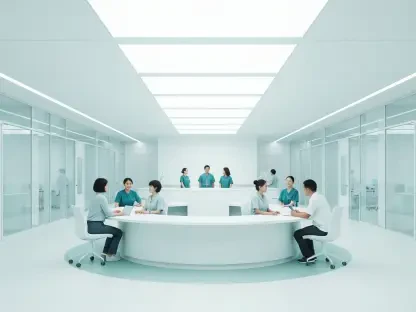
The fundamental design principle is to bring the care to the patient, rather than moving the patient all over a sprawling campus. We’re breaking down the traditional, siloed departments. In these interconnected neighborhoods, diagnostics, consultations, treatment planning, and even recovery spaces are co-located. The spaces themselves are designed to be flexible and reconfigurable, able to adapt as a patient’s needs change. For example, acuity-adaptable units allow a patient to stay in the same room as their condition improves, reducing the stress and risk of transfers. The tangible benefit is a dramatic reduction in handoffs. Every handoff is a potential point of failure or delay. By co-locating services, you speed up decision-making because the entire team can collaborate more fluidly. This isn’t just about aesthetics; it’s an operational strategy that creates a calmer, more coordinated experience for the patient and a more efficient workflow for the staff.
Many new hospitals feature smart rooms with digital whiteboards or robotic assistants. Beyond these standalone features, how can leaders ensure these technologies work together as a seamless, integrated system? What metrics would you use to measure their direct impact on patient safety and experience?
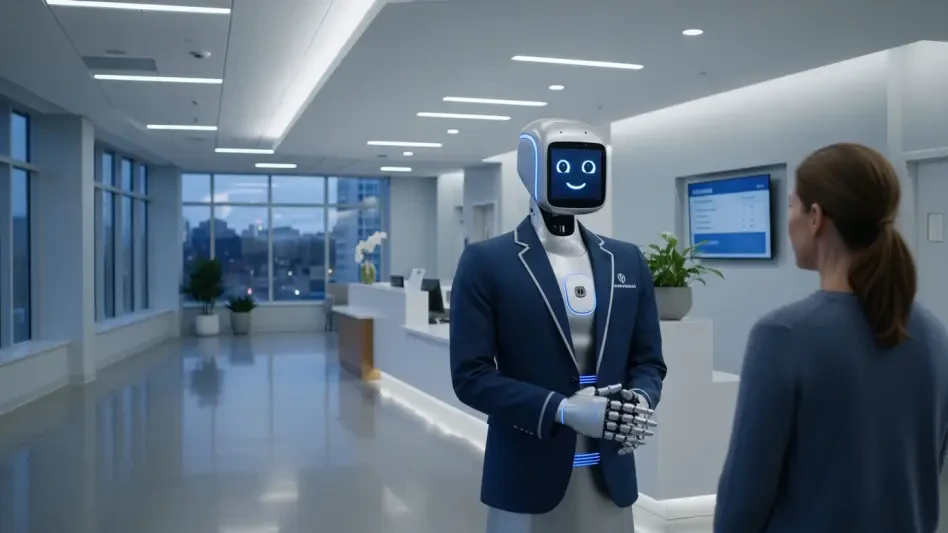
This is where the vision truly comes to life. A smart room is much more than a collection of gadgets. True integration means these tools talk to each other to create a responsive, healing environment. The digital whiteboard showing today’s schedule should sync with the robotic assistant that delivers supplies just in time for a procedure. The advanced camera system monitoring for a potential fall should be able to alert the care team through their mobile devices, while also enabling a virtual visit with family. To measure impact, you have to look beyond simple usage stats. For patient safety, I’d measure the reduction in patient falls or medication errors. For patient experience, you can track satisfaction scores related to communication, comfort, and control over their environment—things like adjusting their own lighting and sound. And for staff, a critical metric is the percentage of time nurses spend on direct patient care versus administrative or logistical tasks, which is a direct reflection of how well technology is freeing them up for higher-value, human interactions.
AI is often positioned as an “invisible partner” that optimizes scheduling and summarizes clinical data. Could you provide a step-by-step example of how AI assists a care team during a patient’s stay and how you ensure it amplifies human connection rather than overshadowing it?
Certainly. Imagine a patient with a complex condition requiring input from three different specialists. First, the AI optimizes their appointment schedules, finding the most efficient sequence to avoid delays and unnecessary waiting. During a consultation, the AI works in the background to assist with documentation and can summarize the key points of the conversation for the clinical record. Later, it analyzes the patient’s complex medication regimen and surfaces potential conflicts or insights for the care team. For the patient, the AI might deliver personalized educational content to their in-room tablet at the most appropriate moment in their care journey. The key is that the patient never directly interacts with the AI. They simply experience a process that feels incredibly smooth, clear, and coordinated. The technology’s invisibility is its greatest strength, because it allows the clinicians to be more present, more attentive, and more compassionate, using the insights AI provides to foster a stronger human connection.
With the growth of remote monitoring and hospital-at-home models, the transition out of the hospital is changing. What are the essential components for creating a seamless post-discharge journey that effectively bridges the gap between acute and chronic care management?
The journey absolutely does not end at discharge anymore. A seamless transition is built on a foundation of continuous connection. The first essential component is the technology itself: connected devices and remote patient monitoring tools that allow the care team to track a patient’s recovery from their own home. This isn’t just about collecting data; it’s about seeing patterns that might signal a need for early intervention. The second component is robust virtual follow-up capability, ensuring patients can easily connect with their care team without the burden of travel. Finally, and most critically, there must be a strong collaborative link between the hospital-based specialists and the patient’s local physician. This creates a bridge between acute care and long-term chronic care management, providing the patient with a sense of reassurance and continuity that their entire team is working together, even when they are miles apart.
For hospital leaders operating without the scale or resources of a major academic center, what are the most impactful first steps to begin designing a more integrated patient journey? Where can they achieve the biggest wins for both patients and staff with more limited investment?
This is a crucial question because innovation must be accessible to everyone. The most impactful first step isn’t a massive technology investment; it’s a shift in perspective. Leaders should start by asking different questions: Where does the most friction exist in our patient’s journey, from the first phone call to the final bill? How do patients experience our care across different times, places, and modalities? The biggest wins often come from solving these specific friction points. For example, implementing a simple, integrated digital communication platform for pre-visit instructions and real-time updates can dramatically reduce patient anxiety with a relatively modest investment. Another high-impact area is focusing on improving a single, high-volume service line by co-locating key services. It’s about being strategic and proving the concept on a smaller scale. The goal is to demonstrate how thoughtful integration of digital tools, physical space, and workflows can remove friction, which benefits both patients and staff.
What is your forecast for the future of hospital experience?
My forecast is that the very definition of a “hospital” will continue to blur. The future of the hospital experience belongs to those systems that stop thinking about care as something that happens within their four walls and start designing end-to-end journeys. We will see a continued acceleration of care moving into the home and community, powered by remote technology and AI. The hospital itself will increasingly become a hub for only the most complex, acute procedures and diagnostics. The ultimate differentiator will not be the technology itself, but how skillfully health systems use that technology to amplify humanity. The winning organizations will be those that make the patient feel seen, heard, and supported at every step, creating an experience so seamless and compassionate that the technology behind it is completely invisible.