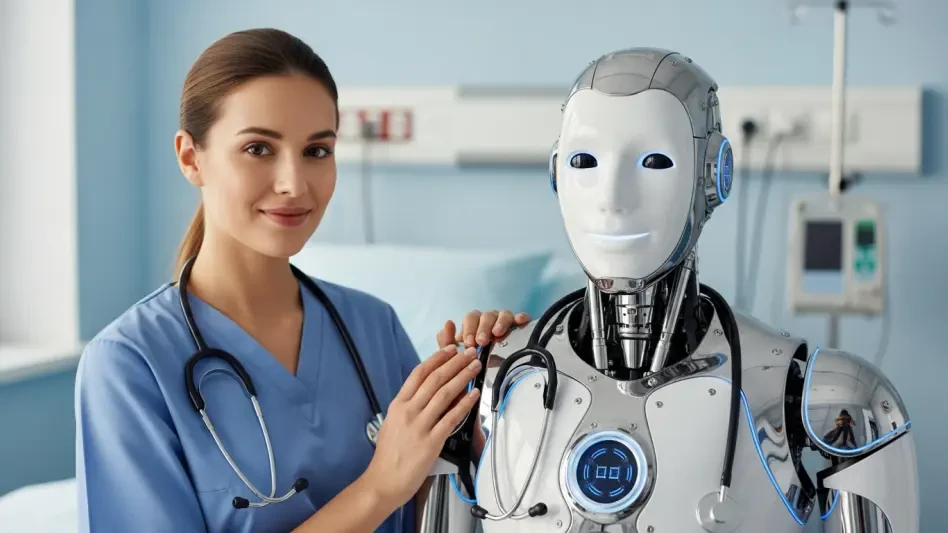

The persistent challenge for modern healthcare is not simply adopting new technologies but weaving them into the very fabric of clinical practice to amplify human expertise and elevate patient-centric care. As hospitals worldwide grapple with the dual pressures of technological advancement and the irreplaceable need for human connection, a critical question emerges: can an institution truly master both high-tech efficiency and high-touch compassion? The answer lies not in choosing one over the other but in creating a synergistic model where innovation serves humanity.
The Driving Force Behind Healthcare’s New Model
Healthcare systems today are navigating a perfect storm of workforce shortages, rising operational costs, and increasing patient complexity. These pressures have rendered traditional, siloed hospital operations insufficient, creating an urgent need for a more integrated, efficient, and resilient model. This imperative for change is what pushes leading institutions to fundamentally rethink their approach to care delivery, moving beyond incremental improvements toward a comprehensive transformation.
In southern Taiwan, Kaohsiung Medical University Chung-Ho Memorial Hospital (KMUH) confronted these very challenges. Rather than making piecemeal adjustments, the hospital embarked on a deliberate journey to redefine its identity. It set out to build a system where digital tools and unwavering clinical standards work in concert, establishing a new benchmark for what a people-focused smart hospital can achieve.
Marrying Digital Innovation with Certified Excellence
The cornerstone of the KMUH strategy is a dual-engine approach that prioritizes technological advancement and clinical quality equally. The first engine is a robust technological backbone, guided by a multi-year “Smart Hospital Development Plan.” This strategic initiative culminated in a significant milestone when the hospital became the first in southern Taiwan to achieve HIMSS EMRAM Stage 7 certification in July 2025, an international gold standard for digital health infrastructure.
Key innovations power this digital engine, including AI-driven Smart ICUs that can predict patient decline before it becomes critical and Digital Nursing Dashboards that streamline shift handoffs to reduce errors. A next-generation Hospital Information System, secured with cloud and blockchain technology, ensures data integrity, while telehealth platforms extend the reach of specialists to remote and underserved communities, democratizing access to expert care.
The second engine is an unwavering commitment to certified clinical quality, which provides the foundation upon which all technology rests. KMUH leads the nation with 14 disease-specific care certifications, ensuring that every patient receives standardized, evidence-based treatment for conditions ranging from stroke and heart failure to complex cancers. By meeting both Joint Commission International (JCI) and Taiwanese accreditation standards, the hospital guarantees that its care is not only technologically advanced but also fundamentally safe and effective.
Putting AI to Work for Better Patient Outcomes
Artificial intelligence at KMUH is not a futuristic concept but a practical tool integrated into daily workflows to improve outcomes and support staff. One prime example is the KMUGPT Nursing Assistant System, an in-house language model designed to lighten the administrative burden on frontline caregivers. This system helps auto-generate nursing notes and summaries, significantly reducing documentation time and allowing nurses to focus more on direct patient interaction.
Beyond administrative efficiency, AI is used for proactive clinical intervention. The hospital’s award-winning Smart AKI Prediction Tool analyzes patient data to forecast the risk of postoperative acute kidney injury, a serious complication. This predictive capability allows clinical teams to intervene early, preventing adverse events and improving patient safety. This demonstrates a shift from reactive treatment to proactive, data-driven care.
Furthermore, KMUH leverages technology to advance health equity beyond its physical walls. An AI-powered tool for breast imaging quality control has been deployed on mobile mammography units that travel to rural areas. This ensures that women in underserved communities receive the same high standard of diagnostic accuracy as those treated at the main hospital, turning technology into a powerful force for equitable healthcare access.
A Practical Framework for People-Focused Transformation
The success of this model provides a clear, replicable framework for other institutions aiming for a similar transformation. The first step is a firm institutional commitment to a dual strategy that places equal value on technological integration and certified clinical protocols. This ensures that innovation is always tethered to the core mission of safe, effective patient care. From there, developing a long-term, phased smart hospital plan is crucial for guiding digital implementation and ensuring sustainable progress.
The next step involves targeting specific clinical and administrative pain points with tailored AI and digital solutions, rather than adopting technology for its own sake. Whether it is reducing the documentation burden or enhancing diagnostic accuracy, solutions should address real-world needs. Simultaneously, the pursuit and maintenance of rigorous, internationally recognized clinical certifications are non-negotiable, as they provide the essential guarantee of quality. Finally, a truly people-focused hospital leverages its technological capabilities to extend care into the community, breaking down barriers and improving health equity for the entire population it serves.