
Faisal Zain is a distinguished expert in healthcare technology with a profound specialization in the manufacturing and integration of medical devices for diagnostics. Having spent years at the intersection of engineering and patient care, he has pioneered efforts to bring sophisticated hardware and software solutions into the clinical environment. His expertise is particularly relevant now as the industry shifts toward AI-driven precision medicine, a field where he has been instrumental in bridging the gap between theoretical data science and the practical realities of high-stakes hospital workflows.
The following interview explores the strategic evolution of Waiv following its $33 million spin-out from Owkin, the role of federated learning in maintaining data privacy, and the practical challenges of integrating digital pathology into routine oncology. We also delve into the competitive landscape of AI diagnostics and how multimodal data is redefining the search for biomarkers in drug development.
Now that Waiv has spun out from Owkin with $33 million in funding, how will you manage the transition from a specialized business unit to an independent entity, and what specific global markets are you prioritizing for the commercial expansion of your AI-enabled precision testing?
The transition from a business unit known as Owkin Dx to an independent entity like Waiv is about accelerating our speed to market while maintaining the scientific rigor we inherited. With $33 million in fresh capital, we are moving beyond our foundational roots in Paris to establish a robust global presence, targeting markets where digital pathology is already gaining a foothold. Our primary focus is on expanding our clinical testing offerings across Europe and the United States, where the demand for precision oncology is highest. We are building our own equity story now, which allows us to be more agile in how we partner with healthcare providers and scale our commercial operations.
Federated learning allows for the analysis of data across hospitals and cancer centers while maintaining privacy. How does this collaborative data model enhance the predictive accuracy of your biological indicators, and what steps are necessary to ensure these insights remain accessible to clinicians in real-world settings?
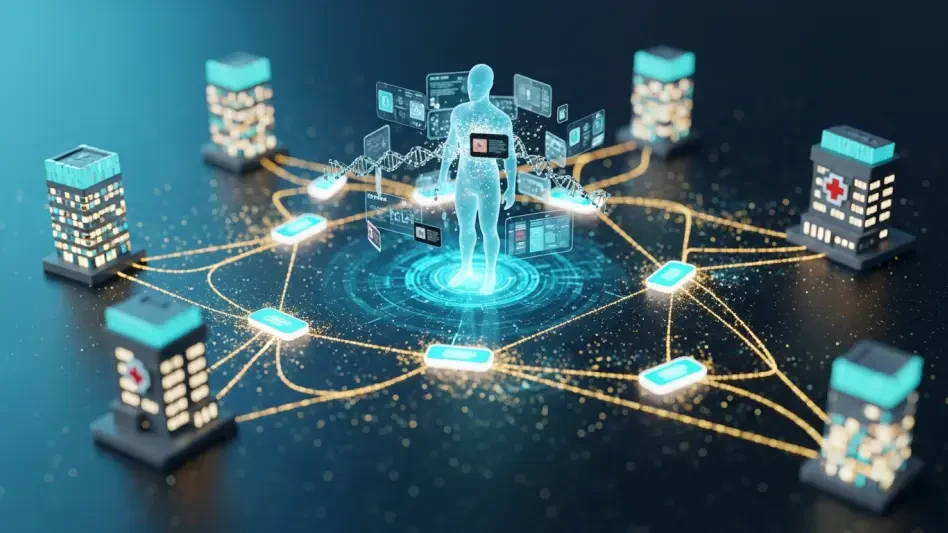
Federated learning is the backbone of our predictive accuracy because it allows us to train our AI on massive, diverse datasets from various hospitals without ever moving the sensitive patient data itself. By analyzing information where it lives, we capture the nuances of different patient populations, which makes our biological indicators much more reliable than those trained on a single, isolated source. To ensure these insights are accessible, we focus on creating a seamless software interface that fits into the existing infrastructure of cancer centers. It is vital that a clinician in a busy hospital can receive an AI-generated outcome prediction as easily as they would a standard lab result, without needing to become a data scientist themselves.
Digital pathology images provide a highly dimensional view of tumor microenvironments. How does your AI technology integrate into existing diagnostic workflows without disrupting routine clinical care, and what specific metrics do you use to validate the reliability of these images in identifying treatment-eligible patients?
We integrate our technology directly into the digital pathology workflows that many modern labs already have in place, ensuring that our AI analysis occurs in the background of the routine diagnostic process. These images are incredibly rich and highly dimensional, providing a window into the tumor microenvironment that the human eye might miss, but they must be validated against clinical outcomes to be useful. We use rigorous metrics, such as predictive accuracy for specific biological markers and correlation with patient response rates, to prove that our AI can reliably identify who is eligible for a particular therapy. This validation is what gives pathologists the confidence to rely on our digital tools during their daily review of patient slides.
Pharmaceutical companies like AstraZeneca and Merck utilize AI to support drug research and development. In what ways does your technology shorten the timeline for discovering new biomarkers, and how do you tailor your per-test business model to meet the differing needs of research labs versus clinical providers?
Working with giants like AstraZeneca and Merck allows us to apply our AI to vast libraries of research data, where we can identify new biomarkers in a fraction of the time it would take using traditional bench science. Our technology scans digital images for patterns that correlate with drug efficacy, essentially flagging potential success or failure much earlier in the R&D cycle. To support this, we employ a flexible per-test business model: research labs use it for high-volume discovery phases, while clinical providers use it for individual patient decision-making. This ensures that whether a partner is looking for a needle in a haystack or trying to save a specific patient’s life, the cost and delivery of the technology remain scalable and fair.
Precision medicine requires more detailed information than traditional diagnostics can typically offer. How do your multimodal oncology tests bridge this information gap, and what practical hurdles must pathologists overcome when moving away from standard diagnostic methods toward AI-driven outcome prediction?
Traditional diagnostics often provide a flat view of a disease, but our multimodal approach combines digital pathology images with other clinical data to create a 360-degree profile of the tumor. This bridges the information gap by revealing hidden genetic drivers and structural nuances that guide more effective treatment choices. However, the hurdle for many pathologists is the “black box” perception of AI, as moving away from traditional staining and manual microscopy requires a significant shift in trust. We address this by providing transparent, validated results that complement their expertise rather than replacing it, helping them transition into a role where they are the ultimate navigators of AI-driven insights.
Your technology is competing in a landscape alongside firms like Foundation Medicine and Tempus AI. What unique advantages does your focus on digital pathology images provide for oncology decision-making, and how do you plan to iterate on your scientific foundation to stay ahead of evolving cancer therapies?
While competitors like Foundation Medicine and Tempus AI have made incredible strides, our unique advantage lies in our deep optimization for digital pathology, which is often more accessible and faster than genomic sequencing alone. By extracting high-dimensional data from standard tissue slides, we provide a layer of “spatial intelligence” about the tumor that other methods might overlook. To stay ahead, we are constantly iterating on our algorithms to account for new classes of therapies, such as immunotherapies that require an even deeper understanding of the immune cells surrounding a tumor. Our goal is to ensure that as cancer treatments become more complex, our AI evolves just as quickly to identify the patients who will benefit most.
What is your forecast for the role of AI in oncology diagnostics over the next decade?
Over the next ten years, I forecast that AI will move from being an “add-on” tool to becoming the primary operating system for oncology diagnostics worldwide. We will see a shift where every biopsy is automatically scanned and analyzed by AI before a human even sees it, providing a baseline of predictive data that will make “one-size-fits-all” chemotherapy a thing of the past. As data privacy through federated learning becomes the global standard, we will see a massive democratization of expertise, where a local community hospital can access the same diagnostic power as a top-tier research center. Ultimately, AI will not just find the cancer; it will tell us exactly how to kill it for each specific individual, turning oncology into a truly proactive rather than reactive field.