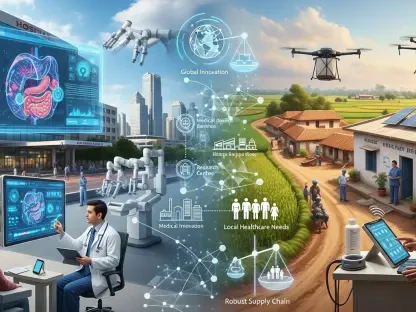

A quiet but powerful digital transformation is reshaping the very foundation of medical care across Asia, with artificial intelligence emerging as the central architect of this new healthcare landscape. This technological wave is not merely an upgrade to existing systems but a fundamental rethinking of how healthcare is delivered. The significance of this trend is profound, promising to enhance patient outcomes through more accurate diagnostics, streamline hospital operations for greater efficiency, and accelerate medical innovation across the continent. This analysis will explore the accelerating adoption of AI, examine real-world case studies from leading institutions, consider the future implications of this integration, and offer a concluding summary of its transformative impact.
The Accelerating Adoption of AI in Medical Services
A Strategic Push Toward Digital Modernization
Across Asia, a clear pattern of strategic investment in digital health is emerging, with private healthcare institutions actively forming partnerships with specialized technology companies. This movement signals a decisive shift from traditional, often siloed, medical practices toward integrated, intelligent healthcare ecosystems. Data from diverse markets, including Japan, Indonesia, South Korea, and India, indicates a widespread commitment to incorporating advanced digital and AI systems into the core of their operations.
These investments are fundamentally modernizing healthcare delivery at every level. From AI-powered diagnostic tools that can detect diseases earlier and with greater accuracy to streamlined patient-facing services that improve accessibility and convenience, the impact is comprehensive. By leveraging intelligent technologies, hospitals are not only enhancing their clinical capabilities but also optimizing resource allocation and reducing administrative burdens, allowing medical professionals to focus more on patient care.
Landmark Implementations Shaping a New Standard of Care
Concrete examples of this trend are setting new benchmarks for medical excellence. In Japan, the esteemed Kameda Medical Center has adopted Sectra’s AI-driven digital pathology platform. This system digitizes tissue samples, enabling pathologists to analyze and collaborate on cases remotely, which enhances diagnostic accuracy and workflow efficiency. Similarly, Indonesia’s Mandaya Royal Hospital Puri has pioneered the use of the Zamenix AI-powered robotic system for minimally invasive kidney stone surgery, marking the technology’s first deployment in the country and establishing the hospital as a national training center.
This momentum is also visible in specialized fields. In South Korea, Korea Eisai is rolling out an innovative AI-based dementia screening service that analyzes brain scans to support early diagnosis, complementing its pharmaceutical advancements in Alzheimer’s treatment. Meanwhile, in India, the Max Healthcare hospital chain has partnered with Google to radically simplify patient access. This collaboration allows users to book appointments directly through Google Search and Maps, seamlessly connecting them to verified information and booking platforms, thereby improving the overall patient journey.
Insights from Industry Leaders and Strategic Partnerships
The high-profile adoption of these advanced technologies reflects a top-level commitment to innovation that goes beyond simple modernization. The strategic rationale is clear: to gain a competitive edge, improve clinical outcomes, and meet the rising expectations of a digitally-savvy population. Decisions by leading institutions to embrace AI are not isolated experiments but calculated moves to redefine the standard of care and position themselves as leaders in a rapidly evolving industry.
Furthermore, the depth of this commitment is evident in how these technologies are being integrated. When Mandaya Royal Hospital decided to become the national training center for the Zamenix robotic system, it underscored a profound belief in the technology’s transformative potential. This move aims to foster a skilled workforce and encourage wider adoption, ensuring that the benefits of AI-assisted surgery extend beyond a single institution.
Collaborations such as the one between Max Healthcare and Google highlight a broader industry consensus on the necessity of patient-centric digital integration. By embedding healthcare services into everyday digital platforms, providers are making medical care more accessible and less intimidating. This partnership model demonstrates a shared understanding that the future of healthcare lies in creating a seamless, user-friendly experience that empowers patients to take a more active role in managing their health.
The Future Trajectory of Intelligent Healthcare in Asia
The long-term benefits of this trend are poised to be transformative. Greater diagnostic precision through AI analysis will lead to earlier interventions and better prognoses, while AI-assisted surgical systems promise enhanced outcomes with reduced recovery times. For patients, the entire healthcare journey—from scheduling an appointment to receiving follow-up care—is becoming more streamlined and personalized, fostering greater engagement and satisfaction.
However, the path to widespread adoption is not without its challenges. The significant implementation costs of advanced AI systems can be a barrier for smaller institutions, and there is a critical need for specialized training to equip medical staff with the skills to use these new tools effectively. Moreover, stringent data security regulations must be navigated to protect sensitive patient information, and concerted efforts are needed to ensure equitable access to these technologies, preventing a digital divide in healthcare quality.
Ultimately, this trend carries broader implications for the region. As more institutions adopt compatible digital platforms, the potential for a more interconnected healthcare ecosystem grows, facilitating cross-border collaboration and data sharing for research. This connectivity could significantly accelerate medical research and development, allowing Asia to become a hub for healthcare innovation and contributing to global advancements in medicine.
Conclusion Charting the Course for a Smarter Healthcare Future
The evidence examined in this analysis clearly demonstrated how leading healthcare providers across Asia were strategically leveraging artificial intelligence to redefine medical excellence. The initiatives undertaken by institutions in Japan, Indonesia, South Korea, and India served as powerful indicators of a continent-wide shift toward smarter, more integrated healthcare delivery. These were not isolated technological upgrades but foundational changes aimed at improving every facet of the patient experience.
This trend’s importance was underscored by its direct impact on creating a more efficient, accurate, and accessible healthcare model for millions of people. From enabling remote diagnostics to simplifying patient access through familiar digital platforms, these efforts collectively addressed some of the most persistent challenges in modern medicine. The partnerships between healthcare providers and technology firms have proven to be a critical catalyst in this transformation.
These pioneering efforts have laid the groundwork for a new era of proactive and personalized medicine in Asia. The move toward intelligent systems represented a fundamental step in building a future where healthcare is not just reactive but predictive, tailored to the unique needs of each individual and capable of delivering better outcomes for all.