
Today, we’re joined by Faisal Zain, a leading expert in medical technology, to explore the dynamic and often uncertain future of clinical diagnostics. As rapid advancements in AI, at-home testing, and data connectivity reshape healthcare, we’ll delve into the practical challenges and transformative opportunities on the horizon. Our conversation will cover the ethical dilemmas posed by patient-driven diagnostics, the tangible applications of AI in structural biology, the security risks of data consolidation, the hurdles facing multi-cancer detection, and the strategies for innovation in a cautious economic climate.
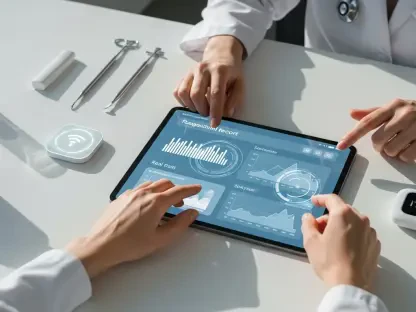
With patient-driven diagnostics from wearables and at-home kits growing, what new ethical guidelines are needed to ensure data privacy and accuracy? How can healthcare systems practically support physicians in interpreting these results and ensuring appropriate follow-up care? Please provide a step-by-step example.
This is one of the most pressing issues we face. The momentum behind patient-driven diagnostics is undeniable, driven by the miniaturization of technology like glucose monitors and health trackers. But this empowerment comes with significant responsibility. We urgently need updated ethical guidelines that establish clear standards for data privacy, ensuring patient information is secure and not misused. These guidelines must also address test accuracy and reliability, so we can maintain the public’s trust in laboratory testing. To support physicians, we need to build integrated systems, not just hand them more data. For instance, a practical workflow would be: first, a patient’s device flags an abnormal heart rhythm. Second, this data is securely and automatically transmitted to their electronic health record through a standardized protocol. Third, a clinical decision support tool alerts the physician, providing a preliminary interpretation and suggesting a specific, confirmatory lab test. Finally, the physician reviews this, discusses it with the patient during a telehealth or in-person visit, and initiates the follow-up, turning a raw data point into a concrete clinical action.
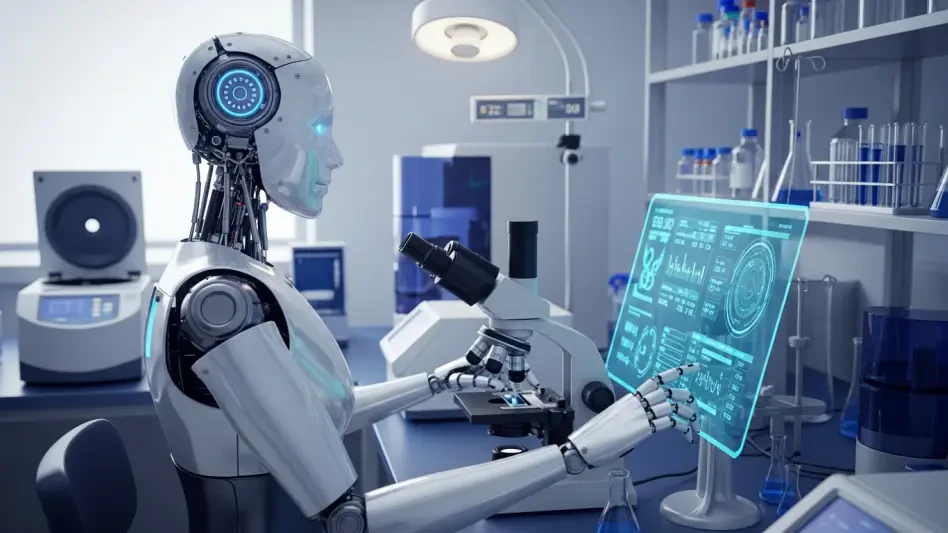
Integrating AI-driven modeling with structural biology is a promising area for diagnostics. Beyond a conceptual level, what is a specific, practical application you foresee by 2026, and what are the key steps required to validate and implement this tool in a clinical setting?
I believe that by 2026, we will see AI and structural biology move from the pharmaceutical research bench to the clinical diagnostics frontline. A very practical application would be in personalized oncology. Imagine a new diagnostic tool that analyzes the three-dimensional structure of a patient’s specific cancer proteins. AI modeling could then predict, with high accuracy, how that particular protein structure will respond to various chemotherapy agents. This would allow clinicians to select the most effective treatment from the start, avoiding the trial-and-error approach. To get there, the validation process would be rigorous. First, we’d need to validate the AI models against vast libraries of known protein structures and clinical trial outcomes. The next step would be prospective clinical studies to prove the tool’s predictions improve patient outcomes compared to the current standard of care. Finally, for implementation, we would need to integrate this tool into the existing laboratory workflow, ensure regulatory approval, and train pathologists and oncologists on how to interpret these highly sophisticated reports.
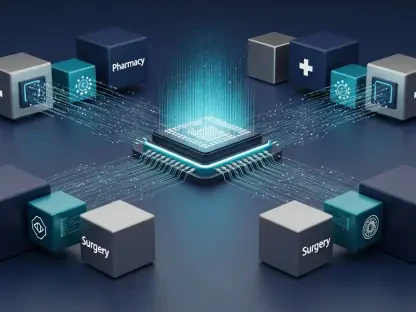
The consolidation of health data on a few tech platforms presents sustainability and security risks, as seen with data center outages. What concrete strategies can healthcare organizations implement to mitigate these vulnerabilities while still benefiting from the power of multi-omics diagnostics?
This is the paradox of connectedness. While we gain immense power from integrating genomics, proteomics, and wearable data on single platforms, we also create single points of failure. The data center outages in 2025 were a stark reminder of this vulnerability. To mitigate this, organizations must adopt a multi-pronged strategy. First, they should pursue a multi-cloud or hybrid-cloud approach, diversifying their data storage across different providers and physical locations to avoid putting all their eggs in one basket. Second, implementing robust, regularly tested disaster recovery and business continuity plans is non-negotiable. This means having offline backups and clear protocols for operating essential services during an outage. Finally, we need to push for interoperability standards that allow data to be more portable, reducing reliance on any single proprietary platform and giving healthcare systems more control over their own critical information.
Multi-cancer detection tests face significant hurdles like reimbursement and a lack of follow-up infrastructure. What specific metrics or milestones must these tests achieve to overcome these barriers, and whose responsibility is it—industry, payers, or providers—to build the necessary support systems for patients?
Multi-cancer detection (MCD) tests hold incredible promise, but promise alone doesn’t build a sustainable healthcare solution. To overcome the reimbursement hurdle, these tests must demonstrate clear clinical utility and cost-effectiveness through large-scale studies. The key metric will be a proven ability to shift cancer detection to earlier, more treatable stages, leading to a measurable improvement in survival outcomes. They also need to achieve high specificity to minimize false positives, which can lead to costly and stressful follow-up procedures. As for responsibility, it has to be a shared effort. The industry has the responsibility to generate the robust clinical evidence payers need to justify coverage. Payers, in turn, must be willing to engage and create novel reimbursement models for these groundbreaking tests. But crucially, providers and health systems must take the lead in building the follow-up infrastructure—the specialized clinics, imaging capacity, and patient navigation programs—to ensure a positive test result is the start of a clear, supportive, and effective care journey for the patient.
Given the cautious investment climate outside of AI and multi-cancer detection, how can innovators in other areas of laboratory medicine secure funding? Please describe a specific type of collaboration or business model that could succeed in this uncertain economic landscape.
It’s a challenging environment, no doubt. With rising manufacturing costs and reimbursement hurdles, investors are hesitant to back innovations outside of the big-ticket areas like AI and MCD. To succeed, innovators must get creative and strategic. One business model that I believe can thrive is the strategic corporate partnership. For example, a startup developing a novel point-of-care diagnostic for a specific infectious disease could partner directly with a large, established diagnostic company or a major hospital system. The startup brings the cutting-edge technology and agility, while the corporate partner provides capital, regulatory expertise, established distribution channels, and immediate market access. This de-risks the investment, provides a clear path to market, and ensures the innovation is addressing a validated clinical need, making it a much more attractive proposition in a cautious economic climate.
What is your forecast for clinical diagnostics in the next decade?
My forecast is one of radical transformation defined by decentralization and personalization. Over the next ten years, the lab will continue to move closer to the patient—from the hospital basement into the home, onto our wrists, and integrated into our daily lives. This will be powered by AI that doesn’t just analyze data but provides predictive, actionable insights for both individuals and entire populations. We will see a shift from reactive, disease-based testing to proactive, wellness-oriented monitoring. However, this future is only achievable if we successfully navigate the challenges of data security, regulatory adaptation, and equitable access. The most vital element will be keeping the human connection at the center of it all, ensuring that laboratorians and clinicians are empowered by these tools to provide more compassionate and effective care for every person they serve.