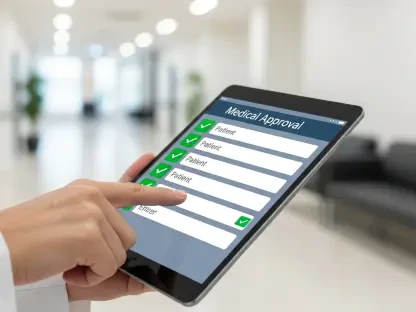

The strategic decisions being made today within the highly regulated landscape of connected healthcare are creating the governance playbook that will guide mission-critical IoT deployments across all industries tomorrow. Long past the phase of speculative pilot programs, the Healthcare Internet of Things (IoT) has become an operational necessity, woven into the fabric of modern clinical delivery. However, its maturation path diverges sharply from that of industrial or smart city applications. In healthcare, where a system failure can directly impact patient safety, the foundational pillars of success are no longer just innovation and connectivity but the far more rigorous disciplines of security, regulatory compliance, and systemic interoperability. These forces are not merely influencing the market; they are fundamentally reshaping system architecture, vendor selection, and the very definition of value in connected health.
From Experiment to Essential: The New Reality of Connected Healthcare
The modern Healthcare IoT ecosystem has expanded far beyond simple fitness trackers, now encompassing a vast network of interconnected devices that form the central nervous system of patient care. This includes everything from continuous glucose monitors in a patient’s home to smart infusion pumps within a hospital and asset-tracking sensors that optimize the flow of critical equipment. The scale is immense, and its importance cannot be overstated, as these systems are increasingly responsible for collecting the data that informs life-or-death clinical decisions. Consequently, the stakes are profoundly higher than in any other IoT sector.
This transformation is unfolding across several key market segments, each with unique challenges and opportunities. Remote patient monitoring (RPM) has become indispensable for managing chronic conditions and enabling aging-in-place, while smart hospital infrastructure leverages IoT for everything from optimizing bed availability to ensuring sterile equipment is in the right place at the right time. Meanwhile, the universe of connected medical devices—from pacemakers to diagnostic imaging machines—continues to grow, generating unprecedented volumes of clinical data. This complex environment involves a delicate interplay between technology vendors building the platforms, healthcare providers deploying these solutions into sensitive workflows, and regulatory bodies tasked with ensuring patient safety and data privacy.
The rapid entrenchment of Healthcare IoT is propelled by powerful socioeconomic tailwinds that are reshaping global health systems. Aging populations in developed nations create a sustained demand for more efficient, continuous care models that reduce the burden on traditional hospitals. The corresponding rise in chronic diseases like diabetes and heart disease necessitates the kind of proactive management that only connected monitoring can provide. Furthermore, systemic staff shortages across the healthcare industry are forcing providers to adopt technology-driven solutions that automate routine tasks, streamline workflows, and allow clinical staff to focus on higher-value patient care.
The Forces Reshaping Connected Medical Technology
Key Catalysts: Value-Based Care and Technological Convergence
A fundamental driver of this market’s evolution is the industry-wide pivot away from traditional fee-for-service reimbursement toward value-based care models. This new paradigm rewards providers for positive patient outcomes rather than the sheer volume of procedures performed, creating a powerful financial incentive to keep patients healthy and out of the hospital. Healthcare IoT is a natural enabler of this goal, as it provides the tools for continuous monitoring, early intervention, and personalized care plans that are essential for improving long-term health and preventing costly acute events.
This shift is occurring alongside a critical technological convergence of clinical Information Technology (IT) and operational IoT platforms. For years, these two worlds operated in separate spheres, but they are now being forced to integrate. Data from an IoT device is of little use if it cannot be seamlessly incorporated into a patient’s Electronic Health Record (EHR) and presented to clinicians in a meaningful way. This convergence is elevating the strategic importance of standards-based data models, particularly HL7/FHIR (Fast Healthcare Interoperability Resources), and robust APIs, which are becoming the control points for managing the flow of mission-critical health data.
Simultaneously, patient expectations have evolved dramatically. Conditioned by seamless digital experiences in retail, banking, and travel, patients now demand a similar level of accessibility and personalization from their healthcare. They expect to have access to their own health data, communicate easily with their care teams, and receive care that is both continuous and convenient. This consumer-driven pressure is a significant catalyst for the adoption of IoT solutions that can deliver a more connected and patient-centric healthcare experience.
Quantifying the Transformation: Market Growth and Future Projections
The adoption of Healthcare IoT is no longer a niche trend but a significant market force, with current valuations already in the tens of billions of dollars. Adoption rates are particularly strong in segments like remote patient monitoring, where reimbursement models have matured, and in smart hospital applications like asset tracking and environmental monitoring, which offer a clear and immediate return on investment. The market for connected medical devices, while more complex from a regulatory standpoint, continues to expand as manufacturers embed connectivity into new product lines by default.
Growth forecasts for the next five years indicate sustained, double-digit expansion across all major segments. Performance indicators for success are also evolving beyond simple metrics like the number of devices sold. Leading organizations are now measuring the impact of their IoT deployments on key clinical and financial outcomes, such as reduced hospital readmission rates, improved medication adherence, and operational cost savings. This focus on demonstrable value is critical for justifying continued investment and scaling initiatives from pilot projects to enterprise-wide deployments.
Investment trends reflect this maturation, with capital flowing away from basic hardware and connectivity toward more sophisticated platform capabilities. Venture capital and corporate investment are increasingly targeting companies that specialize in secure data management, advanced analytics, and AI-powered diagnostic tools that can turn raw IoT data into actionable clinical insights. Furthermore, a significant area of market opportunity lies with platforms that can offer “compliance-as-a-service,” helping healthcare providers navigate the complex regulatory landscape and reduce the burden of achieving and maintaining certification.
Bridging the Gaps: Overcoming Systemic Interoperability Roadblocks
Despite the rapid growth in connected devices, the most significant barrier to realizing the full potential of Healthcare IoT remains the persistent challenge of interoperability. The typical healthcare environment is a heterogeneous patchwork of systems, creating fragmented data silos that prevent a holistic view of patient health. Information from a modern IoT sensor is often trapped, unable to communicate with a 20-year-old piece of legacy medical equipment or the hospital’s central EHR system. This lack of seamless data exchange undermines the very premise of connected care.
The barriers to interoperability in healthcare are uniquely formidable compared to other industries. The sector is burdened with a vast installed base of legacy equipment that follows proprietary communication protocols and cannot be easily modified due to strict regulatory certifications. Clinical workflows are another major dependency; data must not only be exchanged but also delivered with the right context and timing to be useful without disrupting established care processes. These factors combine to make simple device integration a complex, costly, and often brittle undertaking.
To overcome these roadblocks, the industry is undergoing a strategic shift in focus. The conversation is moving away from raw device integration and toward the establishment of a standardized data fabric. Leading solutions are now built around middleware and abstraction layers that decouple devices from applications, allowing different systems to communicate through a common language. This API-first architectural approach, combined with the growing adoption of standards like FHIR, is reframing interoperability not as a technical problem to be solved for each device but as a strategic capability that enables long-term scalability and vendor flexibility.
Compliance by Design: Navigating the Complex Regulatory Maze
In Healthcare IoT, regulatory compliance is not an afterthought or a box-ticking exercise; it is a primary architectural constraint that shapes system design from the very beginning. Laws governing patient data protection, such as HIPAA in the United States, dictate stringent rules around data access, consent, and usage. In parallel, medical device certifications from bodies like the FDA impose strict controls on hardware and software modifications. Compounding this complexity are data residency laws, which may require sensitive patient information to be stored and processed within specific geographic borders, fundamentally influencing cloud and data center strategies.
This regulatory pressure is a key factor driving the adoption of hybrid edge-cloud models. A pure cloud-based architecture is often unworkable, as it may not meet the low-latency requirements for real-time clinical decision-making or comply with data residency rules. A hybrid model offers a solution, allowing sensitive data to be processed locally on an edge device or an on-premise server, while the cloud can be leveraged for less time-sensitive tasks like large-scale analytics and long-term data archival. This architectural choice is a direct response to the need to balance innovation with compliance.
The requirement for continuous compliance has also given rise to the concept of “certification-aware” systems. Any over-the-air update to a connected medical device’s firmware or software must be carefully managed to ensure it does not invalidate its regulatory certification. This necessitates robust lifecycle management capabilities built directly into the IoT platform. As a result, a vendor’s demonstrated expertise in navigating these complex regulatory pathways and providing a platform that supports “compliance by design” is rapidly becoming one of the most important criteria in the procurement process for healthcare providers.
The Next Frontier: Zero-Trust Security and Governance-Led Innovation
The proliferation of millions of connected endpoints in both clinical and home settings has dramatically expanded the digital attack surface for healthcare organizations. Each device, from a simple sensor to a complex diagnostic machine, represents a potential entry point for malicious actors seeking to steal valuable patient data or disrupt critical hospital operations. The security risks are compounded by the long lifecycle of many medical devices, inconsistent patching policies, and historically weak identity and authentication mechanisms at the endpoint level.
In this new, distributed environment, the traditional security model of building a strong network perimeter is no longer adequate. A “castle-and-moat” approach offers little protection when a significant portion of the devices are operating outside the hospital walls, on public or home networks. The inadequacy of this outdated model requires a fundamental paradigm shift in how security is conceived and implemented for connected healthcare systems.
This shift is leading to the widespread adoption of a zero-trust security model, which operates on the principle of “never trust, always verify.” In a zero-trust architecture, no device, user, or network connection is considered inherently trustworthy, regardless of its location. Security is enforced through several core principles: every device must have a unique, tamper-proof identity managed throughout its lifecycle; all data must be encrypted end-to-end, whether at rest or in transit; and every request for access to data or resources must be strictly and continuously authenticated and authorized. This dynamic, identity-centric approach provides a far more robust defense against the sophisticated threats facing modern healthcare. As Healthcare IoT becomes more deeply embedded in care delivery, it is rightly being treated as critical digital infrastructure, demanding institutional-grade security and governance by default.
Strategic Imperatives: Redefining Success in a Governed IoT Ecosystem
The key findings of this analysis show that the criteria for success in Healthcare IoT have fundamentally changed. The conversation is no longer dominated by the number of devices connected or the novelty of the technology. Instead, success is now defined by the ability to establish and maintain robust governance at scale. The new cornerstones of a successful deployment are a mature security posture, a proactive compliance strategy, and a scalable approach to interoperability. These platform-level qualities have superseded device features as the primary determinants of long-term value.
This evolution is reflected in the changing procurement criteria of healthcare providers. When selecting an IoT partner, organizations are now prioritizing a vendor’s demonstrated maturity in regulatory support, its commitment to platform reliability and uptime, and its deep expertise in integrating with existing clinical IT systems. A vendor’s ability to provide a secure, compliant, and interoperable platform is now a more critical consideration than the price or feature set of its hardware. This shift places the burden on vendors to differentiate themselves based on trust and governance.
Ultimately, an investment in Healthcare IoT is a long-term commitment to governance. For healthcare providers, the first step is no longer a technology pilot but the development of a comprehensive strategy that addresses security, compliance, and data management from the outset. For technology vendors, the mandate is clear: build these principles into the core of the platform, as they are no longer optional add-ons but essential requirements for competing in this high-stakes environment. Thriving in this new era requires all stakeholders to recognize that in connected healthcare, effective governance is not a barrier to innovation—it is the essential foundation upon which all sustainable innovation is built.