
What happens when a critical medical diagnosis hinges on the skill of the person holding the ultrasound probe? In hospitals and clinics worldwide, the variability in operator expertise often means the difference between a clear image and a missed finding. Enter Samsung Healthcare’s latest innovation, unveiled at the Radiological Society of North America’s annual conference in Chicago. This cutting-edge ultrasound system, powered by artificial intelligence, is poised to transform diagnostics by making precision accessible to all, regardless of experience.
Why This Innovation Matters in Medical Imaging
The importance of this breakthrough cannot be overstated. Ultrasound technology remains a cornerstone of medical diagnostics, used in everything from prenatal care to cancer detection. Yet, the field grapples with a persistent challenge: inconsistency due to human skill disparities. With many seasoned sonographers retiring and newer professionals stepping in, healthcare systems face mounting pressure to ensure reliable results. Samsung’s latest system addresses this gap head-on, promising a future where diagnostic accuracy no longer depends solely on the operator’s years of practice.
Diving into the Technology: What Sets It Apart
At the heart of this system lies a powerful blend of advanced hardware and AI-driven software. Unlike traditional ultrasound machines, this technology integrates Samsung Electronics’ expertise in semiconductors with refined imaging capabilities. The result is a device that delivers sharper, more consistent visuals across diverse applications, from abdominal scans to vascular assessments. This isn’t just an upgrade—it’s a reimagining of what ultrasound can achieve, tackling long-standing hurdles in clarity and reliability with unprecedented sophistication.
AI as a Guiding Hand in Real-Time Scanning
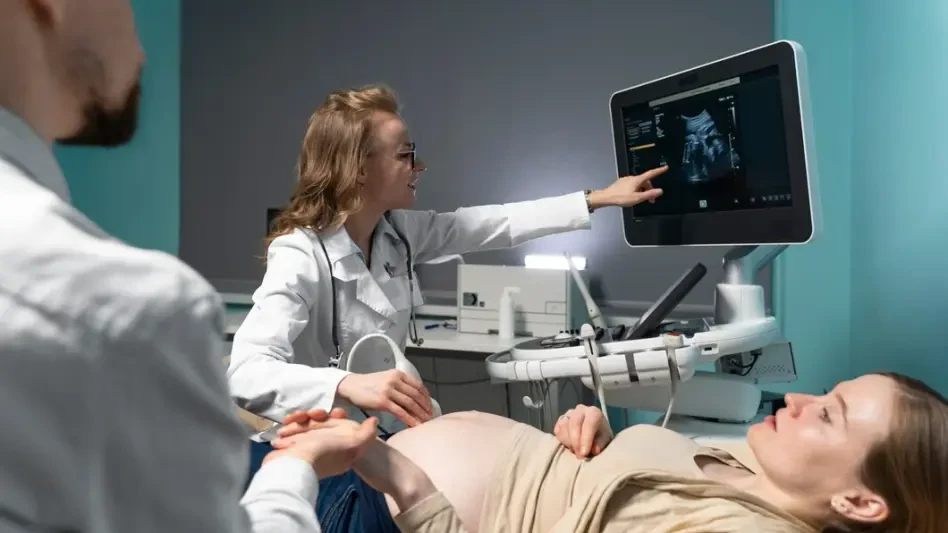
One of the most striking features is the real-time guidance powered by AI. Imagine a tool that acts like a mentor, coaching operators through each scan to ensure uniformity. This system does exactly that, minimizing errors that often stem from inexperience. Tracy Bury, Chief Commercial Officer at Samsung Healthcare, likened traditional ultrasound to an art form such as painting, where outcomes vary wildly based on skill. By contrast, this AI assistance standardizes the process, making high-quality imaging achievable even for novices.
Transforming Diagnostics with Instant Insights
Beyond guiding scans, the system’s AI capabilities extend to real-time diagnostic support. During routine examinations, it can flag suspicious lesions in critical areas like the liver or breast, offering immediate insights to clinicians. Early feedback suggests this feature could significantly reduce missed diagnoses, a common issue in high-volume or understaffed settings. Such precision not only boosts confidence in results but also streamlines patient care, potentially saving lives through earlier intervention.
Early Reactions: A Glimpse from the Frontlines
Those who have tested the system are already singing its praises. A physician involved in early trials described it as a “game changer,” emphasizing how it redefines the scanning experience. The ability to level the playing field—making expert-level imaging accessible to all—has struck a chord with professionals in the field. Bury echoed this sentiment, noting that the technology empowers healthcare providers to focus on patient care rather than wrestling with inconsistent tools. These initial impressions highlight a growing excitement about its potential to reshape ultrasound practices globally.
Redefining Clinical Workflows for the Better
The practical implications for hospitals and clinics are profound. By integrating this system, facilities can expect fewer repeat scans, as AI guidance ensures consistency from the start. This efficiency translates to higher patient throughput, a critical advantage in busy environments. Moreover, the real-time detection of anomalies equips doctors with actionable data on the spot, enabling faster decision-making. For under-resourced settings, this could mean the difference between delayed treatment and timely care.
Building Skills with Smart Technology
Another overlooked benefit lies in training. Newer sonographers, often daunted by the steep learning curve of ultrasound imaging, can lean on this system’s feedback to hone their skills. It’s akin to having a seasoned expert by their side, offering corrections and tips in the moment. Over time, this builds a more competent workforce without sacrificing diagnostic quality during the learning phase. The ripple effect could be a more robust healthcare system, better equipped to handle growing demand.
Reflecting on a Milestone in Medical Imaging
Looking back, the introduction of this AI-powered ultrasound system marked a pivotal moment in medical technology. It tackled the persistent challenge of operator variability with elegance, blending innovation with practicality. As healthcare evolved, the enthusiastic response from early adopters underscored its transformative impact. Moving forward, the focus shifted to widespread adoption—ensuring that clinics of all sizes could harness this tool to elevate patient care. The journey toward precision diagnostics took a bold step, promising a landscape where technology and human expertise worked hand in hand for better outcomes.