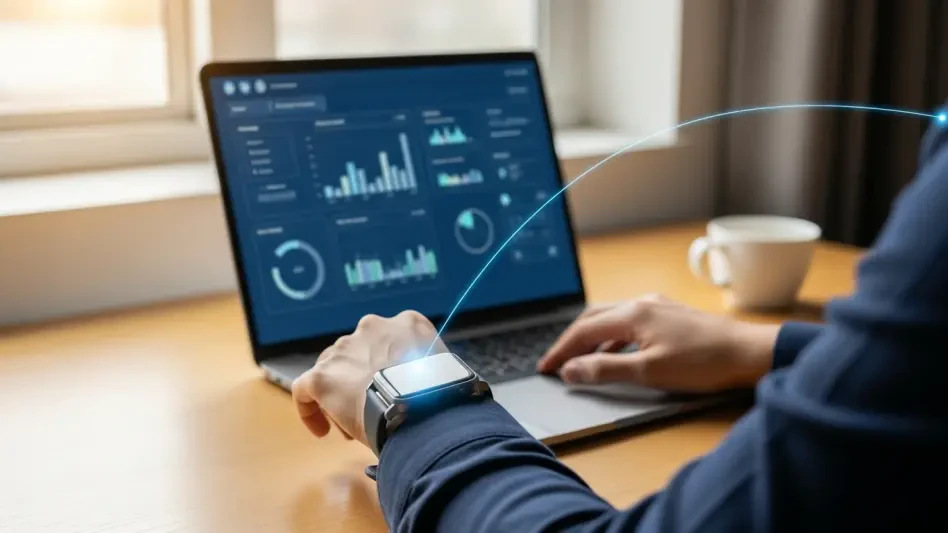

The sleek glass and metal of a modern smartwatch have finally evolved from a trendy fitness accessory into a powerful diagnostic engine that rivals the precision of traditional hospital monitoring systems. At the latest HIMSS conference, Samsung and Verily unveiled a strategic partnership designed to funnel Galaxy smartwatch data directly into the Verily Viewpoint precision health platform. This integration seeks to answer a fundamental question: can the hardware already resting on a participant’s wrist provide the same level of rigorous medical evidence as stationary lab equipment? By merging consumer accessibility with clinical-grade analytics, the two companies are transforming how pharmaceutical giants and government agencies observe human health in real time.
Bridging the Gap: Consumer Tech and Medical Evidence
The transition from counting steps to validating drug efficacy marks a significant shift in the medical landscape. For years, the health community viewed wearable data with skepticism, often citing inconsistencies in sensor accuracy and a lack of standardized reporting. However, the rise of decentralized clinical trials has necessitated a more flexible approach to data collection. This collaboration addresses the “snapshot” problem, where patient health is only assessed during infrequent, high-stress clinic visits. Instead, researchers can now observe a participant’s physiological state within the comfort of their own home, reflecting the true complexities of daily life.
By moving beyond basic wellness metrics, the partnership allows for a more inclusive research model. Patients who live far from major medical centers or those with limited mobility can now contribute to global studies without the burden of constant travel. This democratization of clinical research ensures that the data collected is not just voluminous, but also representative of a diverse population. The result is a more holistic understanding of how different bodies react to treatments over long periods, bridging the divide between laboratory theory and real-world practice.
The Evolution: Wearables as Research-Grade Instruments
Modern smartwatches have reached a level of technological maturity where their internal sensors meet the strict compliance standards required for regulated medical studies. This evolution is driven by the need for continuous monitoring, which provides a far more granular view of a patient’s recovery or decline than traditional methods. As these devices become more sophisticated, they are capable of capturing high-fidelity signals that were previously only available through bulky, expensive medical machinery. This shift allows for the collection of longitudinal data, which is essential for understanding chronic conditions.
The integration of these instruments into the research workflow also helps solve the issue of participant retention. When a medical study utilizes a device that a person already enjoys wearing, the “burden of participation” drops significantly. This leads to higher compliance rates and more reliable data sets. By leveraging the familiar interface of a consumer device, Samsung and Verily are effectively masking the complexity of clinical monitoring, making the rigorous process of data gathering feel like a natural part of a participant’s digital life.
Integrating Raw Sensor DatThe Viewpoint Platform
The technical core of this initiative lies in the depth of data transparency provided to investigators. Unlike standard consumer applications that offer only high-level summaries, this partnership grants researchers access to raw sensor streams. This includes photoplethysmography (PPG) for heart rate variability and raw motion data from accelerometers and gyroscopes. Such granularity is vital for:
- Developing digital biomarkers that can predict the progression of neurological disorders like Parkinson’s disease.
- Capturing subtle physiological shifts that occur during sleep or periods of intense physical activity.
- Utilizing Verily’s advanced data architecture to harmonize information from thousands of individual devices into a single, research-ready format.
- Increasing the speed of analysis through automated data pipelines that flag anomalies in real time.
This high-fidelity approach allows scientists to build custom algorithms tailored to specific therapeutic areas. Rather than relying on a one-size-fits-all metric, pharmaceutical companies can define their own endpoints based on the raw mechanical and electrical signals produced by the watch. This level of customization ensures that the data is not only accurate but also directly relevant to the specific goals of the clinical trial, providing a clearer path toward regulatory approval.
Expert Perspectives: Streamlining Drug Development
Myoung Cha, Verily’s Chief Product Officer, noted that these devices have successfully transitioned into high-performance tools capable of upholding the integrity of the most demanding studies. The partnership offers an end-to-end system that handles everything from device deployment to final data synthesis, effectively removing the technical friction that often stalls innovation in the pharmaceutical industry. Experts suggest that this unified approach drastically lowers the cost of research by reducing the need for physical infrastructure and manual data entry, fostering an ecosystem built on evidence-based findings.
The ability to monitor participants remotely ensures that the resulting data is “research-grade” while remaining “real-world.” This dual quality satisfies both the clinical researchers who need precision and the regulatory bodies that demand transparency. By streamlining the pipeline between a patient’s wrist and a researcher’s dashboard, the collaboration accelerates the timeline for drug development. This efficiency is crucial for getting life-saving treatments to market faster, as it allows for quicker pivots and more informed decision-making during the early phases of a trial.
Frameworks: Implementing Wearable Data in Studies
To successfully weave wearable technology into the fabric of a clinical study, firms can adopt the framework established by the Samsung and Verily model. This starts with prioritizing high-fidelity capture to ensure that the hardware provides the raw data necessary for algorithmic development. Simplifying participant logistics is equally important; using consumer-friendly devices naturally increases engagement and reduces the likelihood of data gaps caused by user error or device abandonment.
Researchers must also ensure that the data aligns perfectly with clinical protocols through a rigorous curation process. This involves translating raw motion and heart rate data into metrics that correspond to established clinical endpoints. Finally, maintaining strict regulatory compliance is non-negotiable. The data pipeline must be secured from end to end, ensuring that participant privacy is protected while the integrity of the medical evidence remains unassailable. This structured approach provides a clear roadmap for any organization looking to modernize its research capabilities.
The partnership between these two industry leaders established a new standard for how digital tools intersected with biological science. By prioritizing the collection of raw, high-frequency data, they shifted the focus toward a more proactive and preventative model of healthcare. Future implementations will likely focus on refining these digital biomarkers to detect illnesses even earlier, potentially before physical symptoms manifested. The successful integration of these technologies suggested that the next generation of medical breakthroughs would rely as much on software engineering as on traditional chemistry.