
For community medical centers, the challenge of providing advanced diagnostic imaging on par with larger urban hospitals often feels like an insurmountable hurdle, trapping them in a cycle of aging technology and limited service capabilities.
Introduction: Evaluating a New Era in Community Healthcare Imaging
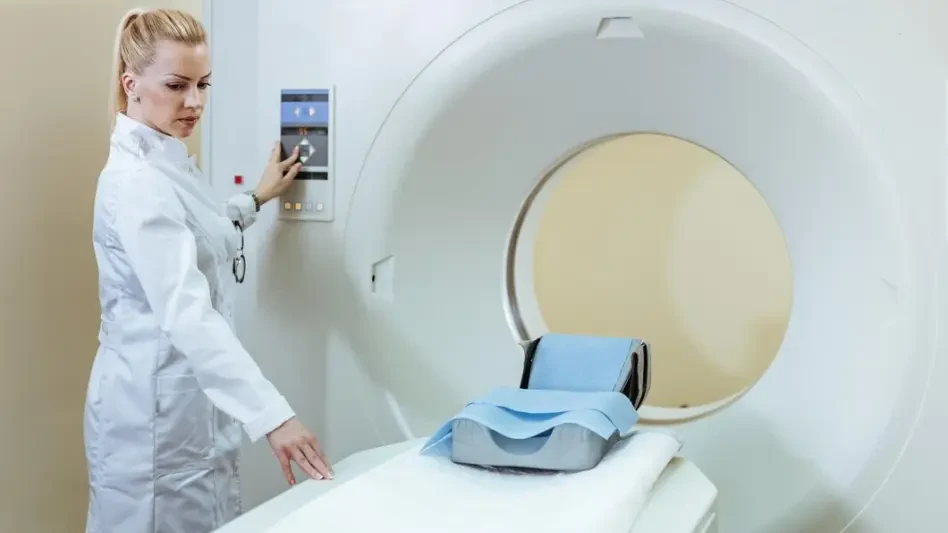
The Siemens Somatom X.cite CT scanner enters this landscape not merely as an equipment upgrade but as a potential catalyst for transformative change in local healthcare delivery. For community hospitals and smaller medical centers, the decision to invest in such technology is a pivotal one, representing a significant commitment of capital and resources. This review evaluates the Somatom X.cite as a strategic asset, examining its capacity to modernize diagnostic services, bridge gaps in patient access, and address the persistent challenges posed by outdated imaging systems that can no longer meet the demands of contemporary medicine.
The central question for many facilities is whether this scanner justifies its investment by delivering a tangible return in clinical outcomes, operational efficiency, and community trust. The assessment that follows moves beyond technical specifications to explore the real-world implications of adopting this technology. It delves into how the scanner’s advanced features translate into better patient care, streamlined workflows for clinical staff, and the introduction of critical new diagnostic pathways that were previously unavailable outside of major metropolitan healthcare systems.
Core Technology and Key Features
At its heart, the Somatom X.cite is engineered to address the core triad of modern imaging demands: speed, clarity, and safety. One of its most significant capabilities is advanced cardiac CT angiography, a non-invasive procedure that provides highly detailed images of the heart and its blood vessels. This function is crucial for the rapid assessment of patients presenting with symptoms of a stroke or cardiac event, allowing for quicker and more accurate diagnoses that can be life-saving. The system is designed to capture these complex images with exceptional precision, a feat that sets a new standard for what is possible in a community setting.
Beyond its cardiac capabilities, the scanner’s unique selling points are built around a patient-centric design philosophy. It operates with a significantly lower radiation dose compared to older-generation machines, a critical consideration for patient safety, particularly for those requiring multiple scans. This reduction in radiation does not come at the expense of image quality; in fact, the X.cite delivers enhanced image clarity that helps physicians identify pathologies with greater confidence. Moreover, the system incorporates intelligent automation designed to reduce manual steps and minimize exam variability, ensuring consistent, high-quality results regardless of the operator, which in turn boosts departmental efficiency.
Real-World Performance and Clinical Impact
The successful implementation at PeaceHealth Peace Island Medical Center provides a compelling case study of the Somatom X.cite’s performance in a live clinical environment. Early usage statistics are impressive, with the scanner completing 158 studies on 115 patients shortly after its launch, demonstrating its rapid integration and high utility. This level of operational efficiency points to a system that is not only powerful but also intuitive for technologists to operate, minimizing the learning curve and allowing the facility to realize benefits almost immediately. The ability to manage a high patient throughput without compromising quality is a key performance indicator that the X.cite appears to meet effectively.
From a clinical perspective, the impact extends directly to patient care and accessibility. The scanner’s design accommodates larger and heavier patients, a practical feature that ensures more members of the community can receive necessary diagnostic imaging without being referred elsewhere. This enhancement in accessibility is a crucial step toward equitable healthcare. Furthermore, the tangible improvements in diagnostic accuracy and patient safety, stemming from clearer images and lower radiation doses, have a direct and positive effect on clinical outcomes, empowering physicians to make more informed treatment decisions while enhancing the overall patient experience.
Key Strengths and Potential Considerations
The primary strength of the Somatom X.cite lies in its ability to empower community medical centers to offer new, life-saving diagnostic services. By bringing advanced cardiac and stroke imaging capabilities in-house, facilities can dramatically reduce the time to diagnosis for critical conditions, directly improving patient outcomes. This expansion of services also enhances the patient experience significantly; individuals no longer need to travel long distances for specialized scans, receiving state-of-the-art care within their own community. The combination of speed, safety, and superior image quality creates a diagnostic environment that builds both physician confidence and patient trust.
However, prospective buyers must weigh these benefits against some practical considerations. The initial capital investment for a scanner of this caliber is substantial and requires careful financial planning and justification. Furthermore, the installation process itself presents logistical complexities. As seen in the PeaceHealth implementation, facilities may need to operate a temporary mobile CT unit during construction, a factor that can disrupt normal operations and requires meticulous coordination. These challenges, while manageable, underscore the importance of a comprehensive integration plan that accounts for both the financial and logistical dimensions of such a significant technological upgrade.
Summary and Overall Assessment
The Siemens Somatom X.cite scanner clearly represents a major technological advancement in the field of diagnostic imaging. Its performance demonstrates a powerful combination of enhanced image quality, reduced radiation exposure, and improved operational efficiency. The integration of user-friendly features that standardize exams and reduce manual intervention positions it as a tool that not only improves diagnostic accuracy but also streamlines departmental workflow. These attributes collectively address many of the core challenges faced by modern imaging departments.
Ultimately, the Somatom X.cite proves to be more than just a piece of hardware; it is a strategic investment in care quality. Its ability to introduce advanced diagnostic procedures, such as cardiac CT angiography, to community settings is a game-changer for local healthcare ecosystems. Based on its demonstrated capabilities, the scanner is a highly valuable asset for any medical facility seeking to elevate its standard of care, improve patient safety, and optimize its diagnostic services for the future.
Final Recommendation for Healthcare Providers
In reviewing its overall value proposition, the Siemens Somatom X.cite scanner earned its reputation as a premier diagnostic tool. It delivered on its promises of enhanced clinical capability and operational excellence, proving to be a wise investment for facilities committed to advancing their imaging services. The scanner’s impact was most profound in its ability to enable new service lines, particularly in cardiac and stroke diagnostics, which were previously the domain of larger, more specialized institutions.
For healthcare decision-makers considering this technology, the recommendation was clear. Facilities aiming to become regional leaders in cardiovascular and neurological imaging stood to gain the most significant clinical and strategic advantages from its adoption. However, the experience also highlighted the critical importance of meticulous planning. The logistical hurdles of installation and the need for a well-coordinated transition plan were key takeaways, emphasizing that the successful integration of such advanced technology required as much strategic foresight as it did financial investment.