
The emergence of advanced molecular imaging techniques has redefined the boundaries of clinical oncology, shifting the focus from structural observation to the real-time analysis of cellular metabolism. This transition from generalized treatment protocols toward hyper-personalized medical strategies represents a fundamental change in how healthcare providers approach complex disease management. Positron Emission Tomography, commonly referred to as PET, serves as the critical technological pillar of this shift by allowing medical professionals to observe the metabolic processes that fuel tumor progression before physical changes even occur. In the current healthcare landscape of 2026, the traditional methods of evaluating tumors through size and shape alone are being replaced by an understanding of molecular behavior, which provides a significantly more accurate picture of a patient’s unique biological landscape. As oncology centers worldwide grapple with the dual challenges of rising case numbers and the need for better survival outcomes, the deployment of molecular imaging has become a non-negotiable requirement for institutions aiming to remain at the competitive edge of modern medicine. This evolution reflects a broader trend toward data-driven diagnostics, ensuring that every therapeutic decision is backed by a comprehensive map of a patient’s internal metabolic activity.
Meeting the Global Demand for Advanced Diagnostics
Strategic Market Growth: Navigating the 2050 Projections
The strategic importance of molecular imaging is underscored by a projected surge in global cancer cases, which experts anticipate will reach approximately 35 million new diagnoses annually by the middle of the century. This demographic shift is driving a significant expansion in the diagnostic imaging market as hospitals scramble to update their infrastructure to accommodate a growing and aging patient population. For healthcare administrators, investing in advanced PET technology is no longer viewed as an optional upgrade but rather as a necessary response to the rising demand for faster, more accurate diagnostic turnaround times. By integrating these systems today, facilities are positioning themselves to manage the increasing complexity of future cases where early-stage intervention is the primary factor in improving long-term patient survival rates. The current investment cycle focuses heavily on high-throughput systems that can process a higher volume of patients without compromising the granular detail required for precision oncology.
This systemic evolution necessitates a move toward robust molecular imaging frameworks that can handle both the sheer volume and the diagnostic intricacies of modern oncology. The competitiveness of a contemporary oncology program is increasingly defined by its diagnostic capacity and the efficiency of its clinical workflows, particularly in how quickly it can move a patient from initial screening to a targeted treatment plan. By building these capabilities now, healthcare systems ensure they can provide the high level of care required in a landscape where diagnostic speed is directly correlated with clinical success. Moreover, the global shift toward outpatient care models is pushing PET technology into smaller community clinics, decentralizing access to what was once a highly specialized hospital resource. This expansion is supported by more compact system designs and the standardization of imaging protocols across different regional health networks, ensuring that high-quality diagnostic data is available regardless of where a patient receives their initial consultation.
Institutional Preparedness: Investing in Molecular Frameworks
Preparing for a future dominated by precision medicine requires institutions to look beyond the immediate costs of hardware and consider the long-term integration of molecular data into every facet of patient care. Hospitals are currently redesigning their oncology departments to center around molecular imaging hubs, where radiologists, oncologists, and nuclear medicine specialists collaborate in real-time to interpret complex scan results. This collaborative approach is essential for identifying the most effective therapeutic pathways, as it allows for a more nuanced understanding of how a specific tumor is likely to respond to a particular drug or radiation dose. Consequently, the adoption of these advanced frameworks is being driven by the need to reduce the “trial and error” phase of cancer treatment, which has historically been both costly for the healthcare system and physically draining for the patients involved.
Furthermore, the rise of value-based care is incentivizing hospitals to adopt PET imaging as a means of documenting treatment efficacy early in the clinical process. By performing interim PET scans during a course of therapy, clinicians can determine if a patient is responding to a specific chemotherapy or immunotherapy regimen long before a tumor physically shrinks. If the metabolic activity remains high, the treatment can be adjusted or replaced, saving precious time and resources while sparing the patient from unnecessary side effects. This shift toward “response-adapted” therapy is a hallmark of the 2026 clinical landscape, where data-driven adjustments are becoming the standard of care. Institutional preparedness, therefore, involves not only the purchase of high-end scanners but also the implementation of sophisticated software platforms that can track these metabolic changes over time, providing a longitudinal view of a patient’s journey through the healthcare system.
The Mechanics and Synergy of Molecular Imaging
Metabolic Mapping: Visualizing Early Stage Cellular Changes
The fundamental advantage of PET imaging lies in its unique focus on biological function rather than just physical shape or anatomical structure. While traditional scans like X-rays or standard CT scans are excellent at identifying physical abnormalities, they often miss early-stage disease because structural modifications typically occur long after metabolic shifts have begun at the cellular level. By prioritizing “how” tissues are behaving over just “where” they are located, PET allows for a more proactive and insightful approach to disease management that is essentially preventative in nature. This capability is particularly vital in the context of recurring cancers, where metabolic “hot spots” can signal the return of a disease months before it becomes visible on a traditional structural scan, allowing for immediate and often more successful intervention.
The process of metabolic mapping involves using radioactive tracers, such as fluorodeoxyglucose, to identify hyper-metabolic cells that consume energy at an accelerated rate, a common characteristic of many aggressive malignancies. These tracers act as molecular beacons, highlighting areas of concern that would otherwise remain hidden within the dense tissues of the body. Beyond the traditional realm of oncology, these same principles are increasingly being applied to neurology and cardiology to solve complex diagnostic puzzles. In neurology, PET helps evaluate brain metabolism to differentiate between various types of dementia, while in cardiology, it is used to assess heart tissue viability after major cardiac events to determine if a patient would benefit from bypass surgery. This versatility makes PET a cornerstone of modern diagnostic medicine, providing a window into the body’s internal chemistry that no other imaging modality can replicate.
System Synergy: Integrating PET with CT and MRI Modalities
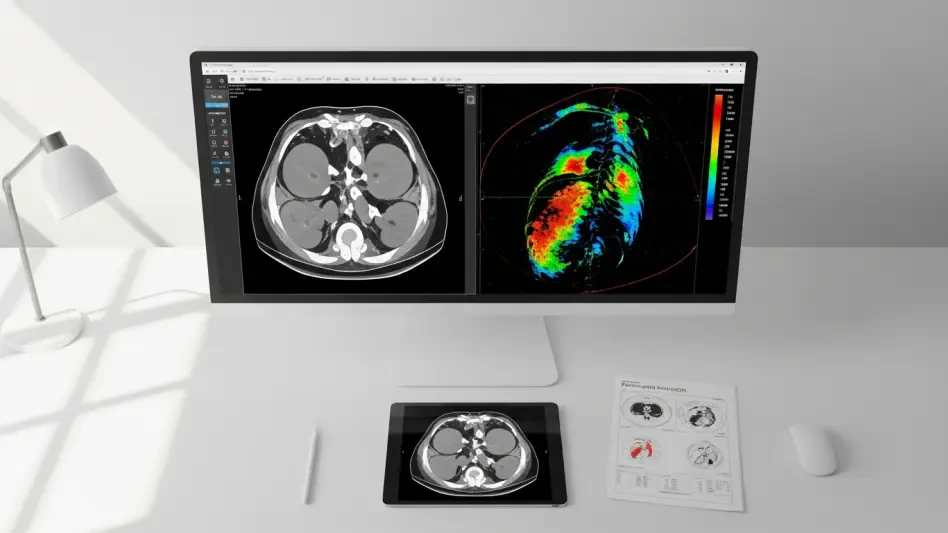
While PET is incredibly powerful for metabolic mapping, it historically lacked the sharp physical resolution needed to determine an exact location within the body’s complex internal environment. This limitation led to the development of hybrid PET/CT and PET/MRI systems, which have now become the industry standard in high-performing oncology departments across the globe. By merging high-resolution anatomical maps with real-time metabolic data, these hybrid systems provide a complete and highly detailed picture of a patient’s health in a single, streamlined procedure. This synergy does more than just improve image quality; it fundamentally changes the diagnostic confidence of the physician by providing a structural context for every metabolic signal detected during the scan.
The integration of these modalities also streamlines the patient journey through the healthcare system by reducing the need for multiple, separate appointments for different types of scans. Clinicians gain a much clearer understanding of how a tumor interacts with surrounding organs and blood vessels, which is critical for surgical planning and the precise delivery of radiation therapy. The ability to overlay biological activity onto a physical map ensures that therapies are directed precisely where they are needed most, minimizing unnecessary damage to healthy surrounding tissues and improving the patient’s overall quality of life. As these hybrid systems continue to evolve, we are seeing the emergence of total-body PET scanners that can image every organ in the body simultaneously, offering an unprecedented view of how systemic diseases like cancer spread and interact with various biological systems in real-time.
Operational Complexity and Future Digital Prospects
Clinical Nuance: Managing Tracers and Diagnostic Complexity
Interpreting PET scans requires a high degree of specialized expertise because a “bright spot” on a scan does not always indicate the presence of a cancerous growth. Normal physiological processes, such as intense muscle activity, natural healing after a recent surgery, or common infections like pneumonia, can cause high tracer uptake that mimics the appearance of malignancy. This inherent complexity means that radiologists must carefully synthesize imaging results with a patient’s full medical history, laboratory data, and prior diagnostic reports to avoid the pitfalls of false positives. The human element of diagnostic interpretation remains indispensable, even as the tools themselves become more technologically advanced, emphasizing the need for continuous education and specialized training for the nuclear medicine workforce.
The rise of precision oncology is the primary force driving the adoption of these sophisticated diagnostic tools and the specialized tracers that support them. Unlike traditional chemotherapy, which often takes a broad-spectrum approach, modern precision medicine uses PET to identify specific molecular biomarkers within a patient’s tumor to tailor a highly specific treatment plan. A notable example is the use of PSMA-targeted imaging for prostate cancer, which allows doctors to find exact clusters of cancer cells even if they have spread to distant parts of the body or are too small to be seen on standard scans. This level of granularity enables highly targeted interventions, such as stereotactic radiation or ligand therapy, which specifically home in on cells expressing that particular biomarker, effectively turning the diagnostic image into a roadmap for a personalized cure.
Digital Transformation: Scaling Oncology through AI Integration
Artificial intelligence is becoming a vital partner in the diagnostic process, helping to make PET imaging more scalable and accurate for increasingly large and diverse patient populations. AI tools assist in the complex process of image reconstruction, allowing for faster scans with significantly lower radiation doses, which is particularly beneficial for pediatric patients or those requiring frequent monitoring over many years. These digital advancements reduce the likelihood of human error during the initial analysis and help hospital administrators manage high patient throughput more effectively without sacrificing the quality of the diagnostic output. Furthermore, machine learning algorithms can now identify subtle patterns in metabolic data that may be invisible to the human eye, providing early warnings of treatment resistance or disease progression.
Throughout the preceding sections, the transformative power of PET imaging and its integration into precision medicine were examined as the primary drivers of improved oncology outcomes. The discussion highlighted how metabolic insights, hybrid imaging systems, and logistical advancements formed a cohesive strategy to address the rising global burden of cancer in 2026. Looking toward 2030 and beyond, the next critical step involves the standardization of radiopharmaceutical access across developing medical markets to prevent a widening gap in global care quality. Healthcare systems must prioritize the establishment of regional cyclotron hubs and AI-enabled diagnostic networks to ensure that high-precision imaging is a standard of care for all. By fostering public-private partnerships and investing in continuous training for nuclear medicine professionals, the global medical community will turn these technological possibilities into a universal reality for every patient.