
The Convergence of Innovation: Navigating the New Medical Frontier
The global healthcare landscape has moved beyond the era of experimental digital adoption into a phase where technology and biology are fundamentally inseparable from one another. Today, the medical sector functions as a high-stakes integration point for deep learning, advanced robotics, and molecular engineering. This shift has expanded the scope of healthcare from simple symptom management to a comprehensive model of health optimization. Major market players are no longer just pharmaceutical giants but also include software developers and aerospace-grade hardware engineers. This diversification has forced a total revaluation of how medical services are delivered to diverse populations.
Regulatory frameworks have also adapted to this new reality, focusing on the security of patient data and the ethical use of predictive algorithms. As medical systems become more interconnected, the significance of maintaining a balance between innovation and patient safety has never been more critical. The current market environment encourages rapid development while demanding rigorous validation of any tool that influences clinical decision-making. Moreover, the convergence of these fields has led to the emergence of specialized segments, such as bioinformatics and telemedicine, which now serve as the backbone of modern clinical practice.
Catalysts of Change: Technological Integration and Market Dynamics
Emerging Paradigms in Diagnostic Intelligence and Personalized Interventions
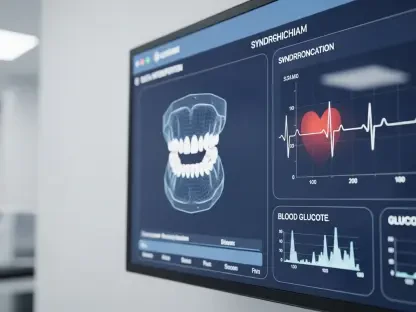
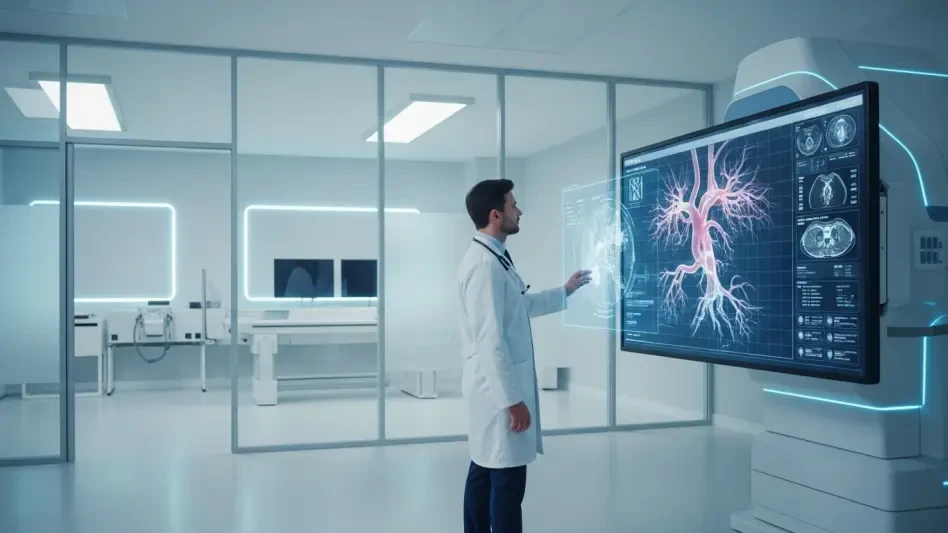
The current trend toward diagnostic intelligence is characterized by the seamless integration of machine learning into standard imaging workflows. These systems allow radiologists to focus on complex cases by filtering out normal results and highlighting subtle anomalies that might indicate early-stage pathology. Such precision ensures that interventions occur at the most effective time, drastically improving survival rates for chronic conditions like heart disease and cancer. In contrast to the generalized treatments of the past, these intelligence-led diagnostics provide a roadmap for interventions that are as unique as the patient.
Moreover, personalized interventions have moved into the realm of custom-printed biological scaffolds. These structures are designed to mimic a patient’s specific cellular architecture, allowing for better integration of implants and faster healing times. By utilizing biocompatible materials that actively resist infection, surgeons can now provide solutions that are tailored to the individual rather than relying on standardized components that may lead to complications. This shift toward bespoke medical solutions represents a fundamental change in the patient-provider relationship, focusing on long-term compatibility and quality of life.
Quantifying the Revolution: Growth Projections and Economic Impact
Market data suggests that the integration of automation and data analytics is not just a clinical success but a significant economic driver. Projections for the coming years indicate that the healthcare technology sector will continue its double-digit growth, with specific segments like remote monitoring expected to expand at an unprecedented rate. This financial trajectory is supported by the massive savings generated through reduced hospital readmissions and more efficient administrative processes. From 2026 to 2030, the market for medical AI alone is expected to maintain a compound annual growth rate that outpaces almost every other tech sector.
Performance indicators show that hospitals adopting advanced digital infrastructure report a marked increase in patient throughput and a decrease in per-patient costs. By the end of this decade, the global economic impact of these technological shifts is expected to reshape national healthcare budgets, shifting expenditures away from emergency interventions and toward preventive, tech-enabled wellness programs. This forward-looking perspective highlights a transition to a more sustainable and fiscally responsible medical model. This economic stability encourages further private investment, fueling a cycle of continuous improvement and discovery.
Navigating the Friction: Overcoming Technical and Structural Obstacles
Despite the rapid progress, the industry faces significant hurdles in data interoperability and legacy system integration. Many medical facilities still struggle with siloed data formats that prevent the seamless exchange of patient information between specialists and general practitioners. Overcoming these technical barriers requires a standardized approach to data architecture that prioritizes transparency while maintaining strict privacy controls. Solutions are currently being developed to create universal data standards that allow for real-time collaboration across different healthcare networks.
Structural obstacles also manifest in the form of a widening technological gap between urban and rural healthcare providers. While metropolitan centers benefit from high-speed connectivity and advanced robotics, remote clinics often lack the necessary infrastructure to support these tools. Strategies to bridge this divide involve the deployment of decentralized energy solutions and satellite-based communication networks, ensuring that modern breakthroughs are accessible to all patients regardless of their location. Addressing these complexities is essential for achieving equitable health outcomes on a global scale.
Safeguarding Progress: The Evolving Regulatory and Compliance Framework
The regulatory landscape is currently undergoing a period of intense refinement to keep pace with the speed of software innovation. New standards for medical device security focus on the resilience of connected hardware against external threats, ensuring that patient safety is not compromised by digital vulnerabilities. Compliance is no longer a static checklist but a dynamic process of continuous monitoring and risk assessment. Agencies are increasingly requiring manufacturers to provide ongoing updates and patches for medical devices, treating them as living software systems rather than finished physical products.
Significant laws and international agreements are being enacted to harmonize the approval process for new technologies. These changes aim to reduce the time it takes for life-saving innovations to reach the market without sacrificing the rigorous testing necessary for public safety. By fostering a collaborative environment between regulators and developers, the industry can maintain a high standard of care while encouraging the next generation of medical pioneers. This evolving framework provides the necessary guardrails for an industry that is moving faster than ever before.
The Horizon of Healing: Anticipating the Next Wave of Disruption
Looking ahead, the next wave of disruption is expected to emerge from the field of neuro-technology and advanced virtual reality applications. These tools will offer new ways to treat mental health disorders and chronic pain, providing alternatives to traditional pharmacological therapies. As consumer preferences shift toward non-invasive and holistic care, these digital therapeutics will become a cornerstone of daily medical practice. Furthermore, the potential for brain-computer interfaces to assist in rehabilitation from spinal cord injuries represents a frontier that could redefine human physical capabilities.
Innovation will also be driven by the adoption of green energy solutions within the healthcare infrastructure. The use of high-efficiency hybrid solar cells and long-duration battery storage will allow hospitals to operate independently of traditional power grids, increasing their resilience during natural disasters. This focus on sustainability will likely become a key differentiator for medical facilities seeking to attract both patients and investment in a competitive global market. These factors, combined with advancements in genomic editing, suggest that the future of medicine will be defined by its ability to not only heal but to prevent illness at its source.
A Unified Vision: Synthesizing the Future of Global Health Outcomes
The findings of this report indicated that the integration of digital intelligence and material science created a new standard for global patient care. Stakeholders recognized that the shift from reactive medicine to proactive, data-driven interventions was essential for long-term sustainability. The implementation of advanced robotics and custom 3D printing successfully reduced surgical risks and accelerated recovery times across numerous clinical settings. These developments demonstrated that the convergence of diverse scientific fields was the most effective way to address complex health challenges.
Investment strategies favored organizations that prioritized interoperability and ethical data management. These next steps ensured that the medical industry remained resilient in the face of shifting economic conditions and evolving public health needs. Researchers and clinicians moved toward a model where the individual patient’s genetic profile served as the primary guide for treatment. Ultimately, the synthesis of these breakthroughs provided a clear roadmap for improving human longevity and wellness on a global scale, proving that the most impactful advancements occurred when technology remained focused on human outcomes.