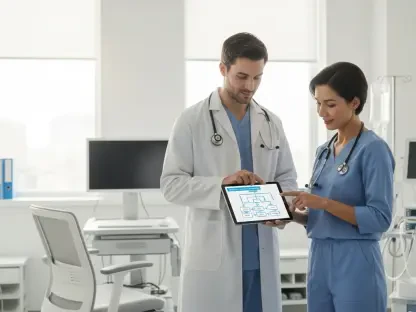

The difference between a successful recovery and a catastrophic medical error often hinges on a single misunderstood sentence during a high-stakes clinical consultation. As global migration and aging populations create more diverse patient bases, the traditional reliance on ad hoc translation or family members is no longer just inefficient—it is clinically dangerous. Digital medical interpretation technology has emerged as a critical infrastructure, transforming the way hospitals manage linguistic diversity by replacing physical presence with immediate, high-fidelity digital access to professional linguists.
The Foundations of Digital Medical Interpretation
Digital medical interpretation serves as the technical bridge between healthcare providers and patients who have limited English proficiency or sensory impairments. At its core, the technology utilizes Video Remote Interpretation (VRI) and Over-the-Phone Interpretation (OPI) to deliver specialized linguistic services on demand. Unlike the static translation apps used by travelers, these platforms are engineered specifically for the healthcare environment, where accuracy is tied to legal and physiological safety.
The industry has seen a massive shift away from the legacy model of scheduling in-person interpreters hours or days in advance. In the current landscape, the focus is on “point-of-care” availability, ensuring that a provider can access a qualified translator within seconds of identifying a communication gap. This transition is particularly vital for telehealth and globalized healthcare standards, where geography no longer limits the expertise available to a patient, regardless of their location or language.
Core Technical Features and Functional Components
High-Speed Video Remote Interpretation (VRI)
The efficacy of modern VRI platforms relies heavily on high-bandwidth, low-latency video streams that go beyond mere audio transmission. Capturing non-verbal cues, such as facial expressions or gestures, is essential for a provider to gauge a patient’s pain level or emotional state. These platforms are optimized to maintain high-definition clarity even in variable network conditions, which is a significant differentiator from consumer-grade video calling software that often suffers from lag.
When analyzing performance metrics, wait times have become the primary benchmark for institutional success. Leading systems now boast connection speeds ranging from 10 to 15 seconds, a metric that directly influences clinical workflow efficiency. By minimizing the time a physician spends waiting for an interpreter, the technology mitigates the “rushed visit” syndrome, allowing for a more thorough examination without compromising the hospital’s operational schedule.
Linguistic Breadth and Specialized Modalities
Beyond simple translation, these systems offer access to hundreds of languages and specialized modalities like American Sign Language (ASL). This technical capacity ensures that the specific needs of the hearing-impaired and those speaking rare dialects are met through a single interface. Furthermore, the integration of medical-grade terminology databases provides interpreters with real-time support, ensuring that complex clinical terms are translated with precision.
Clinical Workflow and EHR Integration
A sophisticated interpretation system must function as a seamless part of the healthcare ecosystem rather than a standalone tool. Modern platforms integrate directly with Electronic Health Records (EHR) and existing telehealth infrastructure, allowing for the automatic documentation of every encounter. This integration is crucial for maintaining HIPAA compliance and ensuring that a clear digital audit trail exists for every patient interaction involving an interpreter.
Emerging Trends in Healthcare Communication
The latest developments in the sector involve the strategic application of Artificial Intelligence to augment human interpreters. AI-assisted translation and real-time transcription services are increasingly used to provide immediate summaries or to help clarify jargon for patients in real-time. These tools do not replace the human element but rather act as a support layer that reduces the cognitive load on the interpreter.
Moreover, there is a rising demand for “cultural brokerage,” where technology facilitates more than just literal translation. The focus is shifting toward cultural competency, helping providers navigate sensitive social nuances that could impact treatment adherence. This evolution reflects a broader industry trend where technology is expected to bridge the gap between purely technical medicine and holistic, patient-centered care.
Real-World Applications and Sector Deployment
The deployment of these tools is most visible in high-pressure environments like emergency departments and rural clinics. In these settings, the ability to rapidly clarify symptoms or obtain informed consent can be life-saving. For geriatric patients with hearing loss, VRI serves as a vital tool that restores their autonomy, preventing them from feeling ignored or misunderstood during complex surgical or discharge procedures.
Navigating Implementation Challenges and Barriers
Institutional implementation is often hindered by bandwidth limitations and the persistent “digital divide” in underserved regions. While the software may be advanced, the physical infrastructure of a hospital—such as dead zones in older buildings—can undermine reliability. Additionally, the high cost of medical-grade hardware and the need for strict adherence to privacy laws present significant hurdles for smaller clinics. Development efforts are currently focused on simplifying user interfaces to combat the “technology fatigue” that often plagues medical staff.
Future Outlook and Technological Trajectory
The trajectory of this technology points toward the deep integration of Natural Language Processing (NLP) to refine how medical jargon is explained to laypeople. We are moving toward a future where augmented reality (AR) interfaces could allow interpreters to virtually “stand” in the room, providing a more immersive and less intrusive experience. These breakthroughs promise to enhance global health equity by ensuring that safety and quality are never dictated by a patient’s primary language.
Final Assessment of Medical Interpretation Systems
The review of digital medical interpretation technology revealed a system that has moved past its initial role as a luxury service to become an essential clinical requirement. These platforms successfully mitigated linguistic and structural barriers that previously compromised patient safety and hospital integrity. While technical and financial hurdles remained, the shift toward on-demand, video-capable interpretation significantly reduced the legal risks associated with miscommunication. Ultimately, the technology demonstrated its value not just through speed or linguistic breadth, but through its capacity to restore empathy and clarity to the provider-patient relationship.