
As a leader who transitioned from the high-precision world of robotics at Vincross to scaling Vesta Sleep into a $150 million global success, Gee Gu brings a unique, architectural lens to the health technology industry. Currently the CEO of Vilo, he is a vocal advocate for moving beyond the clinical coldness of modern health trackers toward a more integrated, supportive experience. This conversation explores the systemic failures of modern wearables in addressing the physiological complexities of women’s health and the urgent need for a longitudinal approach that views wellness through the lens of life stages rather than daily step counts. We examine why women’s health is a fundamental “operating system” issue rather than a niche feature, the massive economic potential of closing the health gap, and how the next generation of wearables can evolve from demanding coaches into quiet, reliable companions.
Current wearable technology often prioritizes short-term metrics like daily step counts and heart rate. Why is this focus inherently insufficient for addressing the complexities of women’s health?
The current landscape of wearable technology was largely built on the logic of immediate optimization and performance, which treats the human body as a machine that should ideally function in a linear, predictable way. For many women, this model is fundamentally broken because it ignores the long-term physiological context that defines their daily reality. We are talking about deep, systemic cycles involving hormonal fluctuations, contraception, pregnancy, and the transition into menopause. When a device only looks at yesterday versus today, it misses the broader narrative of why a woman might feel a certain way or why her recovery score has shifted. These are not occasional edge cases or “special features” to be added later; they are the central operating environment for half of the population. By failing to account for this context, many products end up offering data that feels disconnected from the user’s lived experience.
You have described the gap in women’s health technology as an “operating system problem” rather than a feature gap. Could you elaborate on what this means for the future of product architecture?
When we say it is an operating system problem, we mean that the very foundation of how data is collected, interpreted, and presented needs to be rebuilt. Right now, most wearables organize health around a series of isolated tiles or dashboards—sleep, activity, heart rate—and then try to “add on” a period tracker as if it were just another metric. This approach is flawed because hormonal health isn’t a separate category; it is the lens through which every other metric, from body temperature to mood, should be interpreted. A low readiness score might be a sign of overtraining for one person, but for another, it is a perfectly normal reflection of a specific phase in their cycle or a side effect of a new contraceptive. To solve this, we need an architecture that understands longitudinal patterns across months and years, treating these transitions as foundational to the system’s logic rather than peripheral data points.
A 2024 report indicated that closing the women’s health gap could add $1 trillion to the global economy by 2040. How should these economic and health statistics influence the design of new medical devices?
These numbers are staggering and serve as a wake-up call for the entire industry, proving that investing in women’s health is both a moral and a massive economic imperative. When you consider that women currently spend 25% more of their lives in poor health compared to men, it becomes clear that our current healthcare and technology models are failing to provide the right kind of support. Designers and engineers need to move away from the idea that women’s health is a “niche” market and recognize it as a category-level design challenge. If we can build tools that provide better awareness and earlier interventions for life stages like perimenopause or postpartum recovery, we aren’t just selling a gadget; we are improving the quality of life for billions. This requires a shift from reactive alerts to proactive, evidence-informed guidance that respects the complexity of female physiology.
Many users find that health dashboards can create a sense of judgment or anxiety rather than providing helpful insights. How can designers move toward a “companionable” experience?
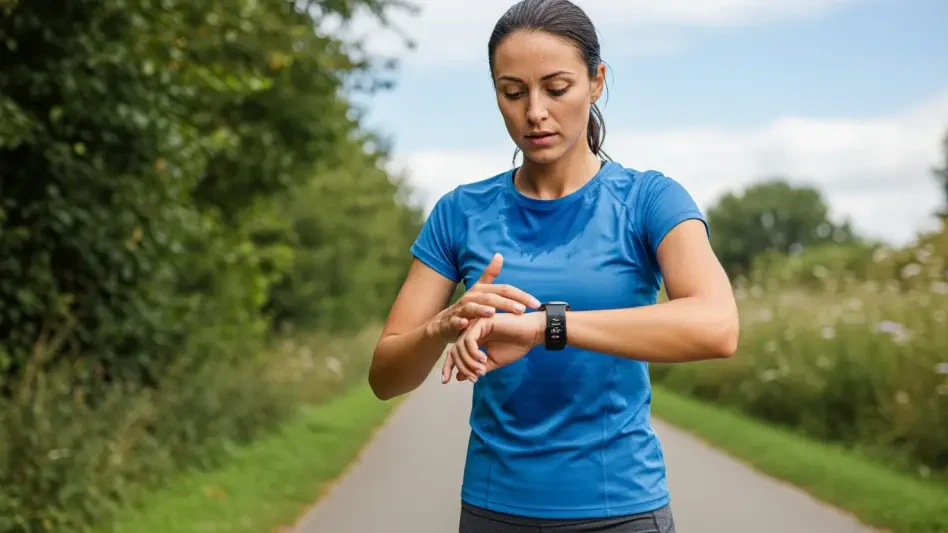
The goal for the next generation of wearables should be to feel like a quiet, supportive companion rather than a demanding coach with a stopwatch. Many women don’t need another notification telling them they failed to hit a generic goal; they need an interface that understands why their energy levels might be lower today and offers context instead of criticism. This involves a high degree of restraint in product design, knowing when to provide an insight and when to stay quiet to avoid creating unnecessary stress. We want to move away from the “dashboard problem” where isolated scores create a sense of constant evaluation. Instead, the interaction should feel more intuitive, providing a sense of continuity that supports the user through their various life transitions without making them feel like they are constantly falling short of an arbitrary baseline.
We are seeing industry leaders like Apple and Oura begin to integrate more specific women’s health features. What does this shift indicate about the maturation of the wearable category?
The industry is finally beginning to move from simple tracking toward sophisticated pattern recognition and personalization. For instance, the Apple Women’s Health Study, conducted with the Harvard T.H. Chan School of Public Health, is a massive step toward understanding the long-term relationship between menstrual cycles and overall health. In May 2026, Oura furthered this trend by introducing hormonal birth control support, helping users see how different contraceptives interact with their biometrics like temperature and sleep. These companies are moving beyond “period trackers” and are starting to address the full spectrum of hormonal life stages, including menopause. This maturation shows that the market is beginning to value the translation of raw data into everyday meaning, which is exactly what users have been asking for.
Artificial intelligence is often touted as the solution to personalization, but you’ve cautioned that it must be used carefully. How should AI be utilized to translate data into meaning without over-medicalizing the user experience?
AI has the incredible potential to act as a translator for complex biological signals, but its greatest value lies in providing context rather than just generating more notifications. The opportunity here is not to turn every minor fluctuation into a potential diagnosis, which only serves to increase user anxiety. Instead, AI should be used to explain the “why” behind a pattern—helping a user understand when a change is a normal part of their cycle or when it might be time to consult a professional. It should work in the background to weave together sleep, HRV, and symptoms into a coherent story that makes sense over time. By using AI to provide longitudinal understanding, we can offer personalized insights that feel empowering and educational rather than clinical and overwhelming.
Your career journey took you from developing the HEXA robot and Mind OS to building a $150 million sleep company. How has this background in robotics and consumer hardware shaped your approach at Vilo?
My background in robotics taught me the importance of creating systems that can interpret and react to complex environments in real-time, which is a philosophy I now apply to human health. When we built Mind OS, we were focused on creating an operating system that was ahead of its time, and I see a similar opportunity now to redefine the “operating system” of the human body. At Vesta Sleep, I saw firsthand how much people value support and comfort in their most vulnerable moments, which helped me realize that wearables should not feel like cold pieces of medical equipment. They should be supportive tools that seamlessly integrate into a person’s life, providing value without demanding constant attention. This blend of technical rigor and a human-centric focus is what drives our mission to make health technology feel like a natural extension of the self.
What is your forecast for women’s health technology?
I predict that over the next decade, the distinction between “wearable tech” and “women’s health” will effectively disappear as female physiology becomes the standard baseline for all health data modeling. We will see a shift away from static dashboards toward generative, narrative-based insights that explain health as a continuous journey rather than a series of daily scores. By 2040, as we successfully close the health gap and unlock that $1 trillion in economic potential, our devices will no longer just track our steps; they will anticipate our needs through pregnancy, menopause, and beyond with absolute privacy and profound empathy. The future belongs to technology that acts as a silent partner, translating the whispers of our biology into clear, actionable, and non-judgmental guidance for every stage of life.