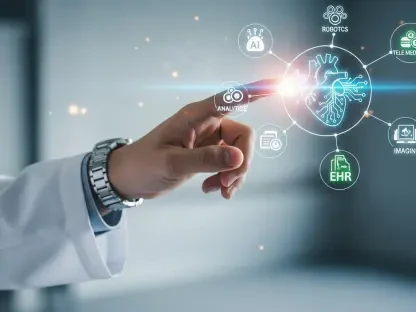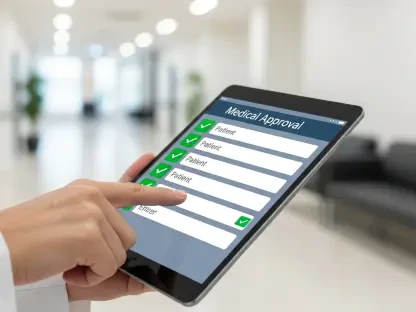
The sudden arrival of consumer-facing AI tools capable of interpreting personal health records has ignited a fierce debate within the healthcare technology sector, pitting the agile disruption of Silicon Valley against the deliberate, fortified strategies of industry incumbents. Integrated Healthcare AI represents a significant advancement, moving beyond standalone applications to become a core part of the medical infrastructure. This review will explore the evolution of this technology, its core components, its performance in real-world settings, and the impact it has had on clinical workflows and patient engagement. The purpose of this review is to provide a thorough understanding of the technology, its current capabilities, and its potential future development.
Understanding Integrated AI in the Healthcare Ecosystem
Integrated Healthcare AI is defined by its deep entanglement with the existing clinical environment, a stark contrast to external, standalone AI solutions. The foundational concept involves embedding artificial intelligence directly within foundational systems like Electronic Health Records (EHRs). This creates a seamless, context-aware intelligence layer that works with, rather than adjacent to, the tools clinicians and patients use daily. By operating from within the central repository of patient data, this model inherently dissolves the data silos that have long fragmented patient information across different specialists and departments.
The primary relevance of this integrated approach lies in its ability to foster a truly holistic view of patient care. When an AI can access and synthesize a patient’s complete medical history, lab results, physician notes, and medication schedules in real time, its outputs become exponentially more valuable. It transitions from a generic information provider to a personalized health partner. This deep integration is not merely a technical preference; it is a strategic choice aimed at ensuring that AI-driven insights are safe, relevant, and immediately actionable within the established frameworks of care delivery.
Core Architectural Components and Key Features
EHR-Native AI and Data Synthesis
The most critical feature of this architecture is the direct embedding of AI within the EHR. This native integration is a complex technical feat, allowing the AI to securely access, process, and synthesize the comprehensive, longitudinal data stored within a patient’s record. Unlike third-party applications that require data to be exported or accessed through APIs, an EHR-native AI operates within the system’s secure perimeter. This allows it to provide clinicians with contextually rich, actionable insights directly within their familiar workflows, eliminating the need to toggle between different applications.
This deep data synthesis is also the engine behind a more personalized and aware patient experience. For instance, an integrated digital assistant like Epic’s Emmie is designed to be meticulously “tuned” to a patient’s specific medical history. Because it lives inside the EHR, it understands the nuances of past procedures, chronic conditions, and prescribed care plans. This enables it to deliver guidance that is not just medically accurate in a general sense, but precisely tailored to the individual, transforming the patient portal from a passive data repository into an interactive, intelligent health hub.
Proactive Engagement and Action-Oriented AI
A significant evolution in integrated AI is the shift from passive, informational tools to proactive, anticipatory digital companions. The goal is no longer just to answer patient questions but to guide them through their entire healthcare journey. This action-oriented approach means the AI anticipates needs based on clinical context. For example, following a surgical procedure, the AI can proactively lay out the complete post-operative care plan, from wound care instructions to scheduling follow-up appointments and physical therapy sessions.
This functionality transforms clinical instructions into a clear, manageable to-do list for the patient. A physician’s discharge notes, often filled with complex medical terminology, can be parsed by the AI and presented as simple, actionable tasks within the patient’s portal. This preemptive guidance helps patients manage their care effectively, reducing the cognitive load and potential for error. It represents a fundamental difference from general-purpose AI, where the patient must know what to ask and how to act on the information provided.
Predictive Analytics for Clinical Support
Integrated AI excels at leveraging the vast datasets within the EHR for powerful predictive analytics. These systems continuously analyze clinical data to perform risk stratification, identifying patients who are at high risk for developing certain conditions or experiencing adverse events. By recognizing subtle patterns across thousands of patient records, the AI can flag individuals who may benefit from preventative interventions long before symptoms become acute.
This capability serves as a vital clinical decision support tool. It can help predict disease progression, suggest potential treatment pathways based on population-level outcome data, and alert clinicians to potential medication conflicts. By presenting these data-driven insights at the point of care, integrated AI assists clinicians in making more informed and timely decisions, enhancing the quality and safety of patient care without disrupting their established routines.
Emerging Trends in Integrated AI Development
The current landscape is defined by a strategic divergence in development philosophy. On one side, external technology companies are focused on rapid deployment, launching general-purpose health AI tools to capture the market quickly. On the other, established EHR vendors are pursuing a more deliberate, “thoughtfully developed” approach. This strategy prioritizes deep integration, safety, and personalization over speed, building new AI capabilities on top of their vast, existing infrastructure like the MyChart patient portal.
Another key trend is the increasing integration of data from consumer health devices. AI systems are now being designed to incorporate real-time data from wearables and other personal monitoring tools through platforms like Apple HealthKit and Google Fit. This creates a more comprehensive and dynamic patient profile that includes lifestyle and behavioral data alongside clinical information. The long-term vision includes direct, secure connections between medical-grade personal devices and the EHR, allowing the AI to use a continuous stream of real-world data to refine its predictions and personalize its guidance.
Real-World Applications and Strategic Implementations
In practice, the distinction between general-purpose and integrated AI becomes clear. A tool like ChatGPT for Health can provide valuable information by answering a patient’s questions about their condition based on data they input. However, its role is primarily informational and reactive. The patient remains the “forger and the curator” of their health journey, responsible for asking the right questions and determining the next steps.
In contrast, an EHR-native digital assistant like Epic’s Emmie is designed for proactive, workflow-centric functions that external tools cannot replicate. Because it is embedded in the system of record, it can do more than just provide information; it can help patients take action. It can guide a patient through a complex pre-visit check-in, parse a doctor’s notes into an actionable checklist, or allow a patient to upload a photo of an insurance card to get immediate answers about copays. These deeply integrated functionalities demonstrate a strategy focused not just on knowledge, but on execution and patient empowerment.
Key Challenges and Implementation Hurdles
Data Security, Privacy, and Regulatory Compliance
The use of Protected Health Information (PHI) presents the most significant challenge in healthcare AI. Any system handling this data must adhere to the stringent requirements of HIPAA, a complex regulatory framework designed to ensure patient privacy. There is considerable skepticism surrounding the claims of third-party AI platforms regarding their compliance, especially when they operate on a “free” business model where the handling of sensitive data is not always transparent.
This is where EHR-native models hold an inherent trust advantage. Companies that build and maintain certified EHR systems have already undergone the rigorous process to become designated HIPAA-covered entities. When their AI models operate exclusively within that secure, certified environment, it provides a level of assurance that external platforms struggle to match. The data never leaves the protected ecosystem, mitigating many of the security and privacy risks associated with transmitting PHI to a third-party service.
The Dilemma of Development Pace vs Clinical Safety
A fundamental tension exists between the tech industry’s “move fast and break things” ethos and the healthcare sector’s unwavering mandate for safety, precision, and rigorous validation. The high stakes of clinical implementation, combined with a labyrinth of regulatory hurdles, naturally slow the pace of innovation within established healthcare technology companies. Every new feature must be exhaustively tested to ensure it is not only effective but also completely safe for patient use.
This deliberate approach, however, raises a critical question: must thoughtful development necessarily be slow? While safety is non-negotiable, the protracted timelines for rolling out new AI features from major EHR vendors stand in stark contrast to the agility of external tech firms. As patient demand for intelligent, interactive health tools grows, the ability of these incumbents to balance methodical development with competitive speed will be a defining challenge and a key determinant of their long-term success.
Future Outlook and Long-Term Industry Impact
Looking ahead, the trajectory for integrated healthcare AI points toward hyper-personalization and automation. Future iterations promise to generate highly individualized treatment plans based on a patient’s unique genomic data, lifestyle, and real-time biometric inputs. On the administrative side, fully automated workflows could handle everything from scheduling and billing to insurance pre-authorizations, freeing up significant time for clinicians to focus on patient care.
The long-term impact of this technology will likely be transformative. By providing patients with an intelligent, proactive guide, integrated AI has the potential to fundamentally reshape the patient-provider relationship into a more collaborative partnership. It could dramatically improve healthcare accessibility for underserved populations and drive unprecedented efficiency across the entire health system. The ultimate goal is a healthcare ecosystem where technology empowers both patients and providers, leading to better outcomes and a more sustainable model of care.
Conclusion: A Synthesis of the Current State and Future Potential
The review explored the strategic landscape of integrated healthcare AI, which was defined by a philosophical schism between the rapid innovation of external tech firms and the deliberate, safety-focused development of established EHR vendors. The analysis of core components revealed that native EHR integration was the key differentiator, enabling a shift from passive, informational AI to proactive, action-oriented digital companions capable of guiding patients through complex care journeys. However, this deep integration came with its own set of challenges, most notably the tension between a necessarily cautious development pace and the urgent demand for innovation. The examination of security protocols underscored the inherent trust advantage of systems operating within a certified EHR environment, a critical factor given the sensitivity of health data. Ultimately, the trajectory of integrated AI was judged to be profoundly promising, yet its true impact was contingent on the industry’s ability to reconcile the competing demands of speed, safety, and meaningful integration.