
Faisal Zain has spent his career at the intersection of medical innovation and operational efficiency, witnessing firsthand how technology can bridge the gap between clinical necessity and financial viability. As an expert in medical technology and manufacturing, he understands that a hospital is only as strong as the systems supporting its staff. Today, he joins us to discuss the “domino effect” of the healthcare labor crisis, exploring how data-driven staffing models and direct-to-clinician platforms can replace the traditional, costly reliance on staffing agencies. Our conversation delves into the financial metrics of workforce management, the psychological toll of burnout on veteran nurses, and the technological shift required to ensure patient safety in an era of unprecedented shortages.
Labor expenses typically account for over 55% of a hospital’s operating budget. How do these rising costs disrupt a facility’s long-term financial health, and what specific data points should executives monitor to prevent staffing shortages from creating an unmanageable financial burden across the organization?
When labor accounts for 56% of total operating expenses, any fluctuation in the workforce isn’t just an HR minor issue; it is a fundamental threat to the institution’s survival. These rising costs disrupt long-term health by forcing hospitals into a reactive “survival mode” where they divert funds away from equipment upgrades and clinical innovation to cover an additional $24 billion burden created by staffing gaps. To prevent this, executives must move beyond simple headcounts and start monitoring the “premium labor ratio,” which compares the cost of contract labor and overtime against standard salary lines. They also need to track the “cost of vacancy,” a metric that includes recruitment fees and the lost revenue from beds that remain closed because there aren’t enough nurses to staff them. By acting on these data points early, leadership can implement a more resilient budget that accounts for market volatility rather than being blindsided by it.
Projections suggest a shortfall of over 60,000 nurses by 2030, forcing many facilities to spend billions annually on contract labor. What are the long-term operational consequences of relying on temporary staff, and how can organizations move toward a more sustainable, direct-to-clinician hiring model?
The federal Health Resources and Services Administration projects a staggering shortfall of 63,720 full-time registered nurses by 2030, a gap that has already led hospitals to spend $51.1 billion on contract labor in a single year. Relying on high-priced temporary staff creates a fractured workplace culture where permanent employees feel undervalued, often leading to a secondary wave of resignations. Moving toward a sustainable model requires a complete digital overhaul where facilities bypass the administrative markup of traditional agencies by using technology to connect directly with a local nursing workforce. This transition involves building a reliable roster of “clinicians-on-demand” through a digital platform, automating credential management to ensure every nurse is qualified, and providing transparency into labor expenses to eliminate hidden fees. By fostering a direct relationship with per diem professionals, a facility can scale its workforce up or down based on actual patient volume without the “middleman” costs that currently drain hospital coffers.
High nurse-to-patient ratios are linked to increased mortality risks, medication errors, and severe burnout. How does this cascade of inefficiencies change the daily workflow of a clinical team, and what practical strategies can leadership use to ensure patient safety doesn’t suffer when shifts remain unfilled?
When a clinical team is spread too thin, the daily workflow shifts from proactive care to frantic crisis management, which has devastating consequences for patient outcomes. Statistics show that for every additional patient added to a nurse’s rotation, the risk of death increases by 16% and the likelihood of a longer hospital stay grows by 5%. Consider a real-world scenario where a nurse, overwhelmed by an unsafe ratio, misses a subtle change in a patient’s vital signs or makes a critical medication error because they were interrupted five times while at the bedside. To combat this, leadership must implement dynamic staffing tools that predict labor gaps before they occur, allowing them to fill shifts with qualified per diem nurses before the existing team reaches a breaking point. Prioritizing workforce agility ensures that the “domino effect” of errors is stopped at the source, keeping the focus on high-quality care rather than just surviving the shift.
Modern staffing approaches leverage predictive analytics to identify labor gaps before they become crises. What does the transition from static to dynamic scheduling look like in practice, and how can facilities ensure that these digital tools actually reduce the administrative burden on managers?
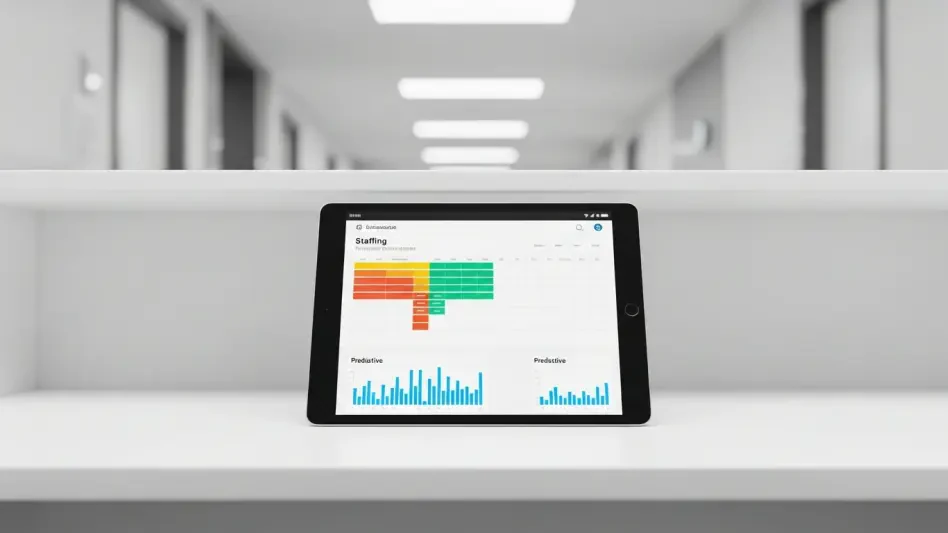
The transition from static to dynamic scheduling is the difference between looking at a fixed calendar and looking at a live, breathing weather map of hospital needs. In a static model, managers often spend hours on the phone or in spreadsheets trying to fill holes, but a dynamic approach uses advanced analytics to forecast patient surges and automatically alerts a pool of available clinicians. To ensure these tools reduce the administrative load, facilities must integrate automated credentialing systems that handle the heavy lifting of verifying licenses and certifications. This means that when a manager sees a gap in the schedule, they can approve a qualified clinician with one click rather than spending their afternoon chasing down paperwork. Ultimately, this technology transforms the role of the nurse manager from a frustrated scheduler back into a clinical leader who can focus on mentoring their team and improving patient care.
Burnout and turnover can add tens of thousands of dollars in recruitment costs for every single replacement. Beyond offering higher pay, how can hospitals use flexible scheduling technology to improve workplace culture and convince veteran nurses to remain in the profession?
With 60% of acute care nurses reporting burnout and 52% considering leaving the field, the industry is facing a massive brain drain that money alone cannot fix. Veteran nurses often walk away because they feel they have lost control over their lives, but flexible scheduling technology can give that agency back by allowing them to choose shifts that fit their personal needs. By using digital platforms to fill gaps with per diem support, hospitals can ensure that their full-time veteran staff aren’t constantly pressured into working mandatory overtime. I have seen cases where simply giving a nurse the ability to swap a shift or pick up a local per diem assignment through an app renewed their passion for the job because they felt the organization respected their time and mental health. When a facility prioritizes a “culture of flexibility,” it sends a powerful message that the nurse’s well-being is just as important as the facility’s operational efficiency.
What is your forecast for healthcare staffing?
I believe we are entering a “decade of decentralization” in healthcare staffing where the traditional 9-to-5 hospital employment model will become the exception rather than the rule. As the 2030 nursing shortfall looms, we will see a massive shift toward “gig-style” professional nursing, where the most successful hospitals will be those that operate like tech-enabled hubs, seamlessly integrating a mix of full-time, contract, and per diem talent. Predictive AI will become the standard for every nursing unit, allowing facilities to anticipate patient arrivals with such precision that the concept of an “unfilled shift” will eventually become a relic of the past. If we embrace these digital connections now, we can turn this current labor crisis into a catalyst for a more resilient, efficient, and ultimately more human healthcare system.