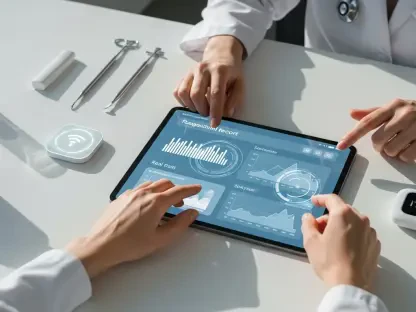

A cardiac surgeon meticulously practices a high-stakes valve replacement on a pulsating, three-dimensional heart that mirrors the patient’s unique anatomy with perfect fidelity, identifying potential complications and optimizing the surgical plan hours before the patient even enters the operating room. This is not a scene from a futuristic film; it is the tangible reality of digital twin technology, a revolutionary force that has migrated from its origins in advanced manufacturing to the forefront of modern medicine. By creating dynamic, data-rich virtual replicas of patients, organs, and entire hospital systems, this technology is catalyzing a fundamental shift from reactive, generalized treatments to a proactive, highly personalized, and predictive model of care. The healthcare industry stands at the threshold of a new era, where virtual simulation informs real-world clinical decisions with unprecedented accuracy and insight.
The New Frontier: Mapping the Virtual Healthcare Ecosystem
At its core, the digital twin concept in healthcare involves creating a living, virtual counterpart to a physical object or system. This extends from a high-resolution model of an individual organ, like a heart or a lung, to a comprehensive simulation of a patient’s entire physiology. On a grander scale, it can even encompass the complex operational dynamics of an entire hospital, modeling patient flow, resource allocation, and staff deployment in real time. Unlike static 3D models, a digital twin is perpetually synchronized with its physical counterpart, constantly updated with new data to reflect its current state, predict future behavior, and simulate the impact of potential interventions.
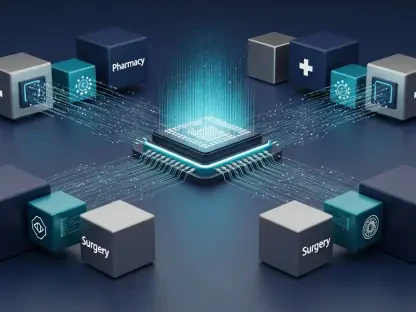
This sophisticated virtualization is made possible by the convergence of three core technological pillars. The first is the Internet of Things (IoT), where a network of connected sensors—from wearable health trackers and in-hospital monitors to advanced imaging machines—gathers a continuous stream of real-world data. This data is then fed into the second pillar: powerful artificial intelligence and machine learning algorithms. These AI-driven analytics engines process the vast and varied data streams, identify patterns, and generate predictive insights that form the intelligence of the digital twin. Finally, advanced simulation software provides the interactive environment where these insights are visualized, allowing clinicians and administrators to run what-if scenarios, test hypotheses, and explore potential outcomes in a risk-free virtual space.
Leading this charge are industry pioneers who are translating this technological potential into clinical and operational reality. Companies like Siemens Healthineers are at the forefront of developing the “digital patient twin,” an integrated model that combines imaging, lab results, and genomic data to provide a holistic view of an individual’s health trajectory. In parallel, GE HealthCare is applying the concept at the systems level, creating digital twins of hospital command centers to optimize patient throughput and manage capacity with remarkable efficiency. Furthermore, technology giants like NVIDIA are providing the foundational computing power and simulation platforms, enabling the development of increasingly complex and accurate virtual models. This collective effort signals a decisive shift toward data-driven, virtualized healthcare, where decisions are increasingly informed by predictive simulation rather than historical precedent alone.
Market Momentum and Key Drivers of Innovation
The Tipping Point: From Reactive Treatments to Proactive, Personalized Care
The rapid adoption of digital twin technology is being fueled by a convergence of powerful trends reshaping the healthcare landscape. Chief among these is the industry-wide push for precision medicine, an approach that tailors medical treatment to the individual characteristics of each patient. Digital twins provide the ideal framework for this, allowing clinicians to simulate how a specific individual’s body will respond to a particular drug or surgical procedure before it is administered. This aligns perfectly with the transition toward value-based care, where providers are compensated based on patient outcomes rather than the volume of services rendered. By enabling more effective, personalized interventions, digital twins help improve those outcomes and reduce costly, ineffective treatments.
This momentum is further amplified by the continuous evolution of enabling technologies. Advances in medical imaging, genomics, and wearable sensors are generating richer and more granular data streams, allowing for the creation of high-fidelity digital models that capture a patient’s unique biology with greater accuracy. Simultaneously, evolving patient expectations are creating a strong market pull. Today’s consumers are more engaged in their own health and increasingly demand tailored solutions and transparent information. The ability of a digital twin to visualize health data and model treatment options in an intuitive way meets this demand, fostering a more collaborative relationship between patient and provider. This combination of clinical need, technological capability, and patient demand has created a fertile ground for innovation, opening new opportunities in areas like virtual clinical trials, accelerated drug discovery, and the development of hyper-personalized preventative health strategies.
Sizing the Transformation: Market Projections and Performance Insights
The financial and operational impact of digital twins in healthcare is already substantial and poised for exponential growth. The current market, valued in the billions, is segmented between solutions focused on patient-specific modeling for clinical applications and those designed for hospital and system-level operational management. Both segments are experiencing robust expansion as healthcare organizations recognize the tangible returns on investment. Forward-looking analysis projects that the market will continue its aggressive growth trajectory, with forecasts indicating a multi-fold increase in value by 2030. This expansion will be driven by broader adoption in areas like surgical planning, chronic disease management, and pharmaceutical research.
The value proposition is clearly demonstrated by key performance indicators from early adopters. Hospitals implementing operational digital twins have reported significant improvements in emergency department throughput, reductions in patient wait times, and more efficient utilization of high-cost assets like MRI machines and operating rooms. In the clinical sphere, the use of patient-specific digital twins for pre-surgical planning has been linked to reduced surgical complications, shorter procedure times, and better patient outcomes. These measurable improvements provide a compelling, data-backed case for the return on investment. By enabling more precise diagnostics, optimizing resource allocation, and mitigating risks, digital twins are not just a technological novelty but a powerful tool for enhancing both the clinical and financial health of an organization.
Navigating the Complexities of Clinical Implementation
Despite the immense promise, the path to widespread clinical implementation of digital twins is paved with significant challenges. The primary technological obstacle lies in data itself. Creating an accurate digital twin requires the seamless integration of vast amounts of data from disparate sources, including electronic health records, imaging archives, lab systems, and real-time monitoring devices. Many healthcare systems still grapple with legacy systems and a lack of interoperability, making the creation of a unified, high-quality data stream a formidable task. The fidelity of the twin is entirely dependent on the quality and timeliness of this data, demanding robust infrastructure and standardized data protocols.
Beyond the technical hurdles, there are significant human and organizational barriers to overcome. Integrating digital twin platforms into established clinical workflows requires careful planning and a deep understanding of how clinicians work. If the technology is perceived as cumbersome or disruptive, it will face resistance, regardless of its potential benefits. Building trust is paramount; clinicians must be confident in the accuracy of the model’s predictions and its ability to enhance, not replace, their own expertise. This requires extensive validation, transparent algorithms, and intuitive, user-centric design that presents complex data in an actionable and easily understandable format. Furthermore, the significant upfront investment costs and the complexities of scaling these solutions from a pilot project to an enterprise-wide system present major financial and logistical challenges that health systems must carefully navigate. Overcoming these barriers will require a strategic approach that prioritizes standardization, focuses on user-centric design, and utilizes a phased implementation plan to demonstrate value and build momentum over time.
The Ethical and Regulatory Framework for Virtual Patients
The creation of virtual copies of patients introduces a complex web of ethical and regulatory considerations that must be carefully managed. From a legal standpoint, digital twin platforms that are used for diagnosis or treatment planning fall under the purview of regulatory bodies like the U.S. Food and Drug Administration (FDA), which classifies them as “software as a medical device.” This requires rigorous validation and adherence to strict quality control standards. Simultaneously, these systems must comply with stringent data privacy laws, such as the Health Insurance Portability and Accountability Act (HIPAA), which governs the use and protection of sensitive patient health information. Navigating this intricate regulatory landscape is essential for any organization seeking to deploy these technologies responsibly.
Protecting the vast repository of sensitive data contained within a digital twin ecosystem is a critical and non-negotiable requirement. These systems represent a high-value target for cyberattacks, and a breach could have devastating consequences for patient privacy. Therefore, a robust, multi-layered cybersecurity strategy—encompassing data encryption, secure access controls, and continuous threat monitoring—is fundamental to the entire endeavor. Alongside security, profound ethical questions must be addressed. Issues of data ownership and patient consent are paramount: who owns the virtual twin, and how can patients provide meaningful, informed consent for its creation and use in various scenarios, from personal care to large-scale research? Moreover, the predictive models driving the twin’s intelligence must be continually audited for algorithmic bias to ensure they do not perpetuate or amplify existing health disparities across different demographic groups. Building a framework of strong governance, transparent practices, and unwavering compliance is the only way to foster the trust needed for this technology to realize its full potential.
Envisioning Tomorrow’s Care: The Future Trajectory of Digital Health
Looking ahead, the next generation of digital twin technology promises to be even more deeply integrated and intelligent. The future lies in unifying an even broader spectrum of data, including an individual’s complete genomic sequence, real-time biometric data from advanced wearables, and lifestyle information from a variety of sources. This will create a truly holistic virtual patient that can model the complex interplay between genetics, environment, and behavior. The integration with autonomous systems is also on the horizon, paving the way for a future where digital twins can not only predict outcomes but also actively guide interventions with superhuman precision.
This evolution will unlock transformative new capabilities across medicine. Imagine an AI-driven digital twin that can autonomously screen for early signs of disease by analyzing subtle changes in a patient’s data streams, flagging risks long before symptoms appear. In the operating room, these models could provide real-time guidance to robotic-assisted surgical systems, adjusting for anatomical variations and helping surgeons navigate complex procedures with greater accuracy and safety. The potential applications extend beyond individual care to population health. Researchers will be able to create virtual test populations to simulate the efficacy and safety of new pharmaceuticals, drastically accelerating clinical trials. Public health officials could use system-level digital twins to model the spread of infectious diseases and optimize response strategies. As global health trends and technological advancements continue to converge, the evolution of virtual care will undoubtedly accelerate, shaping a new paradigm of health and medicine.
A Conclusive Outlook: The Lasting Impact on Health and Medicine
The analysis presented in this report demonstrated how digital twin technology has moved from a conceptual frontier to a practical instrument of transformation in healthcare. It was shown that the benefits were multifaceted, ranging from the micro-level precision of mitigating surgical risks on a patient-specific model to the macro-level efficiency of streamlining the operational flow of an entire hospital. These capabilities have begun to fundamentally alter the established paradigms of both clinical practice and healthcare management.
The synthesis of real-time data, artificial intelligence, and advanced simulation has unlocked the potential to create a healthcare system that is more predictive, personalized, and efficient. The shift from a reactive to a proactive care model, as facilitated by this technology, represented one of the most significant advancements in modern medicine. This report has laid out the core drivers, market dynamics, and implementation challenges inherent in this transition.
Therefore, the path forward required a collaborative effort. Healthcare leaders were encouraged to champion strategic, phased adoption plans focused on clear clinical and operational use cases. Policymakers were tasked with developing agile regulatory frameworks that could foster innovation while ensuring patient safety and data privacy. Finally, technology developers were advised to prioritize interoperability and user-centric design to ensure these powerful tools could be seamlessly integrated into clinical workflows.
Ultimately, this report concluded that the long-term prospects for digital twins in medicine were exceptionally strong. The technology was not merely an incremental improvement but a foundational redefinition of how patient care is conceptualized and delivered. Its continued evolution and integration into the healthcare ecosystem promised a future where medicine is more precise, outcomes are more predictable, and the health of both individuals and populations is managed with unprecedented insight.