
Transferring massive volumes of sensitive health information from a legacy system to a modern cloud-based CRM platform represents one of the most significant technical risks a medical institution can undertake today. It is not merely a software upgrade but a wholesale relocation of the digital lifeblood that sustains clinical operations, research initiatives, and patient relationships. When an organization initiates this change, it enters a landscape where the margin for error is nonexistent. A single misaligned data field or a brief security lapse does not just result in a system glitch; it can manifest as a missing laboratory result, a compromised patient identity, or a complete standstill in the delivery of life-saving care.
In the current environment, where data volumes are expanding at an exponential rate and regulatory scrutiny has reached an all-time high, the focus must shift from basic data movement to the preservation of a fundamental bond of trust. The stakes involve more than technical uptime or budgetary adherence. At the heart of every migration is a patient whose privacy and safety depend on the invisible architecture of the CRM. Consequently, a successful transition requires a shift in perspective, viewing the migration not as an isolated IT event, but as a strategic clinical imperative that demands a rigorous, compliance-first methodology to ensure that no person is left vulnerable by the very systems designed to support them.
The High-Stakes Reality of Moving Patient Data
Modernizing a CRM in the healthcare sector is a project that carries immense weight because these systems have evolved far beyond simple contact management databases. They now serve as the central nervous system for patient engagement, clinical trial coordination, and personalized medicine. Because this data is so deeply integrated into the daily workflows of providers, any disruption during a migration can have immediate downstream effects on the quality of care. For instance, if a clinician cannot access a patient’s comprehensive history due to a synchronization error, the risk of misdiagnosis or redundant testing increases significantly. This reality forces healthcare leaders to treat data as a living entity that requires constant protection during its journey from one environment to another.
The complexities of this process are further magnified by the sheer variety of data types involved, ranging from structured demographic information to unstructured clinical notes and high-resolution imaging links. Each of these elements must be accounted for with precision to ensure that the context of the information is not lost during the transfer. When data is moved without a deep understanding of its clinical utility, the resulting “data swamp” in the new system can lead to operational paralysis. Therefore, the migration process must be treated with the same level of care as a surgical procedure, where preparation, precision, and post-operative monitoring are the primary factors that determine the long-term health of the organization and its patients.
Why Compliance Is the Non-Negotiable Foundation of Migration
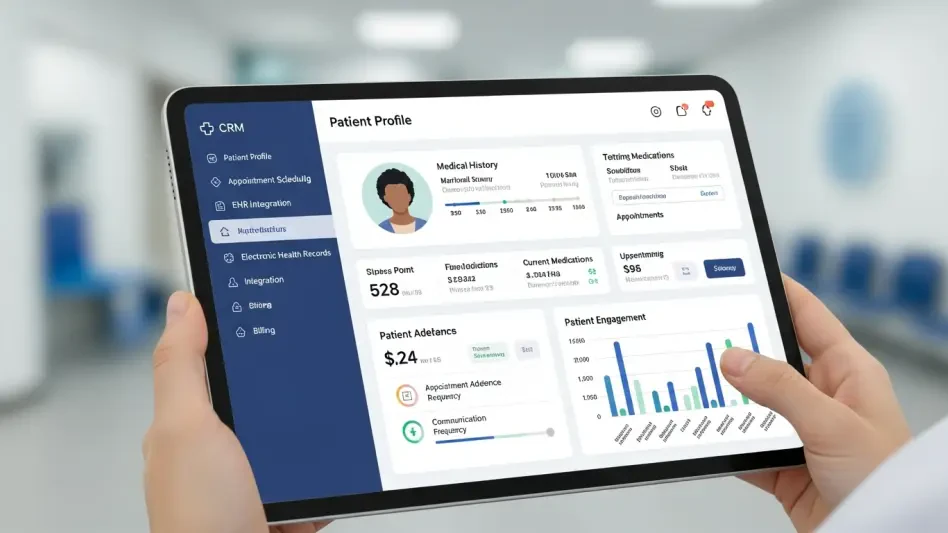
In the highly regulated world of healthcare and life sciences, a CRM system does not function as a standalone island. It is part of a vast, interconnected ecosystem that includes Electronic Health Records (EHRs), financial billing platforms, and sophisticated research databases. Every connection between these systems represents a specific legal obligation that must remain fully intact throughout the entire migration life cycle. Failure to maintain these links or to protect the data at rest and in transit can lead to catastrophic legal and financial consequences. The regulatory landscape has become a complex web of overlapping frameworks, making it nearly impossible for organizations to navigate a migration without a dedicated compliance strategy from day one.
In the United States, HIPAA and the HITECH Act mandate rigorous physical, technical, and administrative safeguards for protected health information, including strict requirements for breach notification. Global organizations face the additional challenge of navigating GDPR and the CCPA, which govern individual privacy rights and the complicated movement of data across international borders. Furthermore, for research-driven entities, standards like FDA 21 CFR Part 11 and EU Annex 11 are critical to ensure that electronic records remain auditable, secure, and untampered with. These standards are not merely suggestions but are the legal bedrock upon which the industry operates. A truly compliant migration begins by meticulously mapping every single data element to its corresponding regulatory requirement, ensuring that the legal integrity of the information is preserved before the first byte of data is ever moved.
Core Pillars of a Regulated Migration Methodology
Turning a high-risk data transition into a series of manageable and predictable milestones requires the adoption of a “compliance-by-design” approach. This philosophy treats the migration as a structured, end-to-end process where security and regulatory alignment are baked into every phase of the project. The first pillar of this methodology is a comprehensive inventory and scoping phase. It involves defining clear success criteria and creating a master catalog of every system, database, and integration involved in the move. By identifying which data should be migrated, which can be safely archived, and which must be retired according to retention policies, teams can significantly reduce the attack surface and the complexity of the move.
The second pillar focuses on risk analysis and the establishment of a robust governance framework. In a regulated environment, accountability is everything. Organizations must assign specific roles to individuals who are responsible for approving datasets, validating test results, and overseeing the final cutover. This structure acts as a blueprint for remediation; if data becomes corrupted or a potential exposure is detected, there is a predetermined path for escalation and resolution. Alongside governance, data hygiene and security measures are paramount. Systematic audits are performed to remove duplicates and correct outdated entries, while sensitive fields are protected with advanced encryption standards like AES-256. This ensures that even if a data packet were intercepted during the move, the underlying patient identifiers and clinical outcomes would remain unreadable and secure.
Expert Perspectives on Redefining Migration Success
Industry experts, including Roman Bevz, a principal consultant specializing in life sciences, argue that traditional IT metrics like budget adherence and project timelines are no longer sufficient to measure success in the healthcare space. In a sector where people’s lives are the primary concern, true success is defined by the continuity of care and the absolute preservation of data accuracy. A successful migration is one where there are exactly zero patient record mismatches and zero unauthorized disclosures. This standard requires a shift in how project leaders think about the final outcome, moving toward a model where the integrity of the data is the ultimate KPI.
Moreover, a forward-thinking migration strategy views the new system as a strategic asset rather than just a replacement for an old tool. When data is migrated correctly, it should be immediately ready for advanced analytics, population health initiatives, and the integration of artificial intelligence tools without the need for manual cleanup. By positioning compliance and clinical teams as co-leaders from the very beginning of the project, the migration ceases to be a technical hurdle and instead becomes a catalyst for organizational transformation. This collaborative approach ensures that the new CRM is not only compliant but also highly functional for the clinicians and researchers who rely on it to make critical decisions every day.
Practical Strategies for Execution and Post-Migration Stability
The final execution of a compliant CRM migration requires a delicate balance of technical precision and human-centric change management. One of the most effective strategies involves the use of “migration twins,” where the old and new systems are run in parallel for a predetermined period. This overlap allows for real-time validation of interoperability standards like HL7 and FHIR, ensuring that data flows correctly between clinical, operational, and financial systems before the old platform is decommissioned. This period of parallel operation serves as a safety net, allowing the organization to catch minor discrepancies in data mapping or system performance that might not have been visible during the testing phase in an isolated environment.
Post-live monitoring is the final piece of the stability puzzle. The true maturity of a new CRM is often tested in the first few weeks after the go-live date, when the system is subjected to real-world operational loads. Organizations should establish a dedicated monitoring framework to track system performance, user adoption, and data integrity in real time. Regular reviews of audit trails can identify irregular access patterns or data entry errors before they escalate into significant clinical risks or compliance violations. By focusing on the user experience and providing clinicians with straightforward guides and immediate support, organizations can foster a sense of confidence in the new platform, ensuring that the transition is viewed as a positive step toward better patient care rather than a disruptive technical burden.
The successful migration of a healthcare CRM was achieved by prioritizing the continuity of patient care over simple technical efficiency. Organizations recognized that the technical act of moving records served as a critical opportunity to reinforce the security and accuracy of their most valuable assets. By embedding compliance into the very architecture of the transition, the project teams ensured that every legal obligation was met and every patient’s privacy was shielded. This rigorous methodology ultimately transformed the migration from a high-stakes risk into a strategic advantage that empowered clinicians and researchers with cleaner, more accessible data. Looking ahead, the focus shifted toward utilizing these modernized systems to drive personalized medicine and predictive health outcomes. The lessons learned during these transitions provided a clear roadmap for future digital transformations, proving that in the intersection of technology and medicine, a commitment to data integrity is the only path toward sustainable innovation.