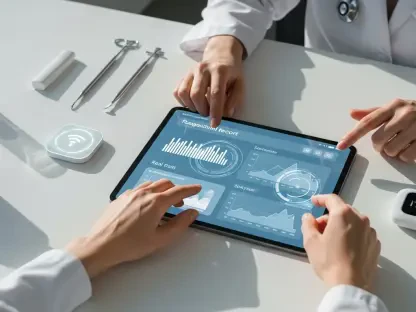

The Shift Toward a Decentralized, Patient-Centered Medical Ecosystem
The traditional hospital wall is effectively dissolving as clinical-grade interventions migrate directly into the domestic sphere, fundamentally altering how we perceive the boundaries of medical care. This transformation represents more than a mere change in location; it signifies a structural pivot toward a model that prioritizes individual autonomy and continuous oversight over the intermittent, facility-based interactions that once defined the industry. In this decentralized ecosystem, the patient home serves as the primary hub of care, supported by a sophisticated network of digital tools and clinical professionals who operate remotely but with greater visibility than ever before.
Several distinct segments now define this burgeoning market, ranging from high-acuity hospital-at-home programs to specialized chronic disease management and post-surgical recovery platforms. Major market players, including global health systems and niche technology firms, are leveraging the Internet of Medical Things (IoMT) to bridge the gap between clinical expertise and residential convenience. The regulatory landscape is also adapting to these shifts, with new standards emerging to ensure that quality of care remains consistent regardless of whether a patient is in a specialized ward or their own bedroom.
This shift is significantly influenced by a global demographic trend toward an aging population and an increasing prevalence of chronic conditions that require long-term management rather than short-term cures. By moving the site of care to the home, the healthcare industry is attempting to mitigate the systemic strain on physical infrastructure while simultaneously improving the quality of life for patients. Consequently, the significance of at-home healthcare has transcended its origins as a supplemental service to become a cornerstone of the modern medical strategy.
Technological Evolution and Economic Drivers of Modern Home Care
Innovations Redefining the Patient Experience
At the heart of the evolution of home-based care lies the integration of artificial intelligence and medical-grade biosensors that offer a constant stream of physiological data. Unlike the episodic data points collected during traditional clinic visits, modern wearables provide a comprehensive narrative of a patient’s health, capturing nuances in heart rate variability, sleep architecture, and even subcutaneous glucose levels in real time. This shift from manual to passive data collection is particularly vital for populations with mobility issues, as it removes the burden of active reporting while maintaining high diagnostic accuracy.
Furthermore, virtual simulation tools such as digital twins are allowing clinicians to model patient responses to specific treatments before they are even administered. By creating a dynamic virtual replica of an individual’s biological system, doctors can test various medication dosages or physical therapy regimens in a risk-free digital environment. This level of precision medicine was once a distant ambition, but it has now become a functional reality, ensuring that home-based care is as tailored and effective as any treatment provided in a premier academic medical center.
The patient experience is further enhanced by AI-driven triage platforms that can predict clinical deterioration days before symptoms become severe. For example, algorithms analyzing weight fluctuations and respiratory patterns in heart failure patients allow for preemptive adjustments to treatment, often preventing emergency hospitalizations entirely. These innovations are not just improving health outcomes but are also fostering a sense of security and empowerment among patients who can now manage complex conditions within the comfort of their own environment.
Market Projections and the Rise of Value-Based Care
The economic justification for this technological surge is rooted in the move toward value-based care models, which prioritize patient outcomes over the volume of services rendered. Since managing a patient at home is significantly more cost-effective than maintaining them in a high-overhead hospital environment, insurers and government agencies are aggressively incentivizing the adoption of home-care technologies. Market data indicates that the global sector for at-home health tech is on a trajectory to reach approximately $747 billion by 2030, reflecting a sustained compound annual growth rate driven by these fiscal efficiencies.
Looking ahead from 2026, the industry is witnessing a massive reallocation of capital as institutional investors move away from physical infrastructure and toward software-as-a-service platforms. This transition is not merely a financial trend but a strategic necessity to address the needs of an aging global population and the rising prevalence of chronic conditions. The forecast suggests that by the end of this decade, the majority of non-emergency medical interactions will occur remotely, supported by a robust backbone of AI-driven logistics and remote diagnostic tools.
Performance indicators currently suggest that hospital-at-home programs can reduce the total cost of care by up to twenty percent while simultaneously lowering readmission rates. These metrics are encouraging more health systems to adopt a “home-first” strategy for chronic disease management and recovery. As the technology matures, the financial barriers to entry are expected to decrease, allowing for even wider implementation across diverse socioeconomic segments of the population.
Navigating the Technical and Social Obstacles of In-Home Care
Despite the rapid pace of innovation, the industry faces significant hurdles that threaten to impede the widespread adoption of these solutions. One of the most pressing issues is the digital divide, where individuals in rural areas or lower socioeconomic brackets lack the high-speed internet or technical literacy required to utilize advanced medical devices. Without targeted interventions, the very technology intended to democratize healthcare could inadvertently exacerbate existing health inequities by leaving the most vulnerable populations behind.
Technical fragmentation presents another complexity, as many devices currently operate on proprietary platforms that do not easily share data with one another. This lack of interoperability creates silos of information that can hinder a comprehensive view of the patient’s health status. To overcome this, industry leaders are pushing for universal standards and open architecture that allow different systems to communicate seamlessly. Only by solving these integration issues can the promise of a unified, medicalized home environment be fully realized for every patient.
Moreover, the social aspect of care cannot be ignored, as the shift toward remote monitoring can sometimes lead to feelings of isolation. While technology can track vitals with extreme precision, it cannot yet fully replicate the empathetic connection between a patient and a bedside nurse. Strategies to address this include the integration of high-definition video consultations and the use of hybrid care teams that combine digital oversight with periodic in-person visits. Maintaining this balance is essential for ensuring that the human element of medicine remains intact.
The Regulatory Framework and Data Security Standards
The expansion of the medical perimeter into the home has necessitated a rigorous reevaluation of data security and privacy laws. As homes become populated with sensors and cameras, the volume of sensitive health data transmitted over the cloud has expanded the potential for cyber threats. Current regulations are evolving to mandate end-to-end encryption and stricter access controls to ensure that patient privacy remains uncompromised. Compliance is no longer just a legal requirement but a foundational element of the trust relationship between the patient and the healthcare provider.
In addition to security, regulatory bodies are refining the standards for what constitutes medical-grade technology in a home setting. This involves rigorous testing protocols for consumer-facing devices to ensure their diagnostic outputs are reliable enough for clinical decision-making. As the distinction between consumer electronics and medical devices continues to blur, regulators are playing a critical role in setting the benchmarks that define safety and efficacy in this new frontier of decentralized medicine.
Furthermore, the role of international standards is becoming increasingly important as health technology companies seek to scale their solutions globally. Harmonizing regulations across different jurisdictions allows for faster innovation and broader access to life-saving technologies. However, this also requires a delicate balance between encouraging innovation and maintaining the high levels of oversight necessary to protect public health. The ongoing dialogue between tech developers and policy makers remains a central theme in the evolution of the industry.
The Future Frontier: From Smart Homes to Medicalized Environments
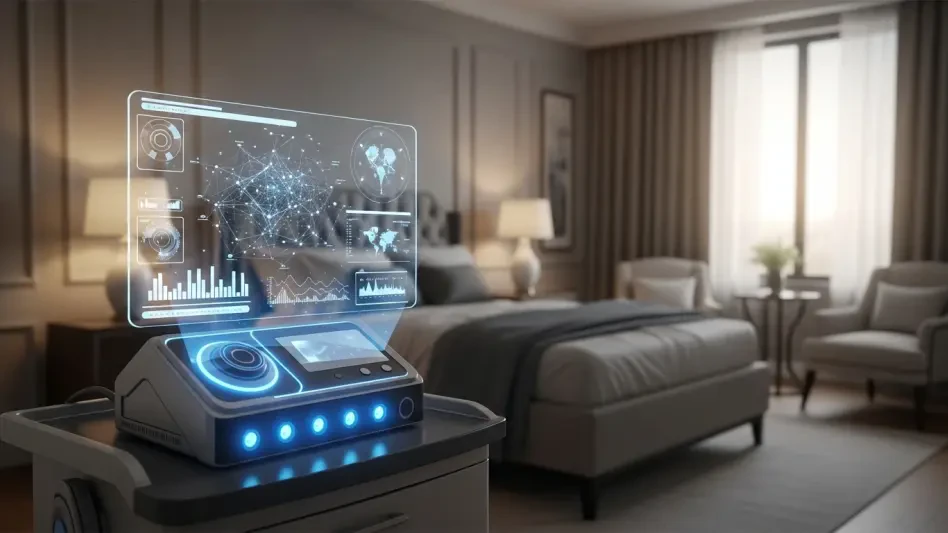
The next phase of development involves the total medicalization of the living space, where the environment itself actively participates in patient care. This goes beyond simple gadgets and enters the realm of ambient intelligence, where walls, floors, and furniture are embedded with sensors that can detect falls, monitor gait changes, or even analyze vocal patterns for signs of respiratory distress. These systems operate quietly in the background, providing a safety net that is both pervasive and unobtrusive, allowing patients to age in place with dignity and security.
Emerging technologies like companion robotics and advanced telehealth interfaces are also expected to play a larger role in addressing the psychological components of care. As social isolation becomes a growing concern for homebound patients, AI-driven avatars and physical robots will provide not just medical reminders, but also cognitive stimulation and social interaction. These disruptors will likely redefine the role of the traditional home health aide, allowing human caregivers to focus on tasks that require high levels of empathy and physical dexterity while technology handles the routine monitoring and companionship.
In the coming years, we can also expect the rise of more sophisticated at-home diagnostic kits that allow patients to perform complex blood tests or imaging from their living rooms. This will further reduce the need for travel to centralized labs, making healthcare more convenient and efficient. As global economic conditions fluctuate, the resilience of the home healthcare sector will likely be a key driver of stability within the broader medical industry, providing a scalable solution to the world’s most pressing health challenges.
Synthesis of Findings and Strategic Outlook for the Healthcare Industry
The transition toward a technology-enabled home healthcare model proved to be one of the most significant shifts in modern medical history. By decentralizing care and placing the patient at the center of a data-driven ecosystem, the industry effectively addressed the twin challenges of rising costs and aging demographics. It was observed that the integration of artificial intelligence and remote monitoring not only improved clinical outcomes but also restored a sense of agency to individuals who had previously felt disenfranchised by a rigid, hospital-centric system.
Strategic recommendations for the future involve a heightened focus on digital inclusion and the development of more intuitive user interfaces to ensure that technology is accessible to all. Investment in cybersecurity infrastructure was recognized as a non-negotiable priority to protect the integrity of the medicalized home. Additionally, fostering collaboration between technology firms and traditional healthcare providers helped create a more seamless transition between facility-based and home-based care.
Ultimately, the prospects for the industry remained exceptionally strong, with continuous innovation paving the way for more complex medical procedures to be handled in residential settings. The move toward medicalized environments offered a sustainable path forward, blending high-tech precision with the comfort of the home. Stakeholders who prioritized the human-centric application of these advanced tools were best positioned to lead the healthcare sector into an era where quality care was no longer confined by the walls of a hospital.