
We’re joined today by Faisal Zain, a leading expert in healthcare business strategy. With a sharp focus on payment models and market dynamics, Faisal’s work examines the critical role of digital infrastructure in the future of care delivery. We’ll be discussing a profound shift in the industry: the movement of healthcare spending authority from large institutions to individual consumers. This conversation will explore how this “healthcare wallet” economy is reshaping the competitive landscape, the specific challenges and opportunities for models like Direct Primary Care, and the strategic imperatives for providers who want to thrive, not just survive, in this new era. We will delve into the critical need for providers to control consumer touchpoints, the strategies for managing both retail and employer-sponsored patient populations, and how the very definition of value in healthcare is being transformed.
With healthcare purchasing power moving into individual-controlled accounts, what are the most critical infrastructure components—like payment rails or navigation platforms—for a provider to control? Please walk me through the first three steps an independent practice should take to build or own these touchpoints.
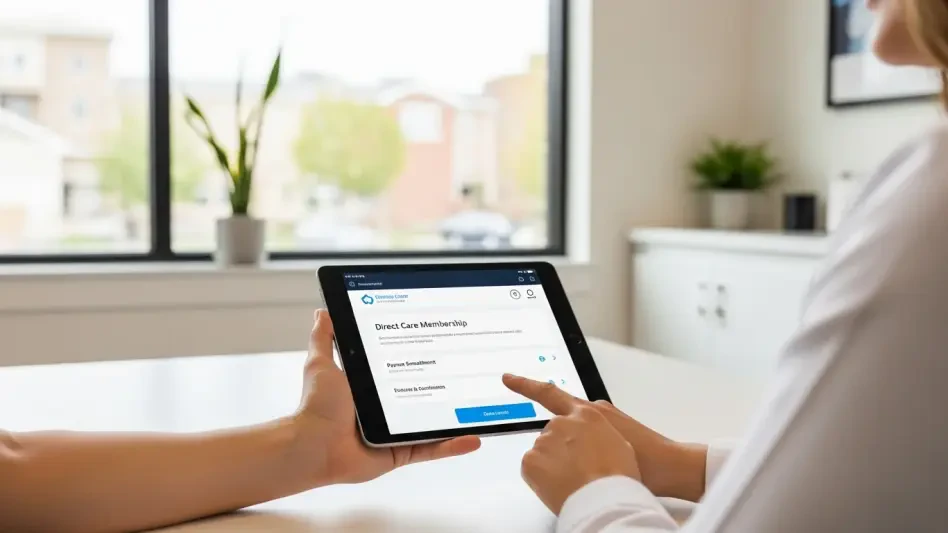
That’s the central question, isn’t it? In any consumer market, the entity that owns the customer relationship is the one that owns the payment rails, the enrollment flows, and the navigation experience. Healthcare is no different. As we see Health Savings Account assets blast past the $100 billion mark, it’s clear the individual is in the driver’s seat. For an independent practice, the first step is a mental one: you must stop seeing yourself purely as a clinical service and start seeing yourself as a business that needs to own its distribution channel. Second, you need to invest in a frictionless payment and enrollment system. This isn’t just about accepting credit cards; it’s about creating a seamless digital front door where a patient can understand your offering, sign up for a membership, and manage their payments without any hassle. This is your digital handshake. The third step is to build a basic navigation platform. This could start as a curated list of trusted specialists or cash-pay services in your portal. The goal is to become the first place your patient turns to when they need to make any healthcare decision, not just the one that happens in your office. You have to control that first click.
Direct Primary Care models seem well-suited for a consumer-driven market, but this introduces retail risks like customer churn. What specific strategies and metrics should a DPC practice implement to manage churn and build brand trust in a competitive retail environment?
This is a critical transition. DPC’s transparent, subscription-based model is a natural fit for this new consumer-centric world. However, that alignment brings with it the harsh realities of a retail market. When you’re relying on household discretionary income, you’re suddenly competing with Netflix, the gym membership, and the rising cost of groceries. Churn becomes an unavoidable, structural part of your business model. To manage it, you must move beyond just tracking patient visits. The key metric becomes customer lifetime value and the cost of acquisition. You need to obsessively monitor your monthly churn rate and understand why people are leaving. Was it price? Perceived value? A poor digital experience? To build brand trust, you have to remember that excellent clinical care is now just table stakes. Trust is built through consistent communication, a frictionless user experience, and by demonstrating value beyond the exam room. It’s about creating a brand that feels indispensable to your customer’s life, not just their health.
A dual market is emerging: a volatile retail segment and a steadier employer-sponsored one. For a care model aiming for scale, what are the key operational and marketing differences when serving both pathways simultaneously? Please provide a detailed example of a successful approach.
Navigating this dual market is the key to sustainable scale. The two segments are fundamentally different. The retail side is a high-growth, high-volatility game. It demands a direct-to-consumer marketing engine, a focus on brand building, and an extremely efficient customer acquisition process. It’s about winning over individual households one by one. The employer-sponsored side offers stability. Here, the sales cycle is longer and more complex, involving brokers and HR departments. The value proposition isn’t just about individual care but about how you can reduce costs, improve productivity, and integrate with an existing benefits ecosystem for the employer. A successful approach requires a two-pronged strategy. Operationally, you need a flexible platform that can handle both individual subscriptions and employer contracts. For marketing, you’d run targeted digital campaigns for the retail segment while simultaneously building a B2B sales team to cultivate relationships with local employers and benefits advisors. The goal is to use the steady, predictable revenue from employer contracts to fuel the higher-risk, higher-reward growth of the direct-to-consumer side. This balance is what allows a practice to weather the storms of the retail market while still capturing its immense growth potential.
As platforms bundle services like DPC, telehealth, and pharmacy, independent practices risk becoming interchangeable suppliers. Beyond excellent clinical care, what unique value propositions can they offer to avoid commoditization and maintain a direct relationship with the consumer? Please elaborate on a specific tactic.
This is perhaps the greatest existential threat to independent practices today. Being relegated to an interchangeable “provider” in someone else’s curated marketplace is a death knell for long-term value. The owner of the transaction layer, the platform, is the one who captures the leverage. To avoid this, you must offer something the aggregator cannot. The most powerful tactic is to build a true community around your practice. A large, impersonal platform can offer convenience, but it can’t offer a sense of belonging or deep, localized trust. This means creating a value proposition that extends beyond the clinical encounter. For example, a DPC practice could host monthly health workshops, create hyper-local wellness partnerships with gyms or nutritionists, or build an active online community for its members. By becoming the trusted hub for your patients’ overall well-being, you are no longer just a “DPC provider.” You are an essential part of their life, a relationship they are unwilling to sacrifice for the slightly lower price or bundled convenience of a faceless platform.
Value seems to be shifting from the clinical encounter itself to the infrastructure that guides how care is selected and purchased. What does this mean for the traditional physician’s role, and how must their business mindset evolve to capture value in this new economy?
It’s a seismic shift. For generations, the physician’s value was almost entirely contained within the clinical encounter—the diagnosis, the treatment plan. That value is not disappearing, but it’s no longer the primary locus of economic power. Power is accruing to the infrastructure that guides the consumer’s entire journey: how they find you, how they pay you, and how they experience their care. For the traditional physician, this means their role must evolve from being solely a practitioner to also being a business owner who is obsessed with distribution. The mindset must change from “how do I provide the best care?” to “how do I build a system that allows consumers to easily find, purchase, and experience the best care?” This requires a new set of skills: understanding digital marketing, user experience design, and strategic partnerships. Physicians must recognize that if they don’t control the consumer touchpoints, they will ultimately be working for whoever does. Capturing value is no longer just about clinical excellence; it’s about owning the rails that lead patients to your door.
What is your forecast for the evolution of the ‘healthcare wallet’ over the next five years?
The ‘healthcare wallet’ isn’t a future concept; it’s already here, and its influence will grow exponentially over the next five years. We are at an inflection point. Whether through specific policy changes or the continuation of existing market trends like high-deductible plans, the amount of healthcare spending controlled directly by individuals will surge. This will trigger a full-blown arms race to build the definitive platform—the Amazon, if you will—of healthcare. We will see intense competition between benefits administrators, tech startups, and even forward-thinking provider groups to become the default interface for the consumer. The winners won’t necessarily be those with the most extensive networks of doctors, but those who create the most intuitive, trustworthy, and seamless experience for selecting, purchasing, and managing care. The very structure of the industry will be redefined around who successfully captures and controls that infrastructure layer between the individual’s wallet and the delivery of care.