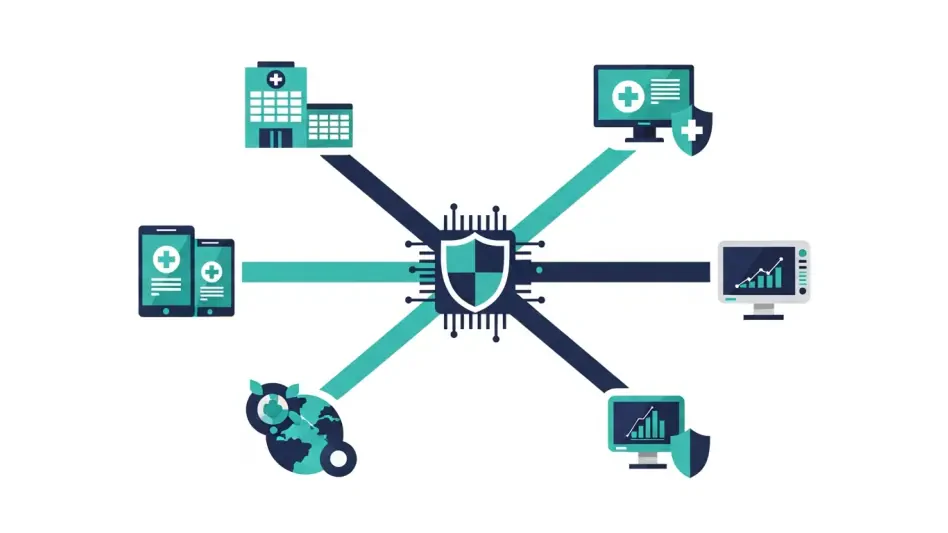

The rapid convergence of advanced artificial intelligence and interconnected medical infrastructure has fundamentally altered the protective requirements for sensitive patient health information and clinical operational stability. This digital transformation of patient care delivery has transitioned clinical operations from paper-based silos to dynamic, data-driven ecosystems. While these advancements have significantly improved diagnostic accuracy and therapeutic outcomes, they have also placed a heavy burden on the digital foundations that support global health services.
Modern clinical settings now rely heavily on the Internet of Medical Things (IoMT) to provide continuous monitoring and specialized care. From wearable telemetry units to sophisticated robotic surgical assistants, these devices form a vast network that bridges the gap between physical medicine and digital intelligence. The interconnectivity between Electronic Health Records (EHR), telemedicine platforms, and administrative systems ensures a seamless flow of information; yet, this interdependence means that a single point of failure can disrupt the entire clinical supply chain, making cybersecurity a matter of socioeconomic stability.
Navigating the Modern Healthcare Ecosystem and Digital Infrastructure
Clinical operations have undergone a profound evolution as digital tools move from the periphery to the core of patient care. The widespread adoption of telemedicine and remote patient monitoring has effectively dissolved the traditional boundaries of the hospital, creating a distributed network that extends into patients’ homes. This expansion has made the role of the IoMT indispensable, particularly in the management of chronic diseases where real-time data collection is vital for preventing acute medical crises.
Securing the global healthcare supply chain has become a priority for stakeholders ranging from hospital administrators to national security officials. Because healthcare data is exceptionally valuable on the black market, the socioeconomic significance of protecting these assets cannot be overstated. A breach does not merely represent a loss of privacy; it can paralyze entire regions by rendering life-saving medical equipment unusable and forcing hospitals to divert patients during critical emergencies.
Analyzing the Surge of AI-Driven Cyber Tactics and Market Dynamics
The threat landscape is changing rapidly as malicious actors begin to integrate automated intelligence into their offensive toolsets. Traditional security measures, which once relied on manual oversight and scheduled updates, are struggling to keep pace with the velocity of AI-driven exploitation. This shift has forced a reevaluation of market dynamics, as organizations must now decide whether to invest in modernizing their foundations or risk the catastrophic costs associated with systemic failure.
The Rise of Agentic Vulnerability Scanning and Automated Exploitation
Large language models have fundamentally compressed the window between the discovery of a software vulnerability and its active weaponization. Agentic AI tools are now capable of conducting high-speed, automated reverse-engineering of security patches, allowing attackers to identify weaknesses before IT teams can implement defenses. This automation eliminates the need for manual research, enabling bad actors to launch targeted strikes across disparate healthcare network nodes with supernatural speed and precision.
Moreover, these AI agents identify correlation patterns across network logs that a human analyst might overlook. By recognizing subtle attack patterns and exploiting them simultaneously across multiple systems, automated threats can overwhelm traditional firewalls and intrusion detection systems. The shift from manual exploitation to agentic scanning represents a new era of cyber warfare where the speed of attack is measured in milliseconds rather than days.
Market Projections and the Economic Impact of Healthcare Data Breaches
Statistical trends indicate a sharp rise in both the frequency and the severity of ransomware attacks within medical settings. Growth forecasts for the healthcare cybersecurity market suggest a massive influx of capital through the end of the decade as hospitals attempt to harden their defenses. Performance indicators show that organizations shifting from reactive spending to proactive infrastructure investment are significantly more likely to maintain operational continuity during a crisis.
The economic impact of a data breach extends far beyond initial recovery costs and legal fees. Long-term damage to institutional reputation and the loss of patient trust can lead to a decline in admissions and revenue that persists for years. Consequently, market dynamics are favoring defensive solutions that offer comprehensive visibility and real-time response capabilities, as the cost of insurance and compliance continues to skyrocket in response to the heightened threat environment.
Addressing Critical Vulnerabilities Within Clinical Environments
One of the most persistent challenges in healthcare security is the prevalence of legacy medical equipment and end-of-life software. High-value imaging suites and lab analyzers often remain in service for decades, long after their operating systems have stopped receiving security updates. These legacy systems serve as unintentional backdoors, providing easy entry points for intruders who can then move laterally into more sensitive areas of the network.
Bridging the operational divide between Information Technology (IT) and Operational Technology (OT) is essential for eliminating these blind spots. While IT departments focus on data integrity, OT teams prioritize the physical functionality of medical hardware. Strategies that unify these departments through shared visibility allow for a more holistic approach to security, effectively reducing the dwell time of AI-powered intruders who rely on fragmentation to remain undetected.
Strengthening Compliance through Robust Regulatory Frameworks
The evolution of HIPAA and HITECH standards has become a necessary response to the era of automated cyber threats. Regulatory frameworks are moving toward more stringent requirements for data encryption and identity management to combat the sophistication of AI-driven breaches. Navigating international data protection mandates has also become a complex task for global health organizations, as they must balance the need for health data exchange with the strict privacy requirements of different jurisdictions.
Government-led security directives are increasingly establishing baseline defensive requirements that go beyond mere paperwork and audits. These directives often mandate the use of AI for defensive monitoring, recognizing that only intelligent systems can counter the speed of automated attacks. Legal and ethical implications remain at the forefront of this shift, particularly concerning how AI-driven security tools process sensitive patient data while attempting to identify malicious activity in real-time.
Forecasting the Future of Intelligent Healthcare Defenses
The industry is moving rapidly toward a Zero-Trust Architecture to neutralize entry points both inside and outside the perimeter. In this model, no device or user is trusted by default, and continuous verification is required for every access request. This approach is particularly effective in healthcare, where the constant movement of staff and the rotation of medical equipment create a highly fluid environment that is difficult to secure through traditional means.
Implementing network segmentation has proven to be a vital method for containing the blast radius of a security incident. By isolating clinical equipment from administrative systems, administrators can ensure that an infection in one area does not lead to a total system shutdown. Emerging market disruptors are also introducing autonomous, self-healing networks that utilize defensive AI to identify deviations from the baseline and automatically quarantine compromised nodes before they can cause widespread damage.
Synthesizing Security Strategies for Sustainable Healthcare Resilience
The transition from a state of perpetual technical debt to a posture of proactive digital resilience proved to be a defining shift for the global health sector. Administrators recognized that the integration of IT and OT management was no longer optional but a fundamental requirement for patient safety. By breaking down silos and prioritizing unified visibility, organizations were able to respond to threats with the agility required to survive in an AI-dominated landscape.
Strategic investment priorities shifted away from disparate software tools toward holistic frameworks that emphasized continuous monitoring and architectural strength. The industry moved toward a model where patient data integrity and clinical uptime were viewed as inseparable components of the care delivery mission. These efforts established a foundation that protected the sanctity of the patient-provider relationship and ensured that the promise of digital health remained secure against the rising tide of automated threats.