
I’m thrilled to sit down with Faisal Zain, a renowned expert in healthcare technology with a deep background in medical device manufacturing for diagnostics and treatment. With years of experience driving innovation, Faisal has been at the forefront of addressing critical challenges in healthcare safety, particularly through advanced wearable solutions. Today, we’ll explore the pressing issue of workplace violence in healthcare settings, the unique vulnerabilities faced by staff, and how cutting-edge technology is transforming safety and morale in hospitals across diverse environments. Our conversation will also touch on the power of collaboration with leading health systems and the tangible impact of prioritizing staff well-being.
How do you explain the alarming statistic that healthcare workers are five times more likely to experience violence than other professions, and what differences do you see across urban, suburban, and rural areas?
I think this statistic really underscores the unique pressures within healthcare. These professionals are often on the front lines, dealing with high-stress situations where emotions run raw—patients and families are scared, frustrated, or in pain, and sometimes that spills over into aggression. This isn’t just an urban issue; it plays out in suburban and rural settings too, though the triggers might differ. In urban hospitals, you might see more incidents tied to overcrowding or socioeconomic stressors, while in rural areas, limited resources and long wait times can heighten tensions. I recall a story from a suburban hospital where a nurse was verbally assaulted by a patient’s family member over a misunderstanding about treatment delays—it escalated so quickly that she felt trapped in the room, her heart racing, unsure if it would turn physical. The emotional toll is heavy; staff often carry this anxiety home, dreading their next shift. Solutions like wearable safety tech have been game-changers—after implementing a discreet alert system in that same hospital, the nurse was able to call for help instantly during a later incident, and a colleague arrived within minutes to defuse the situation. It’s not just about physical safety; it’s about giving staff a sense of control and support, which can make all the difference in how they cope.
What specific challenges do nurses, especially in emergency departments, face that make them so vulnerable to physical violence, and how has technology helped in these critical moments?
Emergency departments are like pressure cookers—nurses are dealing with life-and-death stakes, often with patients in crisis or under the influence, and there’s little time to de-escalate before things spiral. Nearly half of nurses will face physical violence in their careers, and in the ED, they’re often the first point of contact, bearing the brunt of frustration or anger. Imagine a typical night shift: a patient comes in agitated, maybe experiencing a mental health crisis, and starts shouting, pushing against the nurse trying to take vitals. The nurse is caught between ensuring safety and providing care, often with no immediate backup. That’s where wearable tech steps in. I remember a case where a nurse activated a hidden alert during such a confrontation—the system pinpointed her location, down to the room and floor, and within moments, security and nearby staff were there to calm the situation. The relief on her face afterward, knowing she wasn’t alone, was palpable. Technology like this doesn’t just prevent harm; it rebuilds trust in the workplace, letting nurses focus on care rather than fear.
Can you tell us about the design process behind the wearable sensor hidden behind a nametag, and how it functions in a real-world crisis?
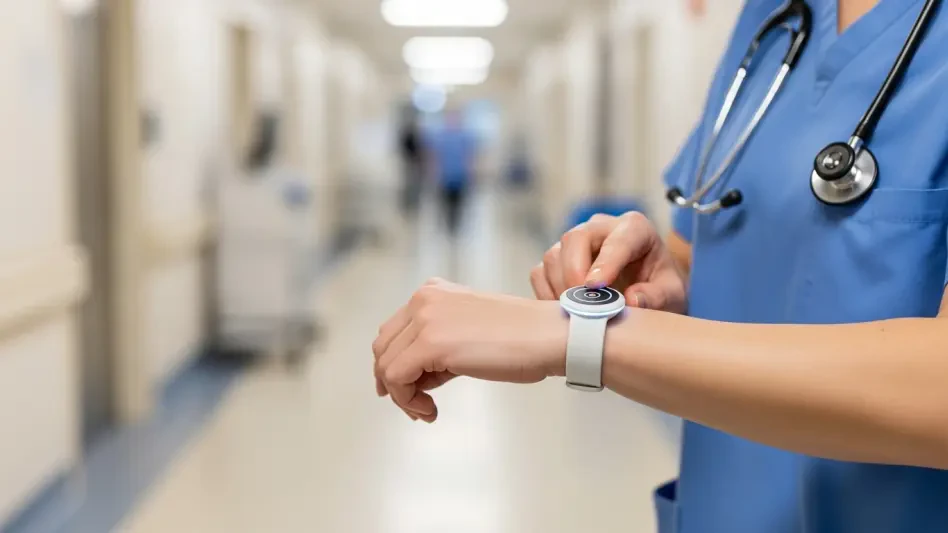
Designing a wearable sensor that’s both discreet and effective was a priority for us. We wanted something that wouldn’t draw attention or make staff feel like they’re wearing a target, so hiding it behind a nametag felt intuitive—it’s already part of their uniform, blending seamlessly into their day. We worked through countless iterations, getting feedback from nurses about comfort and accessibility, ensuring it’s easy to press even under stress. When activated, the process is swift: a quick press sends an instant alert to on-site security and nearby staff with the exact location—room and floor included—via their phones or comms devices. Help is dispatched immediately to de-escalate. I recall an incident at a partner hospital where a nurse triggered the alert during a heated argument with a patient’s relative. Within two minutes, a security officer and a fellow nurse arrived, their presence alone shifting the dynamic—the relative backed off, and the situation resolved without further escalation. The nurse later shared how those few minutes felt like an eternity, but knowing help was coming kept her grounded. It’s moments like these that show how design and function can intersect to save the day.
How often do unexpected team responses, like physicians stepping in after an alert, occur, and what impact does this have on hospital culture?
It’s more common than you’d think, and it’s one of the most heartwarming outcomes of these safety systems. When an alert goes out, it’s not just security that responds—often, nearby staff, including physicians, will step in if they’re close. At one hospital, we heard about physicians regularly showing up to support nurses, and in many cases, their presence alone calmed agitated patients who just wanted to speak to a doctor. This happens frequently enough that it’s become a cultural shift in some facilities. Another instance that stands out was at a different center where, after an alert, a group of staff, including a senior physician, rallied around a nurse dealing with a verbally abusive family member. The physician took the lead in calming things down, and afterward, the nurse couldn’t stop talking about how supported she felt—like the team was truly a family. Feedback from staff often highlights this sense of unity; they feel seen and valued, which boosts morale immensely. It’s not just about stopping violence—it’s about building a stronger, more connected workplace.
Over the past six years, you’ve collaborated with leading health systems to shape your safety platform. How do these partnerships influence the technology, and can you share a specific improvement driven by their input?
Collaboration has been the cornerstone of our approach. Working with innovative health systems over the last six years has allowed us to tailor our platform to real-world needs, not just theoretical ones. We dive deep into their workflows, listening to staff at all levels to understand pain points and logistical hurdles. One major health system provided critical input on alert customization—nurses wanted more control over who gets notified based on the severity of the situation. We refined the system to allow tiered alerts, which drastically reduced unnecessary interruptions while ensuring urgent calls got immediate attention. I remember visiting a hospital after this update rolled out; a charge nurse told me how a tiered alert helped manage a non-violent but tense situation without pulling the entire team away from other patients. The relief in her voice was striking—fewer false alarms meant less stress. These partnerships don’t just shape features; they ensure the tech integrates seamlessly into daily operations, making safety second nature for staff.
You’ve noted that health systems using advanced safety tech often see higher staff retention. What trends or metrics support this, and how does a commitment to safety change daily operations?
We’ve seen compelling trends tying safety tech to retention. Hospitals adopting our platform often report lower turnover, especially among nurses, with some seeing retention rates improve by noticeable margins after implementation. It’s not just numbers—it’s the feedback we get: staff say they feel valued when leadership invests in their safety. One hospital shared that after rolling out our system, they noticed fewer sick days and less burnout-related resignations within the first year—nurses felt safer showing up to work. Safety isn’t just a policy; it reshapes daily operations. Staff walk into shifts with less anxiety, knowing there’s a system backing them up. I visited a facility where the charge nurse described mornings before the tech—everyone was on edge, bracing for potential conflict. Now, there’s a palpable calm; they trust the alert system and focus more on patient care than self-protection. It’s a ripple effect—better morale leads to better teamwork, which ultimately improves outcomes for everyone.
With disorderly conduct and assault topping the list of threats to healthcare workers in recent surveys, how does your platform address these specific risks, and what challenges remain?
Our platform is built to tackle threats like disorderly conduct and assault head-on by enabling rapid response and de-escalation. When a situation turns volatile, staff can trigger an alert that pinpoints their location and notifies security and nearby team members instantly. In one real-world example, a nurse faced a patient exhibiting disorderly behavior—shouting and refusing to comply during a busy shift. She activated the sensor, and within minutes, a security officer arrived to mediate, using calm dialogue to bring the situation under control while other staff managed the surrounding area. The nurse later said she felt a wave of relief seeing backup so quickly; it prevented a potential assault. However, challenges persist—some incidents escalate too fast for even a quick response, and cultural or systemic issues around patient behavior can’t be solved by tech alone. We’re constantly evolving the system, exploring ways to integrate predictive tools or training modules to help staff spot early warning signs. The goal is to get ahead of violence before it even starts.
What is your forecast for the future of workplace safety in healthcare settings?
I see workplace safety in healthcare evolving into a more proactive, integrated ecosystem over the next decade. We’re already witnessing a shift toward connected technologies that don’t just react to threats but anticipate them through data and behavioral analytics. I believe we’ll see safety platforms merging with staff training and patient engagement tools to create a holistic approach—think systems that flag high-risk situations before they escalate. At the same time, I expect greater emphasis on mental health support for staff, recognizing that safety isn’t just physical but emotional. The challenge will be balancing tech with the human element; no system can replace empathy or trust in a team. My hope is that as more health systems prioritize safety, we’ll see violence statistics drop significantly, and healthcare will become a profession where people feel secure to do their life-changing work.