
A single flat tire or a sudden snowstorm in the high desert of the Southwest can mean the difference between receiving life-saving medical advice and suffering through a preventable crisis in total isolation. For millions of Americans living in rural corridors, the nearest specialist is not a neighborly drive away but a multi-hour trek across unforgiving landscapes. This geographic barrier, compounded by a persistent lack of high-speed internet, has created “health deserts” where managed care is a luxury rather than a right.
From Bookstacks to Lifelines: The Changing Role of Public Spaces
Traditional perceptions of the public library are undergoing a radical shift as these institutions pivot to meet the urgent physical needs of their communities. While the silence of the reading room remains, it is now being punctuated by the hum of high-tech medical equipment. By integrating clinical access into the civic fabric of small towns, libraries are proving that isolation does not have to result in medical neglect.
These spaces are uniquely positioned to act as healthcare conduits because they already hold the public’s trust. Unlike a distant corporate hospital or a sterile government building, the local library is a familiar cornerstone of daily life. Transforming these hubs into medical access points bypasses the need for massive new construction while utilizing existing infrastructure to deliver modern care to the most remote corners of the country.
The Anatomy of a Health Desert
The crisis in rural areas is defined by more than just mileage; it is a complex intersection of poverty, aging infrastructure, and a lack of digital connectivity. Without reliable broadband, the promise of modern telemedicine remains unfulfilled for households that cannot support a stable video connection. This digital divide forces residents to postpone routine screenings and leave chronic conditions unmanaged until they escalate into emergencies.
Reliance on emergency rooms for basic primary care creates a ripple effect that strains the entire healthcare system. When a simple consultation requires an entire day of travel and lost wages, many residents simply opt out of the system entirely. This cycle of avoidance leads to poorer health outcomes and higher long-term costs, making the need for localized, low-barrier intervention points more critical than ever.
New Mexico’s Blueprint for Telehealth Integration
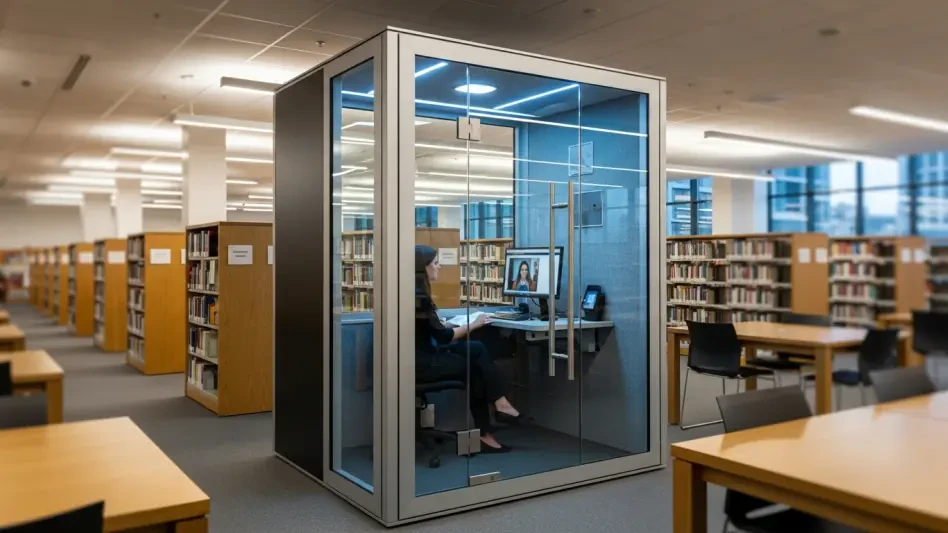
The New Mexico State Library has teamed up with the University of New Mexico (UNM) Health Sciences Library and Informatics Center to launch an ambitious pilot program. By installing specialized 7-foot by 7-foot soundproof booths in locations such as Aztec, Mescalero, and Hobbs, they have created private sanctuaries for clinical consultation. These units represent a significant shift in how rural infrastructure is utilized to bridge the gap between patients and providers.
Supported by an $800,000 USDA grant, these $12,000 units are equipped with high-speed internet to ensure seamless video connectivity. Beyond medical appointments, these pods serve as versatile spaces for recording podcasts or engaging in private educational sessions, maximizing the return on investment. This model mirrors successful frameworks seen in states like Oklahoma, signaling a national movement toward standardized rural health integration.
Validation Through Results and Resident Feedback
Early data from monthly reviews at the seven pilot sites suggests a deep community appetite for these localized services. Librarians report that patrons feel a renewed sense of security, appreciating the confidentiality of the booths compared to the often overwhelming atmosphere of a distant hospital. This “trusted space” status allows libraries to reach skeptical or marginalized populations that might otherwise avoid traditional government outreach.
University partners have observed that the success of the program is rooted in the social capital libraries have built over decades. Residents are more likely to seek help in a place where they already feel welcome and supported. This human-centric approach to technology adoption has proven that the effectiveness of a medical tool is often determined by the environment in which it is placed.
Strategies for Sustaining and Scaling Rural Health Hubs
To maintain this momentum, stakeholders looked toward the Centers for Medicare and Medicaid Services Rural Health Transformation Program to secure recurring revenue. Formalizing agreements between state departments of health and library systems allowed for shared costs and resources, ensuring the booths did not become obsolete once initial grants were exhausted. Training for staff focused on navigating digital interfaces while strictly maintaining user privacy.
Expanding the network to a critical mass of 14 or more locations provided the robust data needed to prove long-term health improvements. This shift toward integrated community health fostered a new era of collaboration where geographic isolation no longer dictated the quality of one’s care. Leaders eventually realized that by embedding clinical technology within the library system, they moved closer to a future where healthcare is a local certainty rather than a distant hope.