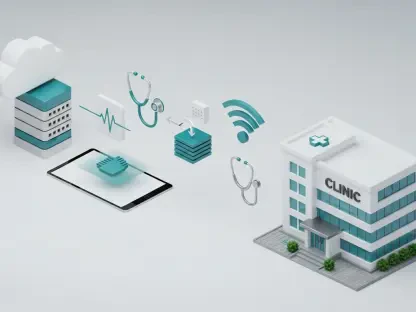

Artificial intelligence in medicine has long been confined to the narrow corridors of research labs and isolated clinical trials, but one Pennsylvania health system is now attempting to tear down those walls entirely. This move goes far beyond a simple technology upgrade; it represents a fundamental rethinking of how clinical operations are managed, positioning the organization as a crucial test case for the future of healthcare delivery.
Beyond the Hype a Pennsylvania Health Systems Ambitious Bet on AI
WellSpan Health, a prominent healthcare network, has initiated a pioneering strategy to embed a comprehensive clinical AI platform across its entire enterprise. This decision marks a significant leap from the industry’s typically cautious, piecemeal adoption of artificial intelligence. Instead of deploying a single-use tool, WellSpan is implementing a system-wide “operating system” for intelligence, signaling a deep-seated belief that AI is not just an accessory but a foundational component of modern medicine.
The initiative is framed as a critical experiment in revolutionizing healthcare at scale. By integrating AI into the daily workflows of every hospital and care location, WellSpan aims to prove that the technology can deliver standardized, high-quality care consistently across a large and diverse patient population. This ambitious bet serves as a real-world evaluation of whether AI can truly address systemic challenges like diagnostic delays, operational inefficiencies, and clinician burnout.
From Successful Pilot to System-Wide Strategy
The confidence to undertake such a large-scale transformation was not born overnight; it was forged in the success of an initial deployment of Aidoc’s AI platform. This pilot phase served as a powerful proof of concept, demonstrating tangible value in a controlled yet substantial environment. The technology was tasked with analyzing a massive volume of medical data, providing a clear picture of its diagnostic capabilities.
During this trial, the AI platform analyzed over 200,000 patient cases within the WellSpan system, a figure that underscores the sheer scale of the test. More importantly, it flagged more than 10,000 potentially critical findings, including life-threatening conditions like pulmonary emboli and brain hemorrhages that demand immediate attention. The pilot proved instrumental in accelerating time-sensitive diagnoses, confirming that the technology could effectively reduce bottlenecks and improve turnaround times for critical care decisions.
The Pillars of WellSpans AI Transformation
Unifying Intelligence Across the Enterprise
The core of WellSpan’s strategy is the expansion of its AI Operating System (aiOS) to all nine of its hospitals and more than 250 outpatient care locations. This move ensures that every clinician, regardless of their location, has access to the same advanced analytical capabilities, effectively standardizing the baseline for diagnostic support across the entire network. The goal is to create a cohesive and uniformly intelligent clinical environment.
This unification is achieved through deep integration with the health system’s existing infrastructure. The aiOS is designed to connect seamlessly with WellSpan’s Electronic Medical Record (EMR) and imaging systems, such as PACS. This integration is crucial, as it avoids creating new data silos and instead weaves AI directly into the established workflows of radiologists and other specialists, making its use feel natural and intuitive rather than an additional burden.
Expanding AI-Powered Care Pathways
With the foundational platform in place, WellSpan is activating 21 new AI algorithms designed to enhance care across seven distinct service lines. This expansion moves the application of AI beyond its traditional stronghold in radiology and into critical areas like cardiology, vascular surgery, and neuroscience. Consequently, the system is now equipped to provide decision support for a much broader range of clinical scenarios.
This wider net of AI-powered detection brings numerous previously hard-to-spot conditions to the forefront. For example, the algorithms are now trained to identify subtle signs of aortic dissection, pneumothorax, and vertebral compression fractures from medical images. This expanded diagnostic scope empowers clinicians to intervene earlier and with greater confidence, directly impacting patient outcomes by catching critical issues that might otherwise be missed or delayed.
Creating a Centralized AI Hub
A defining feature of WellSpan’s approach is its commitment to creating a single, unified intelligence hub. The aiOS is not a closed system; it is designed to be a platform that can incorporate best-in-class, third-party AI tools for highly specialized tasks. This includes algorithms from other vendors focused on detecting lung nodules or breast lesions, allowing WellSpan to build a comprehensive suite of capabilities without being locked into a single provider.
This strategy intentionally moves away from the fragmented, single-point solutions that have characterized early AI adoption in healthcare. By creating a centralized layer where all AI-driven insights are consolidated, WellSpan ensures that clinicians have a single source of truth. This prevents the confusion and inefficiency that can arise from juggling multiple, disconnected AI applications, ultimately fostering a more streamlined and powerful clinical intelligence ecosystem.
A Holistic Approach What Makes This Initiative Different
What truly sets WellSpan’s initiative apart is its system-wide, “Operating System” philosophy. In contrast, many healthcare organizations have limited their AI experiments to isolated departments or specific use cases, treating the technology as a helpful but non-essential add-on. These limited deployments often fail to generate the network effect needed to transform an entire organization’s standard of care.
WellSpan’s strategic intent is far more ambitious. The goal is to embed a unified intelligence layer directly into the fabric of daily clinical operations. This holistic approach is designed to systematically elevate care quality and standardize protocols across the entire network, ensuring that a patient receives the same high level of AI-assisted scrutiny whether they are at a large urban hospital or a small rural clinic. It is a shift from using AI as a tool to building an organization powered by AI.
The Current State Launching a New Era of Clinical Operations
The primary objectives of this initiative are twofold, addressing both the patient and the provider. For patients, the system aims to deliver enhanced care through faster, more accurate diagnoses. By flagging critical findings in real time, the platform significantly shortens the window between the discovery of a problem and the beginning of treatment, which can be life-saving in many instances.
For clinicians, the platform is designed to be a powerful ally in the fight against burnout. By automating the detection of abnormalities and prioritizing urgent cases, the AI augments the expertise of medical staff, allowing them to focus their attention where it is needed most. Features that facilitate automated patient routing and care coordination further streamline the treatment process, reducing the administrative burden on physicians and ensuring that patients with critical findings are seamlessly connected with the appropriate care teams.
Reflection and Broader Impacts
Reflection
The dual benefits of this large-scale implementation are clear. Patients stand to gain from faster interventions and, consequently, better health outcomes. For the medical staff, the technology serves as a valuable co-pilot, augmenting their expertise and alleviating some of the immense pressures fueled by staffing shortages and increasing case complexity. It helps ensure that critical details are not missed in an overwhelmed system.
However, an initiative of this magnitude is not without its challenges. The successful deployment hinges on overcoming significant hurdles, including the technical complexities of deep system integration, the need for comprehensive staff training to foster adoption and trust, and the ongoing work of ensuring rigorous clinical validation for every algorithm. These factors are critical to translating technological potential into real-world clinical value.
Broader Impact
WellSpan Health’s bold initiative is poised to become a blueprint for other healthcare systems contemplating their own large-scale AI adoption. By demonstrating a viable path to enterprise-wide implementation, WellSpan is providing a model for how to move beyond isolated pilots and achieve a systemic transformation. Its successes and challenges will offer invaluable lessons to the industry at large.
The implications of this project extend far into the future of healthcare. It represents a pivotal shift where AI is no longer just a supplementary diagnostic aid but a core, indispensable component of system-wide clinical operations and quality control. If successful, this approach could redefine the standards for efficiency, accuracy, and patient safety across the entire sector.
The Verdict A Glimpse into the Future of Healthcare
WellSpan’s strategy provided a comprehensive answer to whether AI can truly transform a health system. By focusing on a unified platform, deep integration into existing workflows, and a system-wide deployment, the initiative addressed the technology not as a novelty but as a fundamental pillar of modern clinical practice. The emphasis on both patient outcomes and clinician experience created a holistic model for sustainable change.
This enterprise-level approach to artificial intelligence represented more than just an upgrade; it signaled the dawn of a new era in healthcare operations. Integrated systems like this one, which weave intelligence into every point of care, were on a path to becoming the new standard. In doing so, they promised to fundamentally reshape how patient care was delivered and how clinical work was performed for years to come.