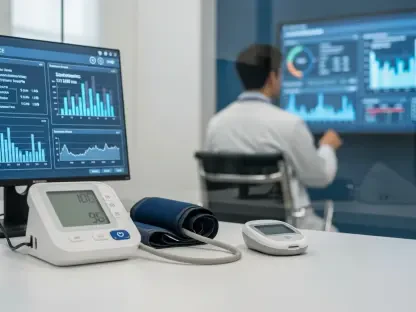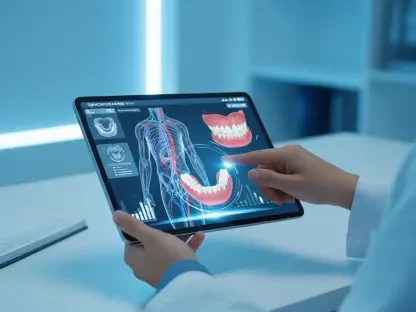

Modern emergency departments are operating at a critical juncture, facing an overwhelming convergence of rising patient volumes, persistent staffing shortages, and heightened expectations for delivering flawless medical care. This immense pressure is dangerously compounded by a specific and growing challenge: the transfer of vulnerable patients from skilled nursing facilities and other post-acute care settings. These individuals frequently arrive with thick, disorganized packets of paper-based documentation that are often incomplete or outdated. This creates a critical information vacuum, forcing frontline clinicians into the high-stakes position of making life-altering decisions with limited context. The direct consequences of this data deficit are stark, leading to significant delays in treatment, increased healthcare costs from redundant diagnostic testing, and a disturbingly high rate of avoidable and costly hospitalizations. Bridging this information gap has become paramount, and artificial intelligence is emerging as the most promising pathway to a solution.
Bridging the Data Divide with Intelligent Synthesis
The most impactful application of artificial intelligence in the emergency setting is its function as an intelligent information bridge, fundamentally transforming how patient transfer data is processed and understood. Instead of clinicians manually combing through dozens of pages of dense, often handwritten notes, AI-enabled tools can rapidly extract, synthesize, and summarize the most clinically relevant details from a patient’s recent history. This entire process unfolds within seconds, presenting the ED team with a structured, real-time overview of the patient’s condition, including critical vital signs, newly identified diagnoses, significant changes in status, and specific treatments administered within the preceding 24 hours. This immediate insight equips clinicians with the necessary context to quickly grasp the reason for the transfer, understand the interventions already performed, and determine the most appropriate next steps, empowering them to make a more informed and confident decision about whether a patient truly requires hospitalization or can be safely stabilized and returned to their post-acute facility.
For any technology to be truly effective in a clinical environment, it must integrate seamlessly into established workflows rather than disrupting them. The most advanced AI tools are designed with this principle at their core, embedding directly into a hospital’s electronic health record (EHR) system. This crucial integration eliminates the need for clinicians to log into separate platforms or navigate unfamiliar interfaces, ensuring the synthesized information appears within the familiar EHR environment where it becomes immediately actionable. Furthermore, the reliability and accuracy of these AI models are rooted in their development on some of North America’s largest post-acute data sets. This provides a comprehensive, longitudinal view of a patient’s health history that is updated nearly to the minute of their transport to the ED. This robust data foundation ensures that the insights provided are not just fast but also trustworthy, giving clinical teams a solid ground upon which to base their critical decisions.
Driving Operational Efficiency and Enhancing Safety
The responsible implementation of AI leads to a cascade of positive effects, generating measurable gains in hospital efficiency and optimizing patient flow. By providing immediate clarity on a patient’s condition and history, these systems help shorten patient dwell time in the emergency department, a key metric for operational performance. AI significantly reduces unnecessary admissions by giving clinicians the data-backed confidence to discharge patients who do not require acute hospital care. The technology can also proactively identify patients at the highest risk of readmission, allowing for the creation of targeted care plans before they leave the hospital. This capability also helps in safely diverting frequent ED utilizers to more appropriate and effective outpatient resources, thereby conserving precious ED capacity for true emergencies. This alignment with value-based care models ensures that healthcare resources are used more judiciously, driving both financial sustainability for providers and better continuity of care for patients.
Beyond operational metrics, artificial intelligence makes a profound contribution to creating a safer environment for both patients and healthcare providers. Advanced AI systems can generate real-time alerts about specific behavioral or clinical risks associated with an incoming patient, such as a history of falls, agitation, or specific infectious diseases. This advance notice allows the ED team to prepare accordingly—allocating appropriate staff, readying specific equipment, or implementing necessary isolation protocols—which can significantly reduce the number of workplace incidents and enhance clinician confidence at the bedside. By replacing debilitating uncertainty with actionable insights, AI directly mitigates clinician stress and burnout, two of the most significant challenges facing the healthcare workforce. This reduction in cognitive load and emotional strain leads to greater job satisfaction and has a powerful, positive ripple effect on the quality and compassion of patient care delivered.
Fostering a Trusted and Connected System of Care
Despite its clear benefits, a degree of caution among clinicians regarding new technology persists. To overcome this skepticism and build lasting trust, the adoption of AI must be guided by a non-negotiable framework of responsibility and transparency. These AI tools cannot be “black boxes”; clinicians must be able to trace every insight and recommendation back to its source documentation to understand the reasoning behind it. The role of AI is to augment and support human judgment, not to replace it. Furthermore, these frameworks must prioritize fairness, ensuring that the models perform equitably across diverse patient populations to avoid perpetuating existing health disparities. Rigorous data governance to protect patient privacy and clear lines of accountability are equally critical pillars of this foundation, ensuring that the technology is deployed in a manner that is both ethical and effective.
Ultimately, the successful integration of AI went beyond enhancing operational efficiency within the four walls of the emergency department. The technology became a cornerstone for building a more integrated and connected healthcare ecosystem, effectively dismantling the traditional information silos that had long separated acute and post-acute care settings. By uniting insights from across the care continuum, AI empowered all clinicians with the information they needed at the moment they needed it. This fostered a healthcare system that was not only faster and more efficient but also profoundly more collaborative and human-centered. The ED, once a point of fractured communication, was transformed into a central, intelligent hub for coordinating safe and seamless patient transitions across their entire journey of care.