
The New David vs Goliath in Health Tech
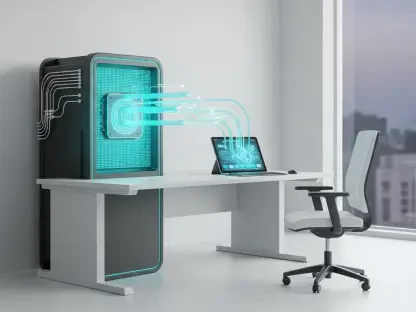
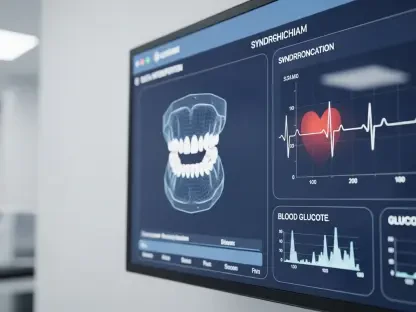
The burgeoning market for AI-powered medical scribes, once a promising frontier for agile startups, has been abruptly reshaped by the entry of a titan. Electronic Health Record (EHR) giant Epic Systems recently unveiled its native AI charting tool, a move that immediately casts a long shadow over independent vendors. This development poses a critical question: can specialized AI scribe startups survive, let alone thrive, when their largest potential customer base is now offered a built-in alternative? This article explores the formidable challenge presented by Epic’s market power and analyzes the compelling counterarguments from startup leaders who believe their clinician-centric, specialized solutions will ultimately prevail.
The Rise of AI Scribes in the Shadow of an EHR Behemoth
To understand today’s conflict, one must appreciate the forces that shaped it. For over a decade, physician burnout has been a critical issue in healthcare, largely fueled by the administrative burden of electronic documentation. Clinicians often spend hours after their shifts completing notes, a phenomenon grimly known as “pajama time.” AI scribe startups like Abridge, Suki, and DeepScribe emerged as a direct response to this pain point, offering to listen to patient encounters and automatically generate clinical documentation. This innovation was hailed as a breakthrough. At the same time, Epic solidified its position as the undisputed leader in the EHR market, now commanding a staggering 42% share of U.S. acute care hospitals. This dominance makes Epic not just a software vendor but the foundational operating system for a massive portion of the American healthcare industry, giving any feature it develops an unparalleled distribution advantage.
A High Stakes Showdown: Integration vs Specialization
Epic’s Unassailable Advantage: The Power of a Closed Ecosystem
For the thousands of health systems already locked into Epic’s ecosystem, the introduction of a native AI scribe presents an almost irresistibly convenient option. The allure lies in its seamless integration; there is no need for third-party contracts, complex IT interoperability projects, or separate support channels. This all-in-one approach simplifies procurement and reduces technological friction, creating a powerful default choice for hospital administrators. For startups, this reality is a formidable barrier. They are no longer just selling a product; they must now vigorously justify their existence against a “good enough” solution that comes pre-packaged with the hospital’s core software.
The Startup Counteroffensive: More Than a Feature an AI Co Pilot
In response, startup CEOs argue that comparing their platforms to an embedded EHR feature is a fundamental misunderstanding of their value. Leaders like Matthew Ko of DeepScribe and Tom Kelly of Heidi contend they are not building simple documentation tools but comprehensive “AI partners” or “operating systems” for clinicians. Their vision extends far beyond note generation to encompass the entire clinical workflow. These platforms offer to reduce the total cognitive and administrative load by preparing patient information before it is entered into the EHR or summarizing a clinician’s entire week to identify trends. This strategy reframes the product from a simple utility into an indispensable co-pilot designed around the user’s needs, not the EHR’s limitations.
The Litmus Test: Winning Over Clinicians in Complex Specialties
The most compelling argument for the survival of specialized vendors lies in the diverse and nuanced world of medical specialties. A generalized solution, even one from Epic, may struggle to accommodate the highly specific workflows of oncology, cardiology, or intricate surgical fields. Startups argue that driving meaningful adoption in these environments requires deep, iterative collaboration with clinicians to align the technology with their unique processes. As Ko points out, a “best-of-breed” vendor is far better equipped to provide this level of customization. Ultimately, the success of any AI scribe hinges on clinician trust and consistent use. If the outputs are unreliable or the tool disrupts their flow, it will be abandoned, and its promised benefits will never materialize.
The Deciding Factor: Where Will Healthcare Leaders Place Their Bets
The future of the ambient AI scribe market will be determined not by a single product launch but by a series of strategic decisions made by health systems over the coming years. The central question they face is whether to prioritize the convenience of an integrated, all-in-one solution or invest in the advanced functionality and superior workflow alignment offered by dedicated third-party platforms. The performance and usability of Epic’s native tool will be a critical variable. If it proves highly effective across various specialties, the challenge for startups will intensify. However, if clinicians find it lacking, the door will remain wide open for specialized competitors to demonstrate their superior value.
Navigating the New Landscape: Strategies for Survival and Success
For AI scribe startups, the path forward requires a laser focus on differentiation and a clear articulation of their return on investment. They must prove that their solutions deliver tangible benefits—such as reduced burnout, increased patient throughput, and improved documentation quality—that significantly outweigh the convenience of Epic’s offering. Success will hinge on building deep partnerships with clinical champions and demonstrating superior user adoption rates. For healthcare organizations, the decision requires a careful evaluation of their priorities. They must weigh the simplicity of a single-vendor solution against the potential for greater clinical and operational gains from a best-of-breed tool that their physicians will actually use and love.
The Battle for the Clinician’s Workflow Has Just Begun
While Epic’s entry into the AI scribe space was a market-altering event, it did not spell a definitive end for innovative startups. Instead, it elevated the stakes and forced a crucial debate about what healthcare providers truly need from artificial intelligence. The conflict between a consolidated, “good enough” platform and specialized, high-performance tools is a familiar narrative in technology, and the outcome was never certain. The future was shaped by the choices of clinicians and the health systems that supported them. The ultimate winner was the solution that most effectively freed doctors from their keyboards and allowed them to return their focus to where it belongs: on the patient.