
The familiar scene of a nurse rushing between patient beds, juggling administrative tasks with compassionate care, is reaching a critical inflection point where the demand for empathy far outstrips the available human bandwidth. In this environment strained by widespread burnout, a profound paradox emerges: artificial intelligence, a technology often characterized as cold and impersonal, is being positioned as the key to restoring the human touch in patient care. This development challenges conventional wisdom, suggesting that the path to more humane healthcare may be paved with sophisticated algorithms and digital assistants.
When the Warmest Hand in the Room is a Digital One
The proposition that a machine could enhance human connection is, on its surface, deeply counterintuitive. Nursing is a profession fundamentally rooted in empathy, trust, and physical presence—qualities that seem antithetical to the logical, data-driven nature of AI. Yet, this is precisely the conversation unfolding in healthcare settings globally.
The central question is not whether AI can replicate human consciousness but whether it can unburden human nurses from the operational pressures that dilute their ability to connect with patients. By automating the mechanical aspects of the job, technology could theoretically free up essential time for the interpersonal work that defines quality care. This shifts the role of AI from a replacement to an enabler, a tool designed not to feel but to help humans feel more.
The Breaking Point and the Need for a New Ally
The modern healthcare system is grappling with an operational crisis. Nurses are increasingly consumed by immense administrative burdens, from charting and documentation to managing patient flow and coordinating care. These logistical pressures divert their attention away from the bedside, chipping away at the quality time they can dedicate to each patient.
This strain is acutely visible in critical areas like hospital emergency departments. Real-world operational bottlenecks during patient intake and triage create significant delays, increase the risk of errors, and place immense stress on staff. During peak hours, the process of assessing and prioritizing patients can become overwhelmed, demanding an innovative solution that can manage high volumes of data and activity with precision and speed, allowing nurses to focus on immediate clinical needs.
The AI Assistant Augmenting, not Replacing the Nurse
AI is no longer a speculative concept in medicine; it is a tangible reality being deployed in clinical operations. From AI-powered companion robots to automated drug-dispensing systems, the technology has proven its value in reducing diagnostic errors and streamlining complex logistical processes. One of its most significant successes has been in optimizing patient triage, where machine learning models have demonstrated a remarkable ability to manage patient flow. An analysis of 26 studies found that these models consistently outperformed traditional triage tools, achieving a clinically useful accuracy level in identifying urgent cases and managing wait times.
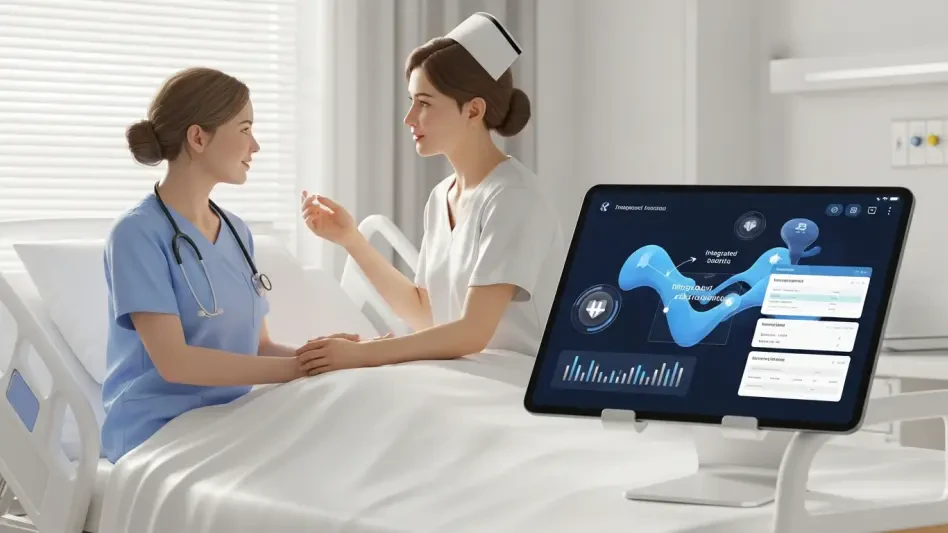
This evidence underscores a fundamental shift in perspective: AI’s primary role is augmentation, not replacement. The technology excels at handling repetitive, data-heavy tasks like initial information gathering, documentation, and sorting through patient records. This creates a symbiotic relationship where the AI assistant manages the administrative workload, thereby liberating human nurses to apply their sophisticated clinical judgment, provide direct hands-on care, and forge empathetic connections. The goal is to create a partnership where technology handles data, and humans manage care.
The Data Behind Digital Empathy
Remarkably, evidence suggests that AI can deliver interactions that patients perceive as highly empathetic. A sweeping meta-analysis of 15 different studies revealed a surprising trend: patients consistently rated AI chatbots as warmer and more empathetic than their human clinician counterparts. In direct comparisons, the AI had a 73% chance of being judged as more empathic, a finding that challenges long-held assumptions about technology and emotional connection.
This counterintuitive phenomenon may be explained by the operational realities of healthcare. Overworked human providers, facing immense time pressure, can struggle to maintain a consistently patient and attentive demeanor. In contrast, a well-designed AI can offer unwavering patience and a sense of undivided attention, creating a safe space for communication. This perceived empathy yields tangible clinical benefits, as patients who feel heard and understood are more willing to disclose sensitive health information and are less likely to report medical errors, ultimately leading to better health outcomes.
An Architectural Blueprint for Empathetic AI
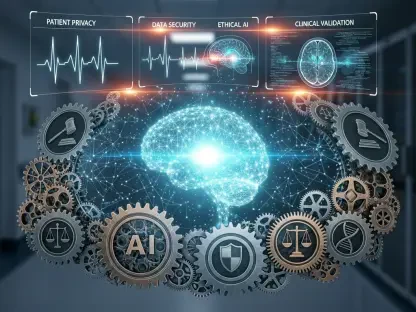
The foundation for effective and empathetic AI lies in its ability to achieve hyper-personalization through data integration. This requires a robust technological framework, such as a Unified Customer Experience Management (UCXM) platform, that can synthesize disparate data streams. By pulling information from electronic health records, clinician notes, and patient communications into a single, cohesive profile, the AI gains deep contextual knowledge of the individual. This allows it to interact in a highly informed and personalized manner, but it demands non-negotiable adherence to robust privacy, security, and HIPAA compliance protocols.
Even with advanced capabilities, the most effective AI systems are designed with a critical safety feature: knowing when to ask for help. A core design principle is programming the AI to recognize its own limitations and seamlessly escalate issues to a human provider. This “human in the loop” protocol ensures the AI alerts a nurse when it encounters patient frustration, queries beyond its training, or critical risk factors requiring immediate medical intervention. This collaborative model, where humans can instantly access the same unified data to understand the context, created a safe and effective partnership for patient care.