
The Urgent Need for a Paradigm Shift in Modern Healthcare
The American medical infrastructure is currently laboring under a burden of administrative inefficiency and clinical exhaustion that threatens the very stability of patient outcomes across the nation. While pharmaceutical and surgical advancements have reached historic heights, the daily reality for most primary care clinics remains stuck in a manual, reactive cycle that simply cannot scale with the aging population. Primary Care Physicians (PCPs) are currently forced to navigate an overwhelming sea of data without the tools necessary to filter noise from clinical insight. This struggle defines the modern healthcare landscape, where the gap between medical potential and operational reality continues to widen at an unsustainable rate.
Integrating agentic and clinically fluent artificial intelligence represents the necessary infrastructure to prevent a total systemic collapse. By moving away from the bottlenecked manual models of the past, the industry has a unique opportunity to transform into a proactive, precision-based model. This evolution is not merely about adding new software but about fundamentally redesigning the workflow of medicine to prioritize both the health of the patient and the long-term well-being of the provider. As the demand for care continues to outpace the supply of physicians, the adoption of these intelligent support systems becomes a pragmatic necessity rather than a futuristic luxury.
The Foundation of Our Current Healthcare Crisis
The roots of this systemic instability trace back to the gradual transformation of the generalist into a data-entry specialist over the last few decades. Historically, the neighborhood doctor managed the vast majority of patient needs through a longitudinal relationship, but the explosion of chronic disease complexity fundamentally changed the job description. As electronic health records became the standard, they brought a heavy clerical load that now consumes more time than actual patient interaction, leading to a landscape defined by physician burnout and a thinning workforce.
Understanding this historical trajectory is vital for recognizing that the current crisis is not a result of a lack of medical talent, but rather a failure of the operational systems that support the delivery of that talent. The complexity of managing conditions like diabetes and heart disease in an fragmented environment has created a scenario where providers are stretched too thin to provide the depth of care required. Consequently, the primary care sector has become a high-pressure environment where the sheer volume of administrative tasks often overshadows the actual practice of medicine, making a technological intervention essential for the profession’s survival.
Bridging the Gap: AI as a Force Multiplier for Primary Care
Closing the PCP-to-Specialist Divide
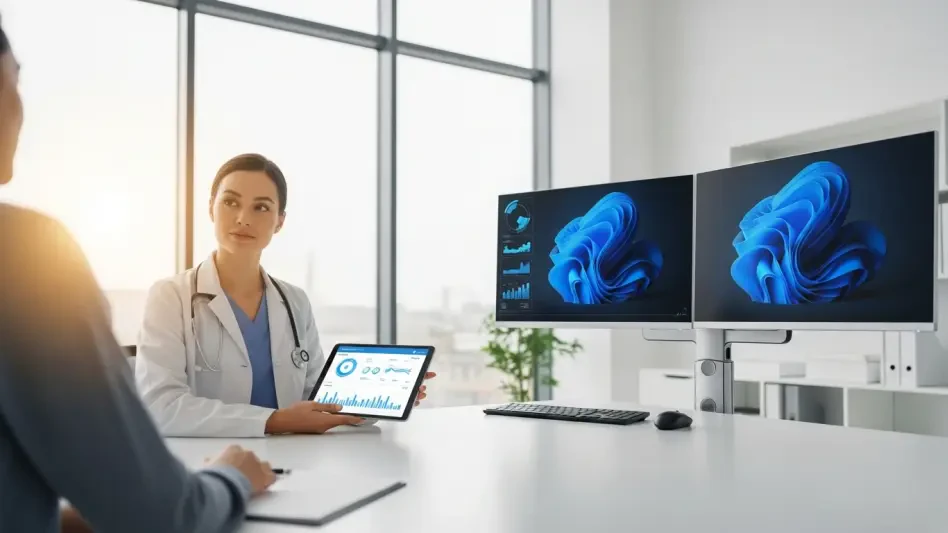
The inefficiency of the current referral system creates a secondary crisis where patients often languish in waitlists while their conditions deteriorate. AI-driven precision care offers a solution by functioning as a sophisticated clinical assistant that possesses the knowledge of a specialized panel. By analyzing massive data sets and suggesting evidence-based protocols, these systems allow primary care providers to initiate complex treatments immediately rather than waiting for a specialist opening months away. This ensures that when a patient finally reaches a specialist, the work-up is already complete, which drastically improves the efficiency of the entire care continuum and reduces dangerous delays.
Achieving a Three-Fold Return on Investment
Beyond clinical outcomes, the market shift toward AI is driven by a powerful financial logic that addresses the tightening margins of modern medical practices. First, the automation of non-cognitive tasks allows providers to operate at the top of their licenses, seeing more patients without increasing work hours. Second, AI ensures that documentation accurately reflects the complexity of patient care, which optimizes reimbursement rates through precise coding. Finally, by managing chronic diseases effectively at the primary level, the system realizes massive downstream savings by avoiding emergency room visits, creating a more sustainable economic model for the entire industry.
Navigating Technical Complexity and Human Skepticism
Adopting these high-level tools requires addressing the cultural friction that often exists within established medical institutions. Some practitioners worry that an algorithmic layer might interfere with the sacred doctor-patient relationship, yet the data suggests the opposite outcome is more likely. By removing the clerical distractions that currently sit between the physician and the patient, AI allows the human touch to return to the center of the exam room. Addressing common misconceptions about AI as a replacement for human judgment is crucial, as these tools are designed to enhance, not automate away, the critical decision-making skills of trained professionals.
The Future of Precision Care and Regulatory Evolution
Looking at the trajectory from 2026 toward 2030, the emergence of agentic AI is expected to redefine the regulatory environment and the standard of care. Insurance providers are already beginning to incentivize the use of predictive analytics that identify health risks before they become acute crises. This shift represents a move away from the traditional sick care model toward a proactive system of preventative maintenance that values long-term wellness over short-term interventions. As these technologies become more integrated, the cost of physician turnover—which remains a staggering expense for most hospitals—will likely decrease as the work environment becomes more manageable.
Strategic Implementation: A Roadmap for Success
For organizations looking to survive this transition, the focus must be on seamless integration rather than adding more digital clutter. Success in the current market requires selecting tools that work within existing workflows to solve specific bottlenecks, such as referral processing or chronic disease management. Leaders who prioritize transparency and clinical buy-in will find that their staff is much more likely to embrace technological assistance when the benefits are clearly tied to a reduction in daily stress. By viewing AI as a pragmatic clinical tool, stakeholders can build a more resilient practice that is better equipped for the challenges of the late twenty-first century.
Reclaiming the Heart of Medicine Through Technology
The systemic failures of the health system demanded a radical intervention that finally arrived through the marriage of clinical expertise and artificial intelligence. This transition allowed the industry to move past the chaos of administrative overload toward a model that truly prioritized the patient. By empowering providers with precision tools, the medical community successfully lowered burnout rates and reclaimed the professional fulfillment that had been lost for years. The deployment of these intelligent assistants proved to be the critical turning point that ensured the long-term viability of primary care. Stakeholders recognized that the strategic application of data was the only way to restore the human element of healing in a complex world.