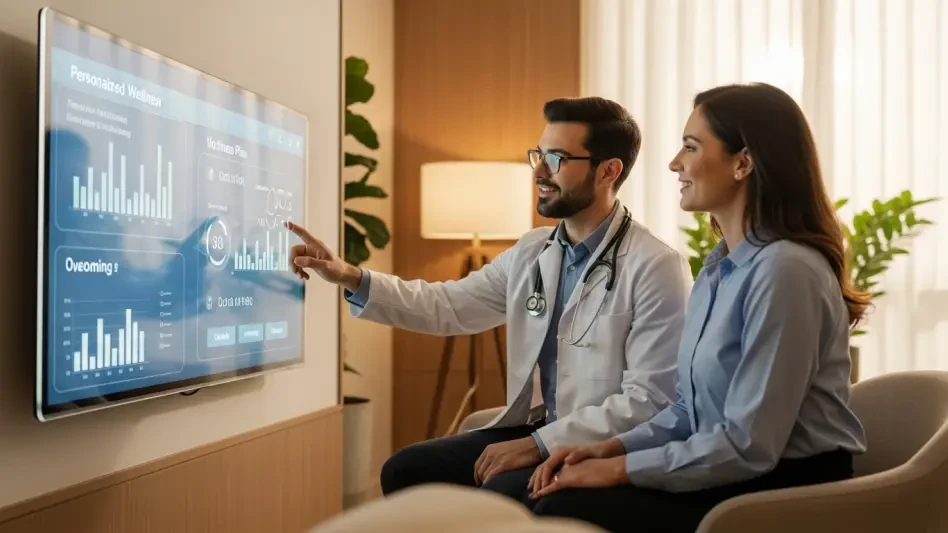

The American healthcare system is at a critical inflection point, caught between its legacy as a world-class institution for treating disease and the modern consumer’s demand for proactive, convenient wellness. While 65% of Americans desire care centered on prevention, they are often met with a system designed to react to illness—a framework aptly dubbed “sick care.” This disconnect has created a frustrating and disempowering experience, leaving patients to navigate a complex labyrinth just to maintain their health. This article explores how Artificial Intelligence (AI) is emerging not as a mere technological upgrade, but as a potential antidote, capable of fundamentally transforming the nation’s reactive health model into a proactive system that anticipates needs, removes friction, and truly partners with patients on their wellness journey.
The Widening Gulf Between Patient Needs and Healthcare Realities
The American healthcare system has long been celebrated for its advanced medical treatments and innovations in managing complex diseases. Yet, this very success has anchored it to a model that is increasingly misaligned with the expectations of the modern patient. Today’s consumers, accustomed to personalized and predictive experiences in nearly every other sector, from retail to finance, are now demanding the same from their healthcare providers. They seek a partner in wellness, not just a repair service for when things go wrong. This fundamental shift in consumer mindset has exposed a deep-seated inadequacy in the system’s design.
This growing chasm is not merely a matter of inconvenience; it represents a systemic failure to engage patients in their own long-term health. The current infrastructure, built around episodic care encounters, inherently discourages the continuous, proactive behaviors necessary for prevention. Patients who wish to stay healthy are forced to operate within a framework optimized for sickness, leading to frustration, disengagement, and missed opportunities for early intervention. The system’s inability to adapt to this demand for “well care” is creating a significant vulnerability, leaving the door open for more agile and consumer-centric competitors to redefine the market.
Ultimately, the gulf between patient needs and healthcare realities highlights a critical strategic challenge for incumbent health systems. The value proposition of simply being available when someone is sick is no longer sufficient. To remain relevant and financially viable, these institutions must evolve from passive providers into active wellness partners. This requires a paradigm shift from a facility-centric model to a patient-centric one, where technology is leveraged not just to treat illness, but to foster and maintain health across a person’s entire life journey.
From Reactive Treatment to a “Prevention Paradox”
For decades, the American healthcare model has operated on a simple premise: when people get sick, they seek treatment. The entire infrastructure—from hospital workflows and physician training to insurance billing codes—was built around this episodic, reactive dynamic. This “if you build it, they will come” mentality has proven remarkably effective at managing acute crises and chronic conditions once they have developed. It has fostered centers of excellence for specialized surgery and world-renowned research into disease management, reinforcing a culture focused on intervention rather than prevention. This focus, while valuable, has inadvertently created a system that excels at addressing problems but fails spectacularly at preventing them from occurring in the first place.
This inherent design has given rise to a perplexing “prevention paradox.” Despite widespread insurance coverage for essential preventive services like annual wellness visits, mammograms, and colonoscopies, utilization rates remain astonishingly low. It is reported that fewer than 10% of eligible adults actually receive a recommended annual physical. This is not due to a lack of desire; polling consistently shows that the majority of Americans want to be proactive about their health. Instead, the paradox stems from two fundamental barriers embedded within the system’s reactive structure.
The first barrier is friction. The mental and logistical load of identifying a need, finding an in-network provider, navigating scheduling systems, and arranging time off work is a significant deterrent for busy individuals. The second is a pervasive lack of healthcare literacy. Many patients are simply unaware of which screenings they need, when they are due, or that their insurance fully covers these services. This knowledge gap places the burden of discovery and initiation entirely on their shoulders, a responsibility that the system is not designed to support. Consequently, the very services that could reduce long-term costs and improve health outcomes are the most underutilized.
Diagnosing the System’s Core Ailments
The system’s inability to evolve beyond its reactive roots has created deep structural problems, leaving it vulnerable to disruption and increasingly misaligned with the very people it is meant to serve. The cracks in this foundation are now too large to ignore, as new competitors emerge and unmet patient expectations challenge the established order. These core ailments signal a need for fundamental change, not just incremental adjustments.
The Patient-Provider Disconnect: A Widening Chasm of Expectations
The core issue is a profound schism between what patients want and what the healthcare system delivers. In every other facet of modern life—from retail and finance to travel—consumers are accustomed to proactive, personalized engagement. Companies leverage data to anticipate needs, offer convenient solutions, and create frictionless experiences that build loyalty. Yet, healthcare remains stubbornly passive, waiting for patients to diagnose their own need for care and initiate contact.
This outdated approach forces individuals seeking to maintain their health into a system built for managing sickness, creating a jarring and often frustrating experience. It fundamentally erodes trust and discourages the very preventive behaviors that lead to better long-term outcomes and lower costs. The expectation of a seamless digital journey clashes with the reality of phone tag, complex portals, and a lack of personalized guidance, widening the chasm between patient expectations and the service delivered.
The Rise of the DTC Disruptor: Capitalizing on Healthcare’s Inertia
Nature abhors a vacuum, and the wellness gap left by traditional health systems has been eagerly filled by a new wave of agile, direct-to-consumer (DTC) companies. Leveraging sophisticated digital marketing tactics and user-friendly technology, these disruptors offer proactive health insights, on-demand access, and frictionless experiences directly to consumers. They have effectively bypassed the traditional gatekeepers of healthcare, speaking directly to patients where they are—on social media, through intuitive apps, and via targeted advertising.
By catering to the public’s hunger for guidance and convenience, DTC providers are successfully siphoning off market share, revenue, and—most importantly—patient loyalty. They have proven that there is a massive, underserved market for proactive well-care, a market that incumbent systems are currently failing to capture. Their success sends a clear message: if traditional systems do not adapt to meet consumer demand for proactive engagement, others will, leaving established institutions to manage only the most complex and least profitable downstream care.
The Data Paradox: Rich Information, Poor Engagement
Ironically, traditional health systems are sitting on a goldmine of the very data needed to deliver proactive, personalized care. Electronic Health Records (EHRs) contain detailed information about a patient’s medical history, demographic risk factors, and existing care gaps. This data represents an unparalleled opportunity to understand patient needs and guide them toward better health outcomes.
Despite massive investments in “digital front-doors” like patient portals, these platforms largely remain passive repositories of information rather than engines of engagement. Unlike their counterparts in other industries, health systems have overwhelmingly failed to operationalize this data to drive proactive outreach. Instead of sending a personalized, one-click booking link for a needed screening, care coordination still often relies on antiquated and inefficient methods like faxes and phone tag. This highlights a stark paradox: the institutions with the richest data have the poorest strategies for using it effectively, leaving immense value untapped.
The AI Prescription: A Future of Proactive, Personalized Care
To survive and thrive in this new landscape, health systems must pivot from being passive gatekeepers to proactive wellness partners, and Artificial Intelligence is the key to making that transition scalable and effective. The future of healthcare lies in leveraging AI to orchestrate care “upstream,” shifting the focus from treating late-stage illness to preventing it in the first place. AI-powered platforms can analyze vast amounts of patient data to identify individual care needs, automate personalized outreach, and seamlessly guide patients to the right service at the right time.
This approach goes far beyond simple appointment reminders. For example, an AI system can identify a patient who is overdue for a mammogram based on their age and health history, then automatically send them a text message with a direct booking link and offer pre-selected, convenient appointment slots. This model intelligently anticipates needs, such as prompting a new mother for a postpartum depression screening before her six-week checkup or suggesting a covered virtual visit with a nutritionist after flagging elevated cholesterol levels in a recent lab report. By removing friction and cognitive load, AI makes it easy for patients to do the right thing for their health.
This level of intelligent automation enables health systems to cultivate a continuous, supportive relationship with their patients, building the kind of lasting loyalty that has become the hallmark of successful consumer brands. Instead of interacting only during moments of sickness, the system becomes a constant, helpful presence in a patient’s life. This proactive engagement not only improves health outcomes but also transforms the patient experience, solidifying the health system’s role as a trusted partner in wellness.
A Strategic Path Forward for Modern Health Systems
The path to transforming from a “sick care” to a “well care” provider requires a fundamental strategic shift, one that is enabled and accelerated by technology. The first and most critical step is for health systems to recognize that patient passivity is no longer a viable business model. In an era of heightened consumer choice and digital-first competitors, waiting for patients to initiate contact is a recipe for market share erosion and financial instability. Health systems must adopt the proactive engagement strategies that now define nearly every other modern consumer-facing industry.
This means implementing AI-powered care orchestration to automate the heavy lifting of identifying care gaps and reaching out to patients with personalized, actionable guidance. Such systems can analyze EHR data at scale to flag patients who are overdue for preventive screenings, follow-up appointments, or chronic disease management check-ins. From there, automated outreach via text or email can deliver tailored messages that not only inform patients but also make it effortless for them to act.
By making it simple for patients to access preventive services—from booking an annual physical with a single click to scheduling a virtual visit with a nutritionist through a direct link—health systems can decisively close the “prevention paradox.” This strategy accomplishes multiple goals simultaneously: it improves community health outcomes, enhances patient satisfaction and loyalty, and protects vital revenue streams from nimble DTC competitors. It is a strategic imperative for survival and growth in the modern healthcare ecosystem.
The Choice: Proactive Partner or Downstream Provider?
The American healthcare system stands at a crossroads. It can continue down its current path, remaining a reactive institution that treats illness as it appears. This approach, however, means ceding the valuable, high-margin wellness and prevention space to more agile competitors, ultimately risking relegation to a downstream provider of last resort for acute and complex illness. In this future, traditional systems become commoditized, handling the most costly cases while losing the long-term patient relationships that drive sustainable growth.
Alternatively, it can embrace the transformative potential of AI to reinvent its role in the lives of patients. By leveraging intelligent automation to deliver proactive, convenient, and personalized care, traditional health systems can finally cure their own “sick care” model. This path involves becoming a true partner in patient wellness, using data to anticipate needs and engage people in a continuous journey toward better health. The choice is clear: evolve into a proactive wellness partner or risk becoming a relic of a bygone era.