
Faisal Zain is a leading healthcare innovator with a profound focus on the intersection of medical device manufacturing and clinical diagnostics. With years of experience driving technological advancements, he has become a key voice in the movement to transition cardiac care from reactive hospital settings to proactive primary care environments. His work emphasizes the integration of high-fidelity data and artificial intelligence to bridge the gap between patient experience and clinical precision. Today, we discuss the urgent need to reshape how we detect and treat heart failure before it reaches a crisis point.
Heart failure costs are projected to reach $70 billion annually as one in four Americans face this diagnosis. How does this financial burden disrupt broader healthcare systems, and what specific economic shifts occur when care moves from emergency interventions to early, non-invasive management?
The financial strain of heart failure is catastrophic because it acts as a massive cost center that drains resources from every other department in a hospital. When we look at that staggering $70 billion figure, much of it is tied to high-cost emergency interventions and prolonged hospital stays that occur only after a patient has reached a state of irreversible decline. By shifting to early management, we move the economic weight away from these expensive “rescue” operations toward low-cost maintenance. This transition allows systems to save significantly on acute care overhead while utilizing affordable tools like beta blockers or lifestyle monitoring. Instead of paying for a crisis, the system invests in stability, which ultimately protects the long-term solvency of our healthcare infrastructure.
Cardiovascular wait times have increased by over 25% while provider burnout rates continue to climb. What specific operational changes could reduce this pressure on specialists, and how does faster access to high-fidelity cardiac data at the primary care level change the daily workflow for a typical clinic?
The current system is bottlenecked because specialists are being flooded with patients who are already in the middle of a cardiac event, which is why we see wait times jumping by more than 25%. To fix this, we need to empower primary care physicians to act as the first line of high-tech defense, filtering out the noise and only referring patients when there is a validated signal. When a clinic has access to hospital-grade data during a routine 10-to-20-minute intake, the workflow shifts from guesswork to precision. The physician no longer spends the visit trying to justify a referral; they spend it reviewing an actionable snapshot of the heart. This targeted approach reduces the volume of unnecessary specialist consultations, directly alleviating the burnout felt by the 44% of cardiologists who report feeling overstressed.
Integrating wearable ECG technology into routine primary care intake allows for immediate data collection before a physician even enters the room. What are the technical steps for syncing this data with electronic health records, and how do AI-driven insights help a general practitioner identify subtle heart risks?
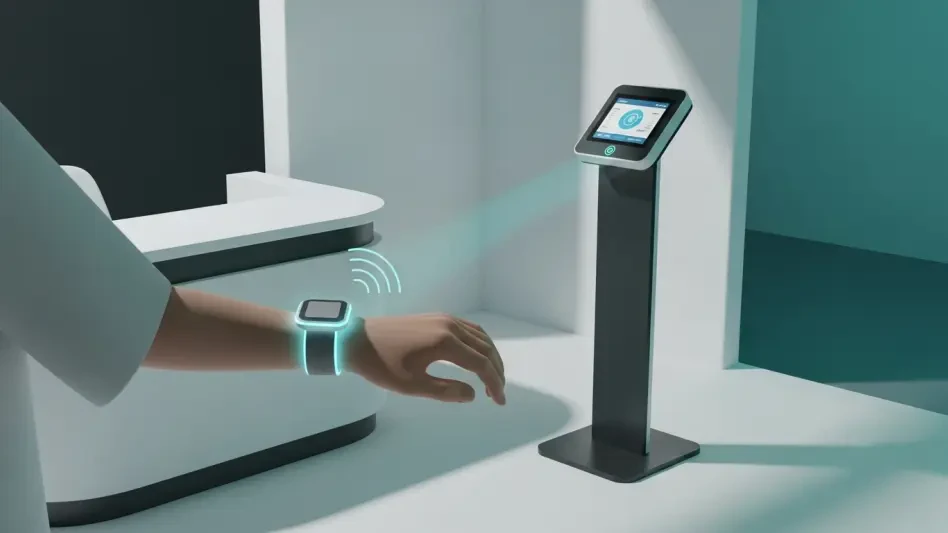
The technical process begins the moment a patient puts on a wearable device in the waiting room, capturing dozens of cardiac data points with high-fidelity signals while they fill out their paperwork. This data is transmitted to an AI-enabled platform that processes the complex waveforms and summarizes the findings into a clear, clinical insight. These summaries are then synced directly into the Electronic Health Record (EHR), allowing for a longitudinal view of the patient’s cardiac health over several years. For a general practitioner, the AI acts as a sophisticated set of eyes that can spot minute irregularities or “subtle risks” that might be invisible on a standard, quick exam. It turns a brief office visit into a deep-dive diagnostic session without adding extra time to the doctor’s schedule.
Early detection allows for the use of ACE inhibitors or lifestyle adjustments before a condition turns acute. Can you walk through the long-term clinical outcomes of this preventive approach versus reactive treatment, and what metrics best track success in reducing emergency room visits?
Reactive treatment is often a losing battle because, by the time a patient presents in the ER, the heart muscle may already be permanently damaged. In contrast, the preventive approach uses early interventions like ACE inhibitors to manage blood pressure and cardiac workload, which can significantly slow or even halt the progression of heart failure. We track the success of this model through metrics like “hospitalization avoidance” and “mortality rate stabilization,” both of which have been trending in the wrong direction since 2012. By intervening at the primary care stage, we can keep the nearly 7 million Americans currently suffering from heart failure out of the hospital. Long-term, this means patients maintain a higher quality of life and avoid the “revolving door” of emergency room visits that characterizes late-stage disease.
Preventing cardiac decline helps patients avoid disability and remain in the workforce longer. Beyond the clinical setting, what are the specific societal ripple effects of delaying the need for assisted living, and how does this change the way families navigate long-term care planning?
The societal impact of preventing cardiac decline is profound because heart failure doesn’t just affect the patient; it creates a tidal wave of secondary effects for families and employers. When we delay the onset of disability, we allow individuals to remain active members of the workforce, which supports the economy and reduces the immediate need for disability benefits. For families, delaying the move to an assisted living facility by even a few years can save hundreds of thousands of dollars and preserve the emotional bond of a home environment. It shifts the conversation from “crisis management” to “quality aging,” giving families more time to make intentional decisions rather than being forced into choices by a sudden medical emergency. Every year of health we reclaim for a patient is a year of productivity and stability returned to society.
What is your forecast for preventive cardiac care?
My forecast is that within the next five years, we will see the total dismantling of the silos that have traditionally separated hospital diagnostics from the primary care office. We are moving toward a reality where “hospital-grade” data is no longer a destination you travel to, but a standard part of every annual checkup regardless of your geography. As AI and wearable tech become more seamlessly integrated, we will finally see a reversal in the mortality rates that have been rising for over a decade. I believe the future of cardiology is one where the most important work happens before the patient ever feels a single symptom, effectively making the “emergency” intervention a rarity rather than the norm. This shift will not only save billions of dollars but will fundamentally redefine what it means to age with a healthy heart in America.