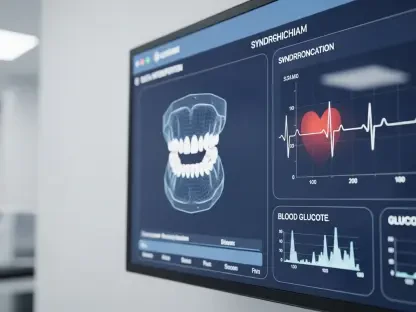

Thousands of algorithms cleared by regulatory bodies are currently gathering digital dust on hospital servers because the leap from a laboratory success to a bedside victory remains the most difficult transition in modern medicine. While global analysts project that artificial intelligence could contribute nearly $15.7 trillion to the global economy through productivity and improved outcomes, the reality within the sterile walls of a modern clinic is far more subdued. Most of these innovations fail not because the underlying mathematics are flawed, but because the software does not survive the chaotic, unpredictable environment of a busy emergency department. The paradox of the current medical landscape is that while technical perfection is more achievable than ever, practical utility remains an elusive target for most developers. Moving beyond the current cycle of hype requires a fundamental realization that the next phase of healthcare evolution is not about generating more sophisticated code, but about refining the points of contact between human decision-making and machine-generated insights.
The $15.7 Trillion Question in Modern Medicine
The central challenge facing health systems today involves reconciling the massive financial projections for artificial intelligence with the low rate of meaningful clinical utilization. There is a profound disconnect between the high volume of FDA-cleared software and the actual number of lives saved at the patient’s side. For many clinicians, a technically perfect algorithm is an expensive distraction if it cannot function within the constraints of a five-minute patient consultation or a high-pressure trauma bay. The industry has reached a point where more software is not the answer; rather, the answer lies in understanding why thousands of functional tools are being ignored by the very people they were designed to assist.
The failure of “technically perfect” software in the messy reality of the clinical setting highlights a critical design flaw in many current AI development cycles. Engineers often optimize for accuracy in a vacuum, using curated datasets that do not reflect the noise and variability of daily medical practice. When these tools are finally deployed, they often struggle with the data gaps and time pressures that characterize a functioning hospital. The result is a growing inventory of “shelfware” that looks impressive in a marketing brochure but provides no tangible value to a physician who is already managing an overwhelming cognitive load.
Transitioning into a productive era of medical technology requires a shift in focus from raw algorithmic performance to deep systemic integration. The value of an AI diagnostic tool is not found in its ability to solve a static problem in a controlled environment, but in its capacity to streamline a complex clinical pathway. This transition demands that developers look past the code and toward the nuances of hospital operations, identifying the specific friction points that prevent a piece of software from becoming a standard part of the medical kit.
Understanding the Great Adoption Gap
The chasm between theoretical accuracy and practical utility is often wide enough to sink even the most promising medical startups. In a laboratory setting, success is measured by the area under the curve or a specific sensitivity percentage, but in a clinic, success is measured by whether a tool improves a patient’s outcome without adding to the provider’s fatigue. This adoption gap is the result of a maturing realism among healthcare providers who have moved beyond early “tech-phobia” and into a phase of healthy skepticism. They are no longer impressed by the novelty of machine learning; they are demanding proof of its necessity.
Adopting Software as a Medical Device (SaMD) requires a significantly different playbook than the one used for standard enterprise IT solutions. Traditional software might be judged on its uptime or user interface, but SaMD is evaluated on its clinical validity and its impact on the medical liability landscape. Physicians are understandably hesitant to delegate diagnostic responsibilities to a system that functions as a “black box,” especially when the stakes involve human life. Consequently, the adoption process is less about technological installation and more about building a framework of trust through rigorous, transparent validation.
The evolution of medical technology is currently stalled at the interface of software and human intuition. For AI to bridge this gap, it must stop being viewed as an external additive and start being treated as an intrinsic part of the diagnostic process. This requires a level of interoperability that goes beyond simple data exchange; it necessitates a cultural shift where the algorithm is seen as a supportive colleague rather than a competing authority. Until this structural integration is achieved, the adoption gap will continue to limit the impact of even the most sophisticated diagnostic tools.
Debunking the Resource Overload Myth
One of the primary fears voiced by hospital administrators is that artificial intelligence will serve as a “noise generator,” triggering a tidal wave of unnecessary follow-up tests and specialty referrals. The logic suggests that if an algorithm is designed for early detection, it will inevitably flag minor anomalies that would have otherwise resolved on their own, thereby flooding the system with “false positives.” This concern paints a picture of a healthcare infrastructure buckling under the weight of AI-driven over-diagnosis, leading to increased costs and patient anxiety without a corresponding increase in health benefits.
Evidence from recent clinical investigations, however, provides a much more optimistic perspective on the resource impact of intelligent diagnostics. A landmark study involving randomized primary care teams and over 22,600 patients demonstrated that while ECG-based AI increased the detection of heart failure by 30%, it did not lead to a statistically significant increase in the total volume of echocardiograms. This indicates that well-designed AI does not simply create more work; instead, it refines the diagnostic funnel. By identifying the right patients for further testing, the technology ensures that expensive imaging resources are allocated to those who need them most, rather than being distributed based on subjective clinical suspicion.
The lesson from these data points is that the “resource overload” argument often overlooks the efficiency gains inherent in precise targeting. When an algorithm correctly identifies an asymptomatic patient with early-stage heart failure, the medical system is not performing an unnecessary test; it is preventing a catastrophic and far more expensive hospital admission in the future. By moving the point of intervention from the emergency room to the primary care clinic, AI actually acts as a stabilizing force for hospital resources. The goal is not to do more, but to do better by focusing clinical attention where it can produce the greatest return on patient health.
Redefining Diagnostic Truth Through Longitudinal Data
The traditional medical definition of a “false positive” is undergoing a radical re-evaluation in the era of longitudinal data analysis. Often, when an AI algorithm disagrees with a clinician or a standard diagnostic test, the immediate assumption is that the software is wrong. However, long-term patient tracking suggests that the machine might be detecting subtle physiological signals that are invisible to the human eye and currently undetected by standard imaging. This shift in perspective suggests that many supposed “errors” by AI are actually predictive insights that foreshadow future clinical events.
A compelling example of this phenomenon is found in studies comparing AI interpretations of electrocardiograms against traditional echocardiography for detecting low ejection fraction. In instances where the AI flagged a patient for heart failure but the echocardiogram returned a “normal” result, longitudinal monitoring revealed a startling trend. Five years after the initial screening, these patients who were labeled as “false positives” by traditional standards exhibited a 65% higher all-cause mortality rate compared to those who were negative on both tests. The AI was not failing; it was identifying a state of subclinical dysfunction that the standard “ground truth” was incapable of seeing.
This realization forces a shift in how medical professionals define diagnostic truth. If an algorithm can predict a patient’s death or a major cardiac event years before it happens, the tool should no longer be viewed as a supplementary aid but as a proactive clinical marker in its own right. This changes the role of the physician from one who merely confirms an AI’s reading to one who manages the latent risk the AI has uncovered. Shifting toward this predictive model of care allows for the creation of new clinical pathways designed to treat the “pre-patient” before they develop symptoms.
Identifying the Four Structural Barriers to Scaling
Despite the technological breakthroughs in model architecture, four significant structural barriers continue to prevent the scaling of AI from pilot programs to global standards. The first is a persistent data quality crisis. Many models are trained on narrow, homogeneous datasets from elite academic centers, making them fragile and inaccurate when applied to the diverse demographics of real-world patient populations. Without massive, diverse longitudinal datasets that include structured and unstructured clinical notes, even the most advanced models will struggle to provide reliable insights across different geographies and ethnicities.
The second barrier is the distinction between regulatory clearance and clinical validation. While obtaining an FDA stamp is a necessary legal step, it does not automatically win the trust of a skeptical medical community. Physicians require evidence that a tool works in their specific environment, often demanding randomized clinical trials that show improvements in patient outcomes rather than just improvements in statistical metrics like accuracy. This creates a validation gap where developers must prove the tool’s worth through peer-reviewed research before it can gain any meaningful traction in the market.
Thirdly, a common design flaw persists where engineers fail to account for the physician’s workflow. A tool that requires a separate login, a new screen, or an extra three clicks to access will almost always be rejected, regardless of its diagnostic power. The “engineer vs. physician” disconnect results in software that is technically impressive but operationally intrusive. Finally, the “last mile” problem involves the lack of clinical change management and IT prioritization within hospital systems. Even when a tool is clinically sound and well-designed, it often stalls because there is no organizational structure in place to manage the ongoing governance and technical maintenance required for AI systems.
The Economic Case for Disciplined Implementation
The financial viability of medical AI depends on its ability to demonstrate a clear return on investment through both short-term operational gains and long-term cost avoidance. In the immediate term, diagnostic AI can improve hospital throughput by streamlining specialist referrals and ensuring that patients are directed to the correct department more efficiently. By reducing the time spent on manual data interpretation and standardizing diagnostic outputs, health systems can increase their capacity and reduce the burnout of highly specialized staff members who are currently bogged down by routine tasks.
From a long-term perspective, the economic argument for AI is built on the prevention of expensive late-stage interventions. Chronic disease management, particularly in cardiology and oncology, accounts for a massive portion of healthcare spending. Identifying these conditions in their early, asymptomatic stages allows for the implementation of low-cost lifestyle interventions or pharmaceutical treatments, avoiding the astronomical costs of emergency surgeries, prolonged hospitalizations, and long-term disability. As reimbursement models shift toward value-based care, the ability to keep populations healthy through early detection becomes a financial necessity rather than a luxury.
The payer perspective is also shifting, as insurance providers begin to recognize the actuarial value of early diagnostic markers. When a health system can prove that an AI-enabled screening program reduces the overall cost of care for a specific patient cohort, it creates a pathway for sustainable reimbursement. This alignment between clinical outcomes and financial incentives is the primary engine that will drive the wide-scale adoption of AI. For the first time, the technology is being positioned as a tool for economic stabilization in a sector that has historically struggled with rising costs.
Strategies for Harmonizing Innovation and Governance
The rapid pace of software iteration often clashes with the slow, deliberate nature of institutional procurement and medical governance. While an algorithm can be updated in a matter of weeks, the typical hospital review cycle for new technology can take years. Bridging this “speed gap” requires the development of agile governance models that can oversee tools that learn and evolve in real-time. Organizations must create dedicated clinical AI committees that include IT specialists, legal experts, and practicing physicians to ensure that software updates are safe and that the clinical impact is continuously monitored.
Moving toward a “physician-centric” workflow is the final requirement for successful harmonization. This means that AI insights must be delivered directly into the existing electronic health record systems that clinicians already use, rather than requiring them to step outside of their normal routine. The goal is to make AI a seamless part of the environment—providing information that is actionable, timely, and integrated. When the output of an algorithm is presented as a routine clinical marker, much like a blood pressure reading, the psychological barrier to adoption disappears and the technology becomes an invisible, trusted assistant.
The transition toward a fully integrated diagnostic landscape was accelerated by the realization that AI should empower rather than replace the medical professional. Institutional leaders worked toward creating infrastructures that favored transparency and interoperability, ensuring that diagnostic tools were no longer isolated silos of data. By focusing on physician-led design and rigorous longitudinal validation, health systems successfully moved away from experimental pilots and toward a future where intelligent software was as routine as a stethoscope. This shift allowed clinicians to regain their focus on the human aspects of medicine, while the heavy lifting of data analysis was handled by a quiet, reliable digital partner. Such a strategy ensured that technology served the patient rather than the other way around.