
The traditional hospital cafeteria, long criticized for its limited hours and uninspired fare, has finally met its match in the form of a fully integrated robotic system capable of delivering chef-quality nutrition at any hour of the day. This shift toward autonomous culinary technology represents more than a mere convenience; it is a fundamental reimagining of how high-traffic institutions manage food logistics. By merging heavy industrial robotics with refined artificial intelligence, these systems are bridging the gap between mass-produced cafeteria meals and personalized, on-demand nutrition.
Evolution and Fundamentals of Autonomous Culinary Systems
The journey toward the Autonomous Robotic Kitchen (ARK) began with the realization that traditional food service models fail to meet the 24/7 demands of modern healthcare and commercial environments. This technology emerged from a need to provide consistent, high-quality meals without the prohibitive labor costs or physical space requirements of a full-scale kitchen. Unlike simple vending solutions, these systems are built on the principles of modularity and precision, allowing them to function as self-contained micro-eateries.
This evolution signifies a broader trend in the technological landscape where automation moves from the back-of-house manufacturing floor to public-facing service roles. The core components include high-speed articulated arms and thermal modules that replicate human cooking techniques. This transition allows facilities to offer round-the-clock service, ensuring that staff working late shifts or visitors arriving at odd hours have access to the same nutritional quality as those present during peak lunch hours.
Core Technological Components and Functional Design
Articulated Robotics and Modular Cooking Systems
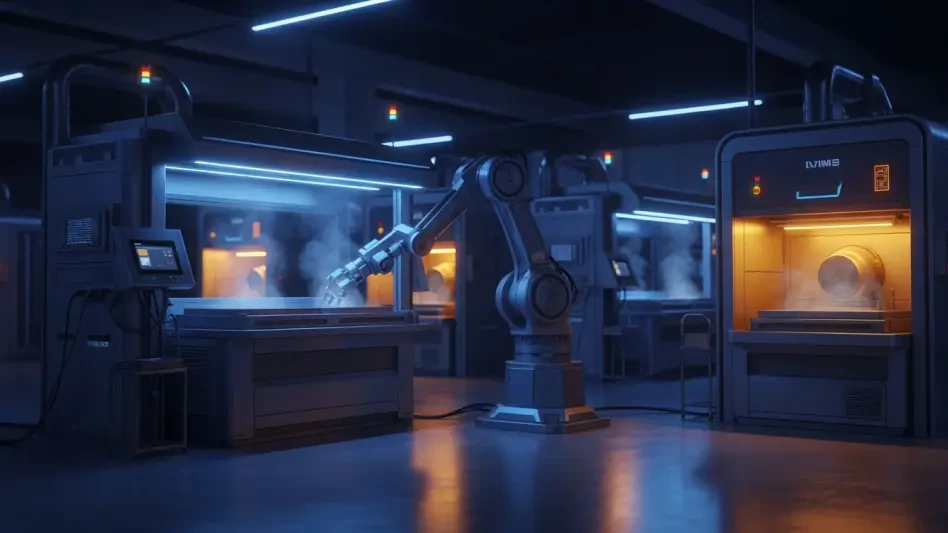
At the heart of the system lies industrial-grade hardware, specifically the high-precision robotic arms provided by ABB Robotics. These articulated components are designed to move with fluid accuracy, managing multiple cooking tasks simultaneously across specialized modules. By using a compact, 400-square-foot footprint, the design maximizes output per square inch, effectively allowing a single unit to perform the work of several human chefs within a footprint smaller than a standard studio apartment.
AI Logic Engines and Ingredient Management
The intelligence behind the hardware is what truly differentiates this implementation from its competitors. An AI logic engine governs the entire preparation cycle, from retrieving chilled ingredients to executing complex plating sequences. This digital brain handles the logistical nightmare of managing dozens of fresh components while maintaining strict self-cleaning protocols. Such automation ensures that every bowl or salad is portioned with mathematical exactness, which is a critical factor for maintaining nutritional standards.
Emerging Trends in Robotic Food Preparation
Current developments in the sector are increasingly focused on the integration of fresh ingredient traceability through AI. Modern consumers are no longer satisfied with processed “fast food”; they demand transparency regarding where their meal originated. Consequently, robotic systems are now being programmed to track the shelf life and source of every leaf and grain, providing a level of safety and data granularity that manual kitchens struggle to match.
Moreover, the rise of the “micro-eatery” format reflects a shift in consumer behavior that favors contactless, efficient service. In institutional settings, the demand for healthy, nutritious options has overtaken the convenience of pre-packaged snacks. This trend is driving the adoption of automated systems that can prepare complex recipes, such as quinoa bowls or customized pasta, without human intervention, catering to a more health-conscious and tech-savvy demographic.
Real-World Implementations in High-Demand Sectors
The deployment of the “Fresh Take Eatery” at WellSpan York Hospital serves as a benchmark for the efficacy of this technology in the United States. Serving a campus of 10,000 daily visitors and staff, the hospital utilized the ARK system to solve the chronic challenge of providing fresh food during off-hours. This implementation allowed the facility to double its dining capacity during peak periods without the need for a costly physical expansion of the building’s footprint.
In these space-constrained environments, the ability to install a high-output kitchen in a hallway or small corner is transformative. It allows healthcare administrators to reallocate resources toward clinical care while ensuring that the dietary needs of the community are met. By using the same local ingredients found in the main cafeteria, the robotic system maintained a high standard of quality that traditional automated solutions often lack.
Operational Hurdles and Adoption Challenges
Despite the impressive capabilities, managing a system that handles up to 80 fresh ingredients presents significant technical hurdles. Ensuring that delicate items like spinach or berries are dispensed without damage requires sophisticated sensor arrays and gentle grippers. Furthermore, meeting the rigorous regulatory requirements for food safety in a clinical environment adds a layer of complexity to the software, as every step must be logged and verifiable for health inspectors.
Adoption is also tempered by high initial capital expenditures and the ongoing complexity of hardware maintenance. While the system reduces labor costs over time, the sophisticated robotics require specialized technicians for repairs. This creates a trade-off where the reliability of the software must be balanced against the physical wear and tear of a machine operating 24/7 in a public-facing role.
Future Prospects for Autonomous Kitchen Technology
The trajectory of this technology points toward a future where collaborative robotics will become the standard in institutional dining. We can expect breakthroughs in hardware that allow for even more compact designs, potentially bringing these “kitchen-in-a-box” solutions to office buildings, airports, and universities. The role of the dietitian will also evolve, as these professionals will transition into “nutritional programmers” who set the parameters for the AI to follow.
Long-term impacts will likely include a drastic reduction in food waste through precision portioning and demand-based preparation logic. As the market matures, the cost of entry is expected to decrease, making these systems accessible to smaller facilities. This will redefine labor efficiency, allowing human staff to focus on hospitality and complex culinary creation while robots handle the repetitive tasks of assembly and sanitation.
Final Assessment of Robotic Kitchen Innovation
The integration of ABB Robotics hardware with advanced AI logic represented a definitive leap forward for institutional food service. This technology successfully addressed the logistical bottlenecks inherent in high-volume dining by providing a consistent and scalable solution. The ARK system proved that high-quality nutrition did not have to be sacrificed for the sake of automation.
The successful deployment in clinical settings showcased how flexible robotics could bridge the gap between efficiency and health standards. While the initial costs remained a significant barrier, the long-term reduction in food waste and labor reliance offered a compelling return on investment. Ultimately, the autonomous kitchen emerged as a vital tool for modern facilities, ensuring that fresh meals remained accessible to everyone at any time.