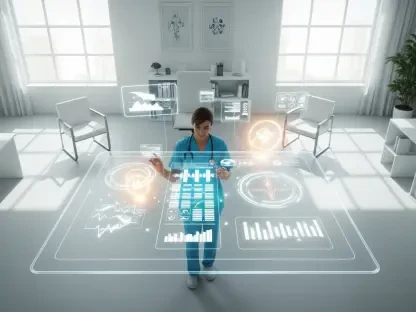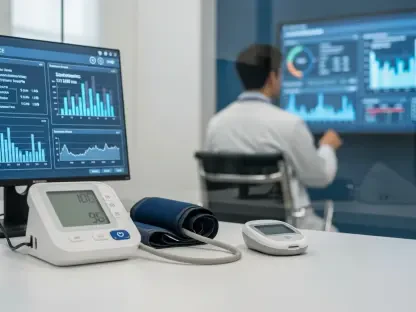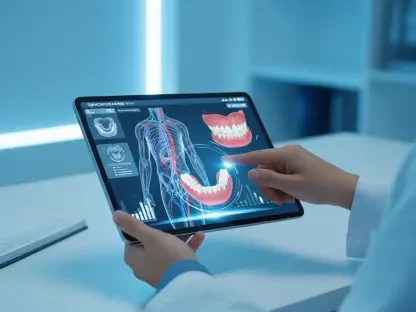

The healthcare industry is standing at a pivotal inflection point, rapidly moving beyond the foundational digitization of patient records toward the intelligent automation and augmentation of care delivery itself. At the very heart of this profound transformation is ambient intelligence, a new class of artificial intelligence that operates seamlessly and invisibly in the background to understand, anticipate, and act upon the complex needs of clinicians and patients in real time. While early iterations of this technology, such as ambient scribes, have shown significant promise in easing the immense administrative burden on physicians, they represent only the first tentative step on a much longer journey.
This analysis explores the critical evolution from passive data capture to active, real-time intelligence, arguing that the true revolutionary power of AI will be unlocked not by simply documenting the past, but by providing contextual, actionable guidance that actively shapes better outcomes in the present moment. It examines how this fundamental shift is poised to solve deep-seated operational inefficiencies that have plagued health systems for decades. The exploration begins with the most critical and complex environment in any hospital: the surgical suite, where the potential for transformation is at its greatest.
The First Wave Acknowledging the Promise and Pitfalls of Ambient Scribes
The journey toward a smarter, more responsive healthcare ecosystem began with significant investments in ambient scribe technologies. These innovative tools, designed to automatically generate clinical notes from physician-patient conversations, were widely hailed as a breakthrough solution to the pervasive and debilitating problem of physician burnout, which is largely fueled by burdensome electronic health record (EHR) documentation. This initial wave of adoption signaled a clear and urgent industry appetite for leveraging AI to streamline data capture and give clinicians back invaluable time to focus on patient care.
However, these first-generation systems possess inherent and significant limitations that curb their overall impact. Their function is primarily retrospective; they are exceptionally skilled at documenting what has already occurred but offer little to no insight that can influence or improve care as it is being delivered. Furthermore, many of these platforms have struggled to demonstrate a convincing return on investment through measurable improvements in financial performance or tangible patient outcomes. This reveals a critical gap between the value of easing administrative tasks and the much larger goal of fundamentally improving the quality and efficiency of care delivery.
Zeroing In on the Surgical Suite The Epicenter of Ambient Transformation
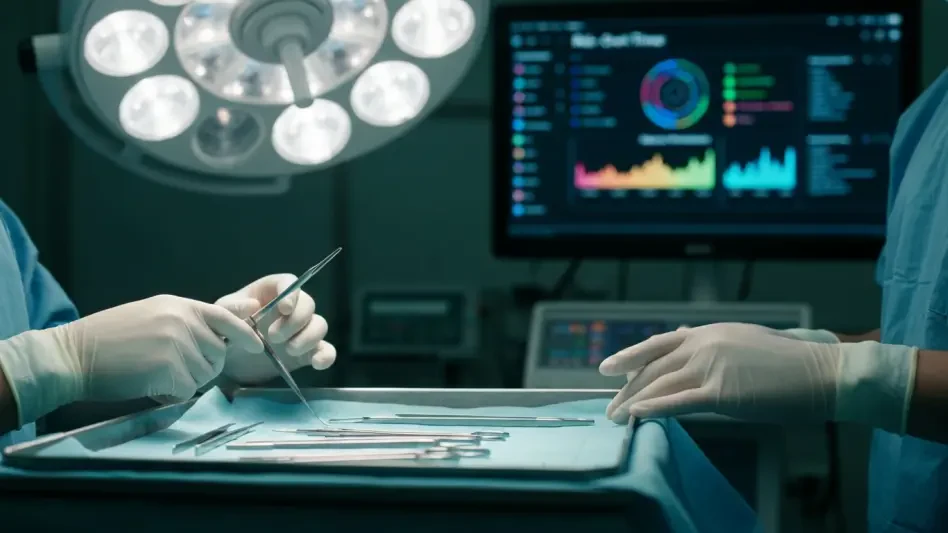
To truly harness the transformative power of AI, the focus of innovation must strategically shift from the general clinic exam room to the financial and clinical core of the modern hospital: the operating room (OR). The surgical suite is not just a site of critical, life-saving care; it is the undisputed economic engine of most health systems, frequently generating over half of an institution’s total revenue. Consequently, any inefficiency, delay, or waste within the OR has a disproportionate and damaging impact on the hospital’s overall financial health and its ultimate capacity to serve patients. It is precisely in this high-stakes environment that the shortcomings of traditional data collection methods are most acute and the potential for ambient intelligence is greatest.
Why the Operating Room’s Data Problem is a Billion Dollar Bottleneck
The OR’s data ecosystem has long been plagued by a deep-seated reliance on flawed and inconsistent manual processes. Nurses, while simultaneously delivering critical patient care under immense pressure, are also tasked with manually logging key events, timestamps, and resource utilization. This dual burden of clinical care and administrative documentation inevitably leads to data that is delayed, error-prone, and fundamentally incomplete. This is not a minor clerical issue; it is a foundational flaw that fuels massive operational waste on a daily basis. Independent research indicates that these data inefficiencies are a primary contributor to preventable delays in over half of all surgical procedures performed. When the very data that drives scheduling, staffing, and resource allocation is fundamentally unreliable, the entire perioperative workflow breaks down, creating a costly and frustrating cascade of preventable bottlenecks.
Deconstructing Inefficiency The Domino Effect of PACU Holds and Turnover Delays
Two specific and highly disruptive bottlenecks, both exacerbated by poor data quality, exemplify this systemic failure. The first is the “PACU hold,” a common scenario that occurs when a surgery is complete but the patient cannot be moved to the post-anesthesia care unit (PACU) because it is not yet ready to receive them. This period of non-operative waiting is often incorrectly logged as part of the surgical procedure time, polluting the EHR with inaccurate data. Schedulers then use this flawed historical information to plan future OR blocks, effectively baking inefficiency directly into the system and perpetuating the cycle of delays.
The second critical failure point is case turnover time—the crucial period between one patient leaving the OR and the next one arriving. This is not idle time but a vital phase for terminal disinfection and meticulous preparation for the next procedure. Yet, without reliable and objective data, this process becomes inconsistent and often unnecessarily prolonged. Inefficient turnovers disrupt the daily surgical schedule, create friction and frustration among staff, and ultimately limit the total number of patients who can be treated, directly impacting both patient access and hospital revenue.
The Ambient Solution How Computer Vision Unlocks Operational Excellence
The solution to these deep-seated operational problems lies in a new generation of ambient technology powered by advanced computer vision. By embedding intelligent video systems within the OR, health systems can gain a continuous, objective, and minutely detailed view of every activity, from the first incision to the final moments of room turnover. By analyzing this rich visual data—often in combination with direct input from clinical staff—AI can pinpoint the exact sources of delay with surgical precision and identify concrete, actionable opportunities for process improvement. This innovative approach has already demonstrated a powerful ability to significantly reduce average case and turnover times, unlocking powerful secondary benefits such as the parallel processing of tasks and more efficient instrument management, transforming the OR into a highly coordinated and optimized environment.
Beyond the OR Envisioning a Fully Integrated Ambient Hospital Ecosystem
The impact of this technology extends far beyond simple time-saving in a single department. In an optimized future state, PACU teams receive real-time alerts that precisely time their preparations, effectively eliminating holds and allowing patients to move to the recovery phase sooner. The OR turnover team operates within a predictable and sufficient window, ensuring the highest standards of sterility and reducing the risk of surgical site infections. Most importantly, the surgeon’s schedule becomes reliable and efficient, enabling them to perform more procedures and expand patient access to essential care. This system creates a powerful, rapid feedback loop; teams can implement a new workflow and immediately see minute-by-minute data on its impact, facilitating a culture of continuous, data-driven improvement. While optimizing turnover may seem like a small gain, its scaled-up effect is enormous, potentially creating capacity for dozens of additional cases per OR each month—a direct boost to both patient care and hospital revenue.
Strategic Imperatives Moving from Data Capture to Actionable Intelligence
This analysis presents a clear and compelling path forward for healthcare leaders seeking to navigate the next wave of technological innovation. The major takeaway is that while passive data capture tools like ambient scribes are a useful starting point, they are not the final destination in the journey toward a truly intelligent health system. To achieve a genuine revolution in care delivery, health systems must invest in technologies that provide active, real-time intelligence at the point of care. The most strategic place to begin this transformation is in the highest-value, highest-impact environment: the operating room. By focusing on solving critical bottlenecks like PACU holds and turnover times with ambient computer vision, hospitals can achieve a swift and significant return on investment that resonates across the entire organization. The key recommendation is to shift the strategic mindset from simply documenting what happened to actively guiding what happens next, using intelligent, context-aware systems to make care safer, more efficient, and more accessible for everyone.
The Invisible Hand of Care Ambient Technology as the Next Healthcare Frontier
Recapping the core insights, the journey of AI in healthcare is a clear and logical progression from passive documentation to active, real-time intervention. By moving beyond retrospective tools and embracing ambient intelligence within critical environments like the surgical suite, health systems can finally solve long-standing inefficiencies that have constrained capacity and driven up costs for decades. This topic remains profoundly significant because it represents a fundamental shift in how care delivery is managed, measured, and improved. A future where ambient sensors and AI seamlessly identify, categorize, and document clinical events will generate a wealth of novel data, empowering smarter decisions and proactive care models. The next great frontier in healthcare innovation will not be a single device or a new algorithm, but rather an invisible layer of intelligence that makes every moment of care delivery fundamentally better.