
The human eye has long been described as a window to the soul, yet modern science has proved it is more accurately a high-fidelity monitor for the cardiovascular system. While traditional heart disease screenings often require invasive blood draws, time-consuming lab work, or expensive specialized scans, a new generation of diagnostic technology is changing the narrative. By harnessing the power of artificial intelligence to analyze the retinal microvasculature, clinicians can now identify systemic health risks with a speed and precision previously thought impossible. This review examines how the integration of machine learning and oculomics is transforming routine eye exams into a frontline defense against stroke and myocardial infarction.
Introduction to Oculomics and Machine Learning Integration
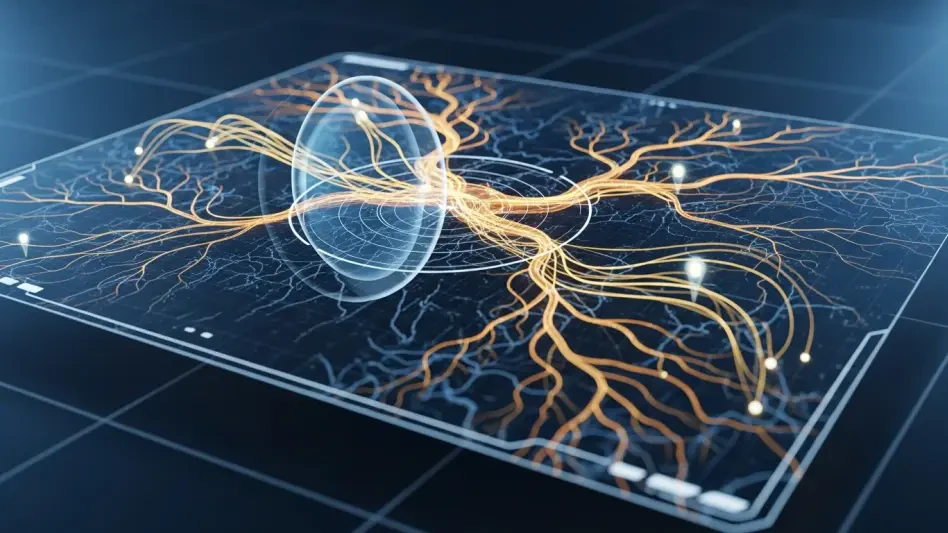
At the heart of this technological shift lies oculomics, a field that capitalizes on the eye’s unique anatomy to assess systemic well-being. The retina is the only location in the body where clinicians can directly observe microvessels without making an incision. Because these vessels share a common structural and functional lineage with the vasculature of the heart and brain, they serve as an early-warning system. AI acts as the interpreter for this data, scanning for patterns that are too microscopic or complex for the human eye to reliably categorize.
The integration of machine learning into this space represents a move toward preventive cardiology that fits seamlessly into existing digital health ecosystems. Unlike traditional methods that look at heart health in isolation, AI-powered retinal imaging considers the circulatory system as a whole. This approach bridges the gap between different medical specialties, allowing optometrists to provide insights that were once the exclusive domain of cardiologists, thereby creating a more holistic and proactive model for patient care.
Technological Architecture and Core Mechanics
Deep Learning Algorithms for Vascular Analysis
The mechanical “brain” behind these scans consists of deep learning models trained on massive, longitudinal datasets that link retinal images to subsequent cardiovascular events. These algorithms do not just look at the vessels; they quantify specific biomarkers such as arteriolar narrowing, venular dilation, and the complexity of branching patterns. By calculating the “tortuosity” or twistiness of the vessels, the AI identifies early signs of hypertension and atherosclerosis long before a patient exhibits high blood pressure or chest pain.
What makes this implementation unique is its ability to detect “subclinical” markers. Human clinicians are trained to spot overt pathologies like large hemorrhages, but AI excels at recognizing the cumulative weight of dozens of tiny vascular deviations. This high-dimensional analysis allows the software to generate a risk score based on the actual physical state of the patient’s vessels, rather than relying solely on statistical averages derived from age or weight, providing a much more personalized diagnostic output.
High-Speed Digital Acquisition and Processing
Efficiency is the secondary pillar of this technology, with high-resolution digital cameras capturing retinal topography in a matter of seconds. Once the image is captured, the processing engine maneuvers through the data in under a minute, delivering a comprehensive risk report before the patient even leaves the exam chair. This near-instantaneous feedback loop is a stark contrast to the days-long wait times associated with lipid panels or the scheduling hurdles of a cardiac stress test.
This speed matters because it democratizes high-level diagnostics. By reducing the time and equipment required to assess stroke risk, the technology moves beyond the confines of the hospital. The rapid processing power means that a cardiovascular check-up can be performed with the same ease as a standard vision test, removing the friction that often prevents patients from seeking preventive care. It transforms a specialized medical procedure into a friction-less, high-throughput screening tool.
Emerging Trends in Retinal Diagnostic Technology
A significant shift is currently occurring toward multi-modal data integration, where AI systems no longer analyze images in a vacuum. Modern platforms are beginning to synthesize retinal data with real-time biometric inputs from wearable devices and patient demographics. This “data layering” compensates for the limitations of imaging alone, creating a more robust predictive model that adjusts the vascular findings based on factors like smoking history or recent physical activity levels.
Furthermore, the decentralization of health screenings is accelerating. The trend is moving away from centralized hospital hubs and toward primary care offices and retail optometry settings. This shift is driven by a consumer-led demand for immediate medical insights. As patients become more accustomed to tracking their own health data, they are gravitating toward non-invasive tools that provide “real-time” monitoring, pushing the industry to refine these AI tools for use in diverse, non-specialized environments.
Real-World Applications in Cardiovascular Health
The most profound application of this technology is the prediction of major adverse cardiac events years before they occur. In clinical settings, AI eye scans have successfully identified patients at high risk for stroke who had otherwise normal blood pressure readings. By catching the micro-vascular “echoes” of heart disease early, doctors can initiate lifestyle changes or statin therapies earlier, significantly extending the window for effective intervention and reducing the likelihood of emergency room visits.
In underserved or rural communities, this technology is a vital equalizer. Many regions lack the infrastructure for advanced imaging like MRI or CT, but most have access to basic optometric equipment. Deploying AI software to these existing devices allows for high-level cardiovascular screening in areas where specialized cardiology is scarce. This dual-purpose use of the eye exam ensures that a routine check for a new glasses prescription can double as a life-saving medical screening, maximizing the utility of every patient encounter.
Technical Challenges and Clinical Constraints
Despite the impressive capabilities, there remains an “accuracy gap” that prevents these scans from being a total replacement for traditional diagnostics. While the AI is exceptional at identifying vascular risk, it currently achieves its highest predictive value only when used as a complementary tool. For instance, an AI might flag a vascular abnormality that turns out to be a benign anatomical quirk rather than a sign of disease. Without human oversight and the context of a patient’s full medical history, there is a risk of over-diagnosis.
Algorithmic bias also presents a hurdle that researchers are actively working to overcome. Many early models were trained on datasets that lacked ethnic diversity, which can lead to inconsistent performance across different populations due to natural variations in retinal pigmentation. Additionally, regulatory and ethical concerns regarding patient anxiety are significant; receiving a high-risk cardiovascular report during a simple eye exam can be jarring, necessitating clear protocols for how these results are communicated and managed.
Future Trajectory of AI-Powered Imaging
The path forward involves the radical miniaturization of hardware, which could soon lead to retinal screening tools integrated into smartphone peripherals or kiosks in local pharmacies. This evolution would effectively move the diagnostic process from the clinic to the community, allowing for more frequent monitoring. As the hardware becomes more portable, the barrier to entry for cardiovascular screening will likely vanish, making heart health tracking as common as checking one’s pulse.
Moreover, the diagnostic scope of retinal AI is expanding into neurology. Recent studies suggest that the same retinal scans can detect early markers for neurodegenerative conditions like Alzheimer’s and Parkinson’s disease. This expansion would turn the eye into a universal sensor for the body’s most critical systems. As the medical community shifts from reactive treatment to proactive, individualized prevention, these tools will play a central role in lengthening the human healthspan.
Summary and Overall Assessment
The emergence of AI-powered retinal imaging marked a decisive turning point in how clinicians approached the intersection of different physiological systems. The technology successfully demonstrated that the microvasculature of the eye was not just a localized structure but a vivid map of an individual’s internal health. By providing a non-invasive, rapid, and data-rich alternative to traditional cardiovascular assessments, these tools moved the needle from reactive “sick care” toward a more sophisticated model of early intervention. The efficiency of the “eye-heart connection” allowed for a massive expansion of screening efforts, reaching populations that were previously overlooked by the healthcare system.
Looking ahead, the integration of these tools into standard primary care and community settings proved to be the logical next step for modern medicine. The focus shifted toward refining algorithmic transparency and ensuring that diagnostic models were trained on globally representative datasets to eliminate systemic biases. Rather than functioning as a standalone diagnostic, the technology matured into a foundational layer of a multi-modal health assessment. This progress paved the way for a future where early detection was the standard of care, ensuring that cardiovascular and neurological risks were managed long before they reached a critical threshold.